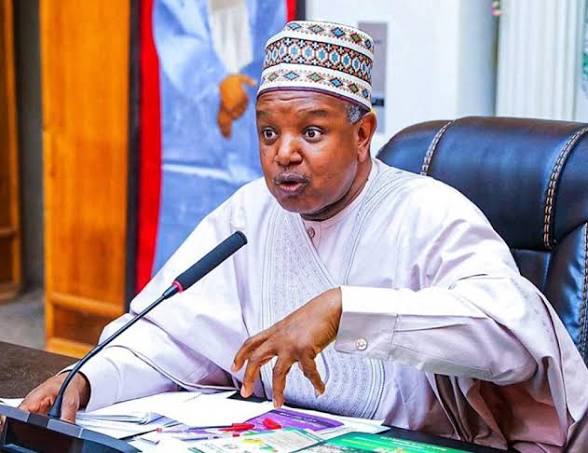
The federal government has declared that ongoing economic reforms must ultimately translate into tangible improvements in the lives of ordinary Nigerians, saying social investments, stronger institutions and human capital development are critical to ensuring that the gains of the reforms reach poor and vulnerable citizens across the country. The Minister of Budget and Economic Planning, Senator Abubakar Atiku Bagudu, stated this at the Presidential Launch of the Nigeria Community Action for Resilience and Economic Stimulus Additional Financing (NG-CARES AF), the Solutions for Internally Displaced and Host Communities (SOLID) Programme and the Human Capital Opportunities for Prosperity and Equity (HOPE) Programmes at the State House Banquet Hall, Abuja. Bagudu described the launch as another milestone in translating the Renewed Hope Agenda of President Bola Ahmed Tinubu into practical interventions that directly impact the lives of Nigerians, especially those at the grassroots. “It is my honour and privilege to warmly welcome you to this Presidential Launch of these flagship development programmes of the administration of President Bola Ahmed Tinubu,” he said. According to him, the programmes represent the administration’s commitment to building a resilient, inclusive and prosperous nation where development opportunities reach every citizen. He explained that the programmes were carefully designed as strategic poverty and shock-responsive investments to address both longstanding and emerging development challenges confronting Nigeria. According to the minister, the interventions are aimed at strengthening social protection, expanding economic opportunities, improving human capital outcomes and supporting poor and vulnerable communities nationwide. Bagudu said the NG-CARES Additional Financing Programme builds on the achievements of the parent NG-CARES Programme, a US$750 million intervention implemented from 2021 to 2025, which reached 17.6 million direct beneficiaries across Nigeria. He noted that the beneficiaries included poor and vulnerable individuals, households, farmers, Nano, Micro and Small Enterprises (NMSEs) as well as communities affected by the COVID-19 pandemic and other socio-economic shocks. He said the US$500 million Additional Financing would deepen the programme’s impact by strengthening livelihood support, food security, community resilience and social protection systems. The minister explained that the US$300 million SOLID Programme addresses the challenges facing Internally Displaced Persons (IDPs) and host communities affected by conflict, insecurity and climate-related shocks. Rather than focusing solely on humanitarian assistance, he said the programme adopts a long-term development approach by restoring livelihoods, strengthening resilience, improving access to social services, supporting local infrastructure and promoting social cohesion. Bagudu also described the US$1.5 billion HOPE Programme as an investment in Nigeria’s most valuable asset—its people. He said through its three pillars—HOPE-Governance, HOPE-Primary Healthcare and HOPE-Education—the programme is designed to strengthen governance systems, improve primary healthcare delivery, enhance learning outcomes and support reforms that improve accountability, efficiency and service delivery at the sub-national and local government levels. He stressed that the true strength of the three programmes lies in their complementarity. According to him, while NG-CARES builds resilience and strengthens institutions, SOLID restores dignity, opportunity and stability to displaced persons and host communities, and HOPE builds the human capital required for long-term prosperity through investments in health, education and governance. He said together, the three initiatives form an integrated framework for tackling poverty and vulnerability while creating opportunities for sustainable development. “They ensure that economic reforms are complemented by social investments, human capital development and targeted support for those most in need. In essence, they translate the Renewed Hope Agenda into measurable results and impact on the lives of poor and vulnerable Nigerians,” he said. Bagudu said the success of the programmes would depend on effective coordination, accountability and commitment from all implementing institutions and stakeholders. He commended the World Bank, development partners, the Nigeria Governors’ Forum, state governments, implementing agencies and other partners for supporting the programmes. The minister also urged all implementing institutions to ensure that every intervention is delivered with responsibility and accountability, stressing that the resources are intended to improve the lives of poor and vulnerable Nigerians. “Accordingly, the administration expects the highest standards of transparency, accountability and prudent financial management in the implementation of
Don't miss out on breaking stories and in-depth articles.