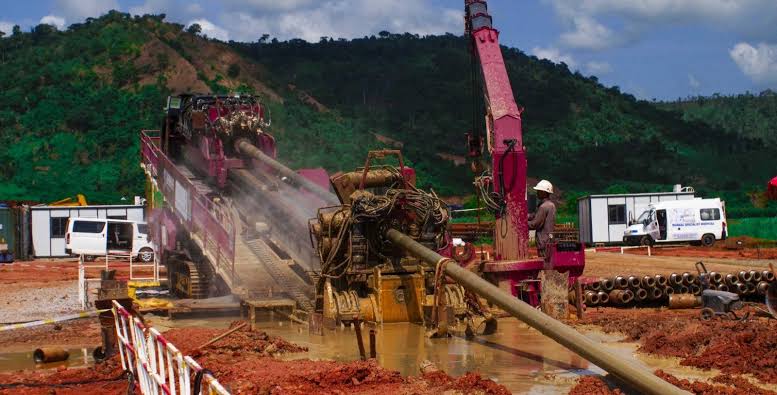
In this interview, Dr Bala Zakka, a petroleum engineer, energy consultant, chartered accountant, tax expert and public affairs analyst spoke on how Nigeria is losing revenue from the delay in completing the Ajaokuta-Kaduna-Kano (AKK) gas pipeline. Six years after flag-off, the Ajaokuta-Kaduna-Kano pipeline is yet to function. What do you make of it? I think that generally, as far as people like me are concerned, there is an expectation that whenever you have visionary leaders, they are supposed to plant the seed of growth and development, which is expected to be nurtured and fertilised so that people will see the benefits. In the context of Nigeria, I think leaders do more of talking. Leaders are always rushing to make statements that do not carry intentions. But if you go to other climes, before leaders talk, they think and plan generationally. In Nigeria, a lot of the leaders are just talking about political gains. Let us talk about the legislature and the executive. In the executive, we have people that have powers who should be able to sit down, think about what should be done to move the country forward through developmental activity. And those developmental strides can come in different ways. They can come in form of projects; some are minor while some are major. When the dream of AKK was conceived, honestly, I applauded it, but sometimes, when I sit down and I look at the way leaders think and do things negatively in Africa, most importantly in Nigeria, I feel sad. I can back up what I am saying. I remember years back when that West African Gas Pipeline project was conceived, the plan was that there would be sufficiency as far as gas was concerned. Everybody knows the value of gas. From natural gas alone you can boost food security because from it you can get ammonia, from ammonia you can get urea, and from urea you can get fertiliser. Everybody also knows that you use natural gas to drive gas turbines and generate electricity. Right from when I was an undergraduate, I heard about the Trans-Saharan Gas Pipeline Project. If that project had crystallised, the plan was from Nigeria, we were going to pump pipe gas to North Africa, to the Mediterranean Sea into Europe. You can imagine what would have happened if we had successfully executed that. It means that Nigeria would have been feeding Europe and some parts of Africa. Apart from that, looking at the crisis between Ukraine and Russia, and now, the United States and Iran, Nigeria would have raked in billions of naira from gas and the byproducts of natural gas. So, it is very unfortunate for us. It has been happening from one political dispensation to another because Nigeria has been in a democracy now for probably upwards of 25 years. To me, it is a clear docility from our leaders because leaders are supposed to be visionary, think and plan generationally. It is either our leaders are not visionary or they don’t surround themselves with good lieutenants that would help them to achieve national objectives and goals. What do you think is the financial implication of the delay? Generally, there is what we call the time value of money. When you live in a country like Nigeria where the currency is continuously depreciating and where you have policies that are not well coordinated, the implications are out there for anybody who cares to see. In Nigeria, you have situations where a project that probably was going to cost you N100 million would increase by another 20 per cent, 30 per cent or 40 per cent if you delayed it for a year or two. And knowing that Nigeria is a country where we have so many things that are not there, in terms of infrastructure to keep the economy moving, it is very clear that every time the project is being revisited, it has to be reassessed and re-evaluated in terms of cost. And if for any reason there are areas where funding is coming in the form of loans, there is what we call cost of capital. That means the interest will be going up and the equipment you are supposed to get when the exchange rate was probably N200 to a dollar but now N1,300 will increase. You can see the implications. Let us also remember that some of the tools or equipment you require must be imported. Imagine that this project had been completed when the exchange rate was probably N400 to a dollar. It is clear that the delay is in the negative interest for Nigeria. Apart from the equipment, what about the experts? There will be one or two experts from different parts of the world and you will still pay their charges. And now that the country is facing insecurity challenges, the cost will be factored by those who will even come in the form of personnel. So, when you look at it, the delay is not in any way going to favour Nigeria. It will add so much to the already existing budget that was there. And there will be a need for re-evaluation of the project. As I said, looking at the depreciating values of our currency and in
Don't miss out on breaking stories and in-depth articles.