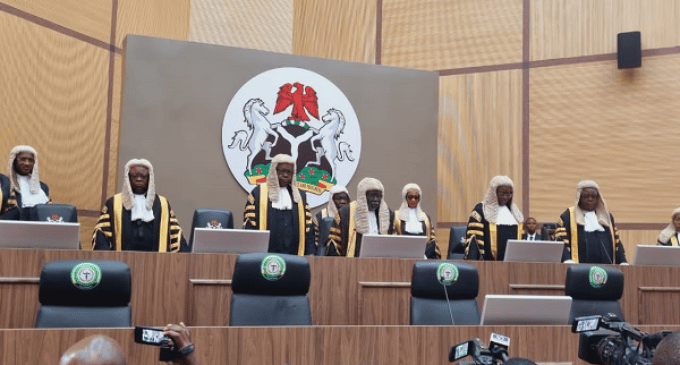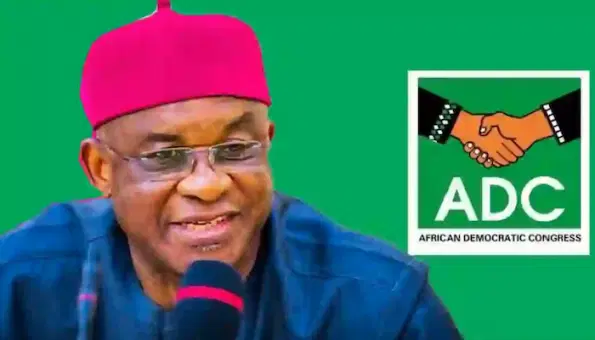
By Luminous Jannamike The ADC’s leadership crisis is heading to the Supreme Court, but the bigger battle may not be legal. As the opposition coalition fights over control of its structures, time is running out to convince Nigerians it is ready for the 2027 elections. Read Also: From lender to borrower: Arise TV’s Rufai Oseni weeps over Nigeria By the time the Supreme Court finally settles the battle over the African Democratic Congress (ADC), the legal questions may have been answered. The political damage, however, may already have been done. That is the irony confronting Nigeria’s most prominent opposition coalition. For months, the conversation around the ADC has revolved around court orders, rival factions, congresses and constitutions; not policies, campaigns or governance. Every judgment has produced another appeal. Every appeal has prolonged uncertainty. And in politics, uncertainty can be as damaging as defeat. That is why last Monday’s Court of Appeal judgment is about much more than David Mark or Dumebi Kachikwu factions. It has become a test of whether an opposition coalition can remain electorally viable while fighting for control of itself. The Judgment that Changed the Conversation In a split two-to-one decision, the Court of Appeal upheld an earlier Federal High Court judgment restraining the Independent National Electoral Commission (INEC) from recognising state congresses organised by committees appointed by the David Mark-led National Working Committee, NWC. The appellate court agreed that under the ADC constitution, elected state executive committees, not a national working committee, possess the authority to conduct state congresses. It equally affirmed that the congresses and subsequent national convention organised by the David Mark leadership amounted to a nullity because they allegedly violated an earlier court order. The Mark camp has appealed to the Supreme Court, maintaining that the judgment neither removed its leadership nor invalidated candidates already uploaded to the INEC portal. Legally, therefore, the dispute is far from over. Politically, it may just be beginning. What the Supreme Court Will Really Decide On Arise TV’s The Morning Show, constitutional lawyer Liborous Oshoma stripped away the politics and reduced the dispute to one decisive question. “They must present the facts showing that the caretaker committee (appointed by Mark-led NWC) was subsequently suspended and did not conduct the congresses or primaries,” he stated. According to Oshoma, the burden now rests on the ADC to prove that the disputed congresses were conducted by lawful party structures rather than the caretaker committee. If it cannot, he warned, the implications could extend beyond state executives. “Yes, the presidential ticket is threatened by this court judgment… The truth will be laid bare, but time might not be on their side,” he cautioned. That final observation may be the most significant. Time, not merely law, has become the opposition’s greatest adversary. Beyond the Courtroom The legal arguments are relatively straightforward. The political consequences are not. The David Mark NWC currently enjoys INEC recognition for candidates already uploaded onto the commission’s portal, including the Atiku Abubakar/Rotimi Amaechi presidential ticket and hundreds of legislative candidates. The Kachikwu faction, despite claiming legitimacy over party state structures, does not control those submissions. That creates a practical dilemma. Suppose the Supreme Court eventually upholds the Appeal Court judgment. The faction recognised as controlling the party structure may still confront the reality that another faction submitted candidates to INEC months earlier. Conversely, should the apex court overturn the judgment, the Mark-led coalition may retain legal authority but still have to repair months of internal distrust and organisational paralysis. Either way, rebuilding confidence may prove harder than winning the case. The Politics Nobody Wants to Discuss Opposition politicians have repeatedly alleged that the ruling All Progressives Congress, APC, benefits from keeping rival parties trapped in endless litigation. Those allegations remain political claims; there is no verified evidence that the judiciary or INEC is acting at the direction of the government. Yet one fact is difficult to ignore. Lengthy legal disputes consume energy, divide party elites, discourage donors and confuse supporters. Whether caused by political strategy or self-inflicted organisational failures, the result can be remarkably similar: an opposition that spends more time in court than on the campaign trail. Ironically, the courts may eventually clear every legal obstacle. But if public confidence has already eroded, legal victory ma
Don't miss out on breaking stories and in-depth articles.