
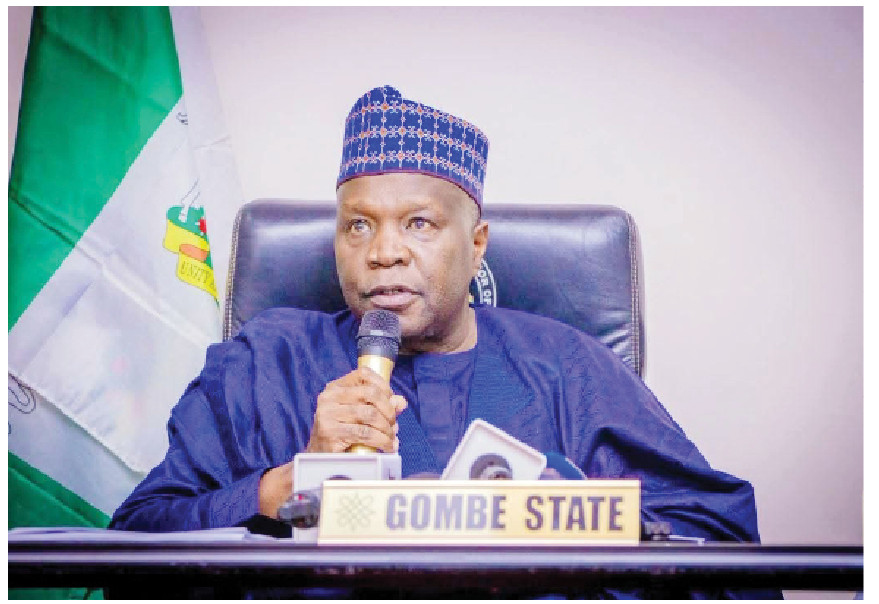
The decision by the Northern Governors’ Forum to establish the Northern Nigeria Security Trust Fund (NNSTF) is a significant acknowledgement that insecurity has become the region’s most pressing development challenge. The Security Trust Fund is co-chaired by former Minister of Defence, Alhaji Mahmud YayaleAhmed, and former Chief of Defence Staff, retired General Martin Luther Agwai. Other members include former Chief of Army Staff, retired Lieutenant General Umar Farouk Yahaya. Speaking at the inauguration, the Governor of Gombe State and Chairman of the Northern States Governors’ Forum (NSGF), Alhaji Muhammadu Inuwa Yahaya, said the forum was united by one conviction: “that the security crisis in Northern Nigeria requires prompt, coordinated, and decisive measures in order to rescue our region from the brink of total collapse.” For more than a decade, terrorism, banditry, kidnapping, communal conflicts and organised criminal activities have claimed thousands of lives, displaced communities, disrupted agriculture and commerce, and undermined public confidence in the state’s ability to protect its citizens. Therefore, any initiative that seeks to confront this reality deserves careful consideration by well-meaning northerners and Nigerians in general. The idea behind the Trust Fund is understandable. Criminal groups operate across state boundaries, making isolated responses by individual states increasingly ineffective. Terrorists who attack communities in Kaduna can easily move into Zamfara or Niger. Likewise, whenever security operations are intensified in Niger or Zamfara, many of these criminal elements relocate to neighbouring states. A coordinated regional approach that strengthens intelligence sharing, supports security agencies and pools resources could improve the capacity to confront threats that no single state can tackle alone. In principle, this is a step in the right direction. However, the establishment of another institution should not be mistaken for a solution in itself. Nigeria has created numerous intervention agencies and special funds over the years with lofty objectives, only for many to fall short because of weak governance, poor coordination and inadequate accountability. The Northern Nigeria Security Trust Fund must not become another addition to that growing list. The first test of the initiative will be transparency. Citizens have a legitimate right to know how the fund will be managed, who will supervise its operations, how contracts will be awarded, and what safeguards will be put in place to prevent abuse. While security operations often require confidentiality, financial accountability should never be sacrificed in its name. There is a need for independent audits, regular public reporting and strong oversight mechanisms if the fund is to earn public trust and avoid becoming another opaque institution sustained by public resources. Yet there is an even more fundamental question that deserves honest reflection. If many of the governors championing this initiative already possess considerable constitutional and administrative powers to support security operations within their respective states, why has insecurity continued to escalate under their watch? Governors chair their State Security Councils, control substantial security votes, provide operational logistics to security agencies, enact relevant laws, and work closely with traditional institutions and local vigilante groups. These are significant powers. If they have not consistently produced the desired outcomes, many Nigerians will naturally ask: what will be different this time? The answer cannot simply be the creation of another fund or the commitment of more money. Unless this initiative is accompanied by stronger leadership, greater accountability and measurable improvements in security coordination, it risks addressing the symptoms rather than the underlying causes of the crisis. Indeed, insecurity in Northern Nigeria is not merely a funding problem; it is also a governance problem. Large ungoverned spaces, poor intelligence coordination, delayed responses to threats, weak prosecution of criminal networks, porous borders, illegal arms trafficking, and limited collaboration among states have all contributed to the persistence of violence. These institutional weaknesses cannot be solved by financial contributions alone. They require political will, disciplined execution and sustained intergovernmental cooperation. Equally important, the Trust Fund must avoid reducing security to the procurement of vehicles, equipment and logistics. Such investments are necessary, but they are insufficient. Modern security management increasingly depends on intelligence gathering, surveillance technology, data analysis, secure communications and rapid information sharing. There is also the temptation—common in many public institutions—for those entrusted with managing public funds to prioritise luxury vehicles, excessive ad
Don't miss out on breaking stories and in-depth articles.


