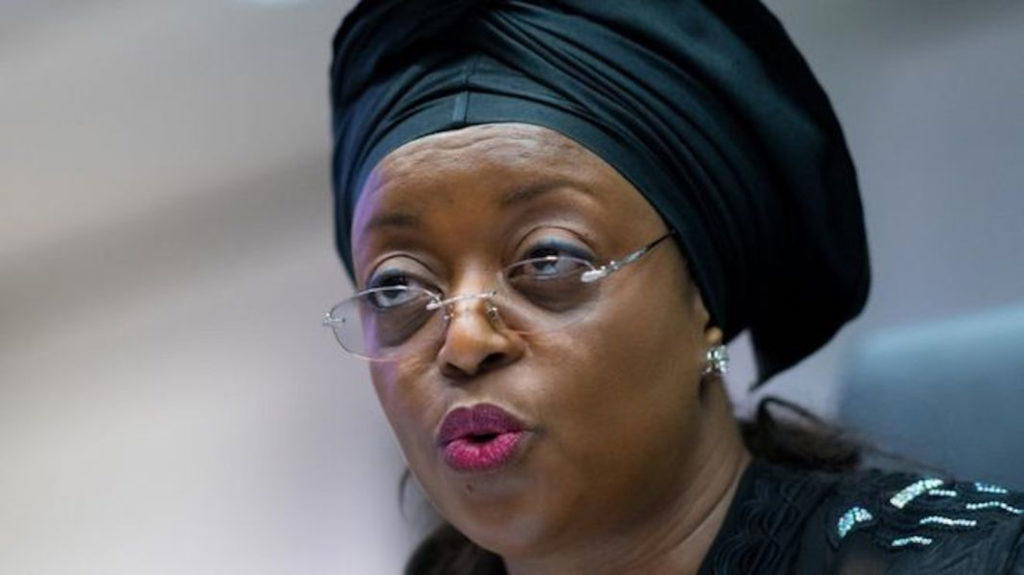
By Prisca Sam-Duru There was a period in Nigeria when almost every headline in both traditional and social media platforms screamed the name Diezani Alison-Madueke. For more than a decade, beginning from the time ex-president Goodluck Jonathan left office, the name Diezani Alison-Madueke attracted a disproportionate amount of public vilification and controversies for global discourse on corruption. To the public, the former minister of petroleum resources’ name became synonymous with excess: a recurring character in headlines detailing luxury properties, high-stakes shopping sprees at Harrods, private jets, and multimillion-pound bribery allegations carried by news organisations across continents. But in June 2026, the narrative took a sudden, definitive turn. A London jury acquitted the former Nigerian Minister of Petroleum Resources of all six charges against her, bringing an end to one of the United Kingdom’s longest-running corruption prosecutions. While the verdict effectively ended what Alison-Madueke described as years of “unjust vilification,” the events of the past decade and its dramatic end have ignited a secondary, more complex debate. In the digital age, can a judicial acquittal ever truly mend a reputation that has been systematically dismantled by a decade of headlines? Deep research by Open-Source Intelligence (OSINT) analysts into over a decade of digital coverage of the Diezani saga across multiple countries and continents, reveals a striking imbalance between the intensity of accusation and the relative silence of exoneration. The data analysis, which sampled nearly 1,000 news reports across nine African countries between 2015 when the saga began, and 2026 highlights a stark reality: allegations travel faster and stick longer than the truth. At that point, people choose to ignore the fact that an accused remains innocent until proven guilty. From her initial arrest on October 2, 2015, by the UK’s National Crime Agency (NCA) to her acquittal on June 17, 2026, Alison-Madueke was the subject of intense media scrutiny. The coverage was dominated by themes of bribery, asset forfeiture, and her initial arrest. However, the “news cycle” proved to be unforgiving. Once the acquittal was announced, the volume of reporting plummeted. Media coverage of the former minister dropped by over 80 per cent, suggesting that while the verdict was a legal victory, it failed to generate the same level of sustained public engagement as the allegations that preceded it. The saga was not just a Nigerian story; it was a global one, with allegations involving oil contracts, election financing, money laundering and international asset recovery, triggering investigations across Nigeria, the United Kingdom, United States, etc. The geographical spread underscores how the allegations against the former minister transcended borders, embedding her image into a global consciousness of corruption, fueled by international news organizations. Institutions, public figures caught in the web As was seen, the scale of the investigations made the Diezani saga a most publicised corruption case laced with years of criminal proceedings, civil forfeiture actions, and cross-border asset recovery efforts. The investigations, however, didn’t stop at Diezani, as multiple institutions and public figures were caught in the web. Many relatives, business associates, oil executives, bankers, lawyers, and former public officials soon tasted how costly being a relative or an associate can be when things turn sour. Some of them were prosecuted, while others were investigated without being formally charged. Along the line, some were acquitted or discharged by the courts, while proceedings against others continued. In spite of these different legal outcomes, many of those investigated had their names almost eternally linked to one of Nigeria’s largest corruption investigations because they were tried and sentenced by public opinion. A cast of characters which were tethered to the saga include, former President Goodluck Jonathan who was mentioned in 481 reports, former President Muhammadu Buhari, mentioned 267 times, Doye Agama (Brother), mentioned 135 times, Abdulrasheed Bawa (Former EFCC Chair) and Olatimbo Ayinde (Co-defendant) who were tied with 130 mentions each. In all, those who are closest to the former minister suffered the most. Her son, Ugonna Alison-Madueke, was a constant feature in investigations relating to the alleged movement of funds connected to the 2015 election financing probe. Her cousin and private lawyer, Donald Chidi Amamgbo, was arrested in 2016 amid allegations that his companies profited from crude oil allocations because of his relationship with Diezani. Amamgbo was lucky to have experienced a reversal. Her brother, Archbishop Doye Agama, was not spared. As it happened, the narrative
Don't miss out on breaking stories and in-depth articles.