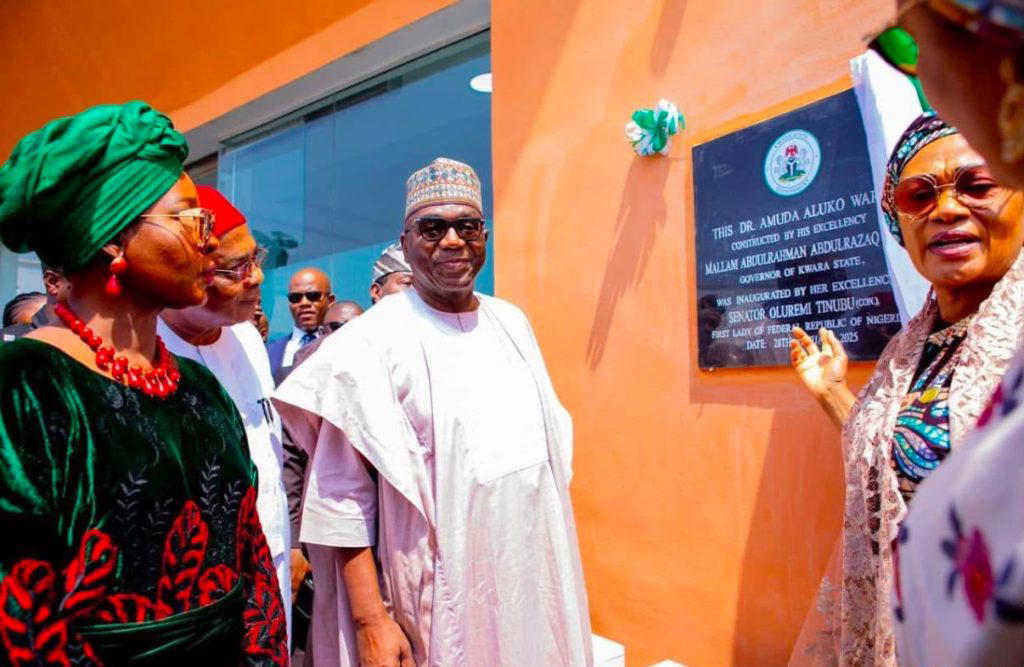
By Abdulsalam Olesin Every community has a hospital that tells a story. Some tell stories of neglect, where broken equipment gathered dust, overstretched health workers struggled with limited resources, and patients travelled long distances in search of quality care. Others tell stories of hope, where government investment restores confidence in public healthcare and brings life-saving services closer to the people. For many years, Kwara belonged largely to the first category. Decades of underinvestment left many public health facilities in poor condition. Specialist services were limited, and access to quality healthcare remained a challenge, especially for rural communities. Many residents who could afford it sought treatment outside the state, while those who could not often settled for inadequate care. Under the administration of Governor AbdulRahman AbdulRazaq, however, a different story is unfolding. It is a story reflected not in political rhetoric but in upgraded hospitals, improved healthcare outcomes, renewed confidence among development partners, and the growing number of Kwarans who can now access quality medical services within the state. Unlike many reforms that begin with headline-grabbing projects, Kwara’s healthcare transformation started with the basics. The administration focused on rebuilding the primary healthcare system, strengthening secondary facilities, investing in modern medical equipment, expanding health insurance coverage, and improving the welfare and capacity of health workers. The results are increasingly visible across the state. Nearly 200 primary healthcare centres have been renovated, equipped and solarised under programmes supported by the Basic Healthcare Provision Fund, the World Bank-assisted IMPACT Project, and state resources. Of these, 83 have been upgraded to modern Level-2 facilities with labour rooms, laboratories, pharmacies, immunisation units, clean water, reliable electricity, staff quarters, and perimeter fencing. Communities including Alapa, Magaji Ngeri, Ago Oja, Aboto-Alfa, Ijagbo, Babanloma, Oro, and Lade now have health facilities that are not only functional but also capable of delivering quality services closer to the people. The reforms extend well beyond primary healthcare. General hospitals in Patigi, Lafiagi, Kaiama, Yashikira, Oro, and other parts of the state have undergone major upgrades, while the former General Hospital, Ilorin, has been transformed into the Kwara State University Teaching Hospital (KWASUTH). More than a change of status, the upgrade positions the institution as a centre for specialist healthcare, medical education, and the training of future health professionals. Nothing symbolises this ambition more than the ultramodern Intensive Care Unit recently completed at KWASUTH. Commissioned by the First Lady of the Federal Republic of Nigeria, Senator Oluremi Tinubu, during her official visit to Kwara State, the facility is the largest Intensive Care Unit in North Central Nigeria. It significantly expands the state’s capacity to manage critically ill patients and complex surgical cases, reducing the need for emergency referrals outside Kwara. The administration has also prioritised modern diagnostics. At the inception of the AbdulRazaq administration, much of the state’s diagnostic infrastructure was outdated or no longer met contemporary standards. Rather than continue relying on obsolete technology, the government procured a state-of-the-art 1.5 Tesla MRI machine and a 160-slice CT scanner, significantly strengthening the diagnosis of neurological, oncological, spinal, and other complex medical conditions. Modern ultrasound machines have also been distributed to health facilities, while Sobi Specialist Hospital has received new ophthalmic equipment to strengthen eye care services. Complementing these investments is a state-of-the-art Oncology Centre under construction in partnership with ASR Africa. When completed, it will improve access to cancer diagnosis and treatment, sparing many families the emotional and financial burden of travelling outside the state for specialised care. Healthcare infrastructure alone, however, cannot deliver better outcomes without qualified professionals. Like many parts of Nigeria, Kwara has not been immune to the migration of doctors, nurses, and other health workers. The state’s response has been both pragmatic and proactive. The AbdulRazaq administration has implemented the full CONMESS and CONHESS salary structures alongside hazard allowances to improve staff welfare and retention. Hundreds of healthcare workers across different cadres have been recruited, with additional nurses currently being employed to strengthen service delivery. Equally important is the sustained investment in training. Dozens of midwives have been trained in Basic Emergency Obstetrics and Newborn Care, while hundreds of h
Don't miss out on breaking stories and in-depth articles.