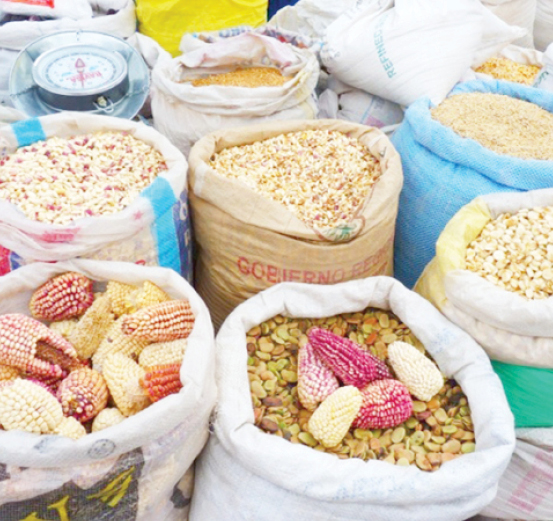
Years of conflict in North East Nigeria have forced many vulnerable farmers into distress sales, leaving them trapped in a situation where they must sell food crops meant for their families to meet immediate needs, a new study has shown. A recent study published in Applied Studies in Agribusiness and Commerce (APSTRACT) has revealed how farming households in communities ravaged by insurgency now sell a significant portion of their harvest soon after harvest to pay for food, healthcare, school fees, debts and other pressing expenses. The research, which surveyed 525 widowed cowpea farmers across Adamawa, Borno, Gombe and Yobe states, found that increased commercialisation among the widows was associated with poorer welfare outcomes rather than improved livelihoods. According to the researchers, many of the widows were not selling because they had surplus produce, instead, they were compelled to sell a large share of their harvest to meet urgent household needs, a practice the study described as distress sales. Troops: How We foiled abduction of students in Borno School Shettima departs Abuja for 69th ECOWAS summit in Sierra Leone While the practice provides short term relief, development experts warn it leaves many households with little food to sustain them until the next farming season, exposing them to deeper poverty and food insecurity. The study found that every increase in the commercialisation of cowpea farming was associated with a decline in the farmers’ Progress out of Poverty Index, suggesting that greater market participation did not translate into better living standards. The researchers identified displacement as one of the strongest drivers of poverty, saying years of conflict had deprived many widows of farmland, productive assets, income opportunities and social support, forcing them to depend on distress sales to survive. They warned that promoting agricultural commercialisation alone would not reduce poverty among vulnerable farming households in conflict affected communities unless governments also addressed insecurity, displacement and limited access to productive resources. How Distress Sale is Deepening Poverty – Expert Speaking in an interview with Daily Trust, the lead author of the study, Dr Abbas Shehu of Abubakar Tafawa Balewa University (ATBU), Bauchi, said the research challenges the long-held belief that agricultural commercialisation automatically reduces poverty among smallholder farmers, particularly those affected by conflict. According to him, while previous studies generally concluded that commercialisation improves farmers’ welfare, the research found the opposite among widowed cowpea farmers in North East Nigeria. “Most previous studies established that commercialisation helps to alleviate poverty. But in our study, we found that as these widowed farmers sell more of their cowpea, they are actually going deeper into poverty.” The agricultural economist said many people assume farmers become poorer because they sell their produce immediately after harvest when prices are relatively low, explaining that the study revealed more than that. “Usually, when farmers sell at harvest, prices are not that high, although nowadays some can still make profits. “What we found from the scientific evidence is that these women are selling because they need cash to meet immediate household needs, whether it is healthcare, their children’s education or other pressing family expenses. “They don’t have anything else to rely on except selling their produce. “The study brings out something new. If people are selling under distress, commercialisation will not lift them out of poverty. Instead of helping them escape poverty, they become poorer and poorer.” The expert further explained that commercialisation simply measures the proportion of a farmer’s output that is sold and should not be mistaken for prosperity. “Even if you are farming at a subsistence level, once you sell part of your produce, you are commercialising your output. “The problem is not commercialisation itself. The problem is that these women are selling under distress, not because they have surplus production.” Why IDP Widows Are Worse Off Shehu said widows living in internally displaced persons (IDP) settlements recorded worse poverty levels because years of conflict had stripped many of them of their means of livelihood. He said many lost their husbands, farmland, productive assets and social support networks, forcing them to rebuild their lives from scratch. “Most of them don’t even have farmland. They have to rent or borrow land. They lost their assets and the networks that supported their livelihoods. That is why there is a need for institutional intervention to support these farmers.” He also explained that the Progress out of Poverty Index used in the study measures the likelihood of households moving out of poverty based on their assets and consumption pa
Don't miss out on breaking stories and in-depth articles.