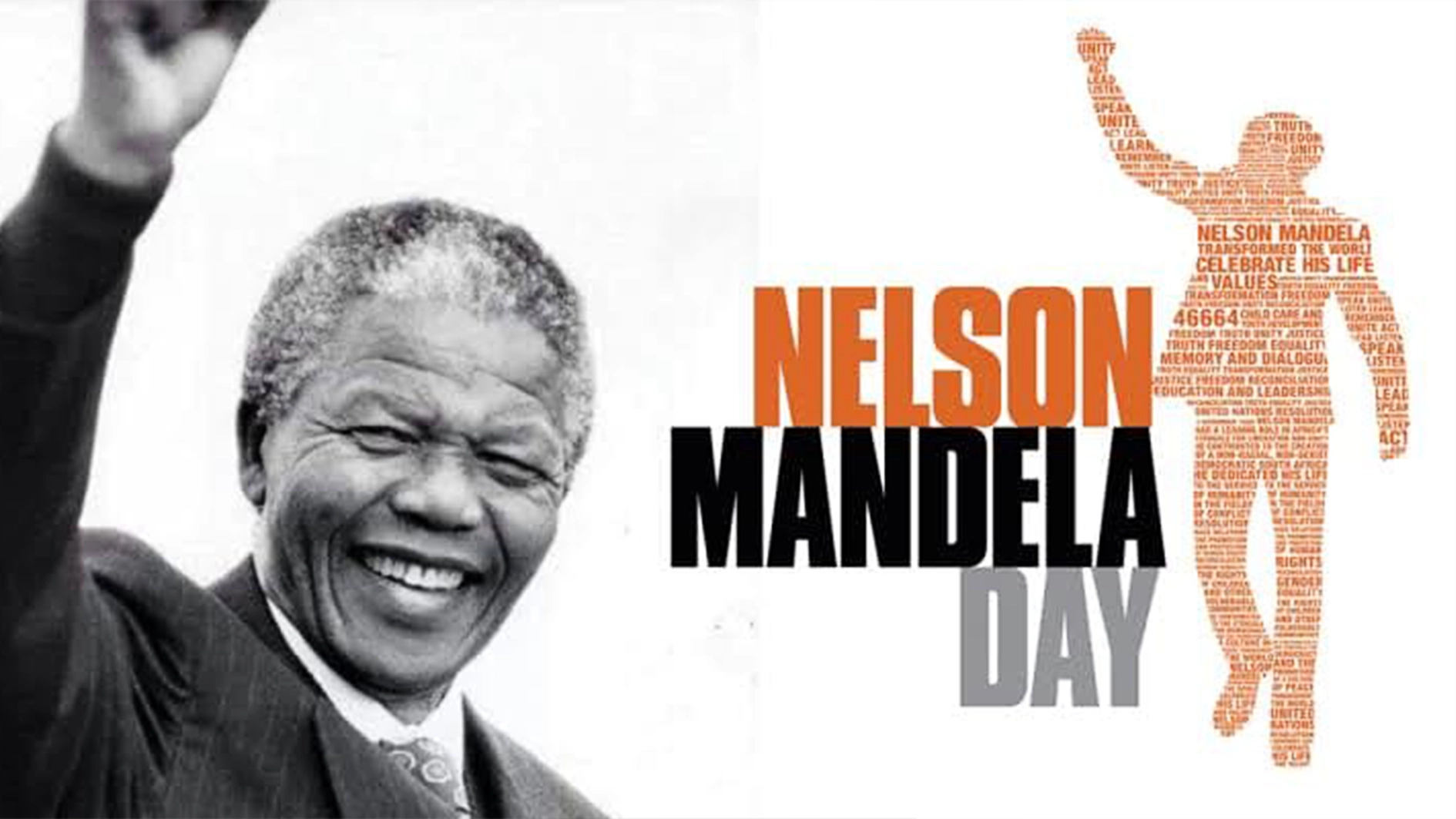
– Demands justice for victims Onyebuchi Ezigbo in Abuja Amidst growing concerns over the protest by some citizens of South Africa forcing fellow African immigrants including Nigerians to abandon their businesses and return to their home countries, scholars, pro-democracy and human rights activists have faulted the action, describing it as a negation of the ideals of freedom which Nelson Mandela fought for in his lifetime. They called for symbolism and reconciliation as exemplified by Nelson Mandela and encourages young people to mobilize and seek for a new Africa. While condemning anti immigrants’ attacks, the leadership of the Academic Staff Union of Universities (ASUU) said that Nigeria should push for justice for the victims of xenophobia, insisting that perpetrators are only punished but compensations must be paid to those who lost their lives and properties as a result of the incident Speaking at the event marking the 2026 Nelson Mandela International Day held on Saturday in Keffi, Nasarawa State, Pro-chancellor & Chairman of Governing Council, Nasarawa State University, Keffi (NSUK). Prof. Attahiru Jega, said that Mandela stood for a democracy that is sustained through sacrifice, tolerance, dialogue, respect for diversity, and the collective pursuit of the common good. However, Jega said that the recent xenophobic incidents in South Africa, “do not reflect the ideals and enduring legacy of Nelson Mandela, who championed unity, equality, human dignity, and peaceful coexistence among all people, regardless of their nationality or background”. Represented by Mr. Thomas Ari Ogiri, member of Governing Council of NSUK Jega said that Nelson Mandela’s struggle was not merely for the freedom of South Africans but for the universal values of justice, peace, and human rights. “Today, we honour a man whose unwavering courage, resilience, and commitment to justice transformed a nation divided by apartheid into a democracy founded on equality, human dignity, reconciliation, and the rule of law,” he said. The commemoration jointly organised by the Centre for Democracy and Development (CDD) and ASUU sought to highlight the lofty ideals and principles of freedom and social justice which Mandela struggled to institute in South Africa. Speaking on the theme: “Mandela’s Long Shadow: Foreign Influence Campaigns and Struggle for South Africa’s Democratic Identity”, the Chairman of the Governing Council of the Centre for Democracy and Development (CDD) and former General Secretary of the Nigeria Labour Congress, Comrade John Odah said that a curious study of the situation in both Nigeria and South Africa showed external forces maybe at play trying to destabilize the continent. He cautioned that the dream of a united Africa, conceived by the founding fathers with the establishment of the Organisation of African Unity in 1963, now the African Union, must not be derailed by the forces seeking to undermine Mandela’s vision and South Africa’s democratic ideals. He said: “Some of the issues fueling the current crisis back home in our country are being created by actors who are acting on the instructions of extra continental forces who do not want Nigeria to realize it’s full potentials with our huge resources and they see South Africa as the next country that will put Africa ahead along with Nigeria. What they are trying to do is to scatter it”. While condemning xenophobic attacks in South Africa, ASUU urged African leaders to also condemn it and take a united action to discourage it. ASUU urged the Government of South Africa, civil society organisations, labour unions, universities, youth movements and all democratic forces to reject xenophobia, resist divisive identity politics, and reaffirm the Pan-African values that Nelson Mandela embodied. “We equally urge African governments to deepen continental cooperation, protect the rights and dignity of all African citizens wherever they reside, and ensure that those responsible for xenophobic violence are brought to justice”. The union said that, “the greatest tribute to Nelson Mandela is not merely to celebrate his memory but to continue his unfinished struggle for a just, peaceful, democratic, united and prosperous Africa—an Africa where no citizen is persecuted because of nationality, ethnicity or origin, and where the spirit of Ubuntu triumphs over fear, hatred and division”. While reaffirming that African unity remains indispensable to the continent’s development, the union said: “No nation can truly be free while injustice, poverty, corruption, discrimination, inequality persist. South Africa democratic identity must therefore continue to be anchored on constitutionalism, accountability, inclusiveness, respect for human dignity, and upon African ideals that sustain th
Don't miss out on breaking stories and in-depth articles.