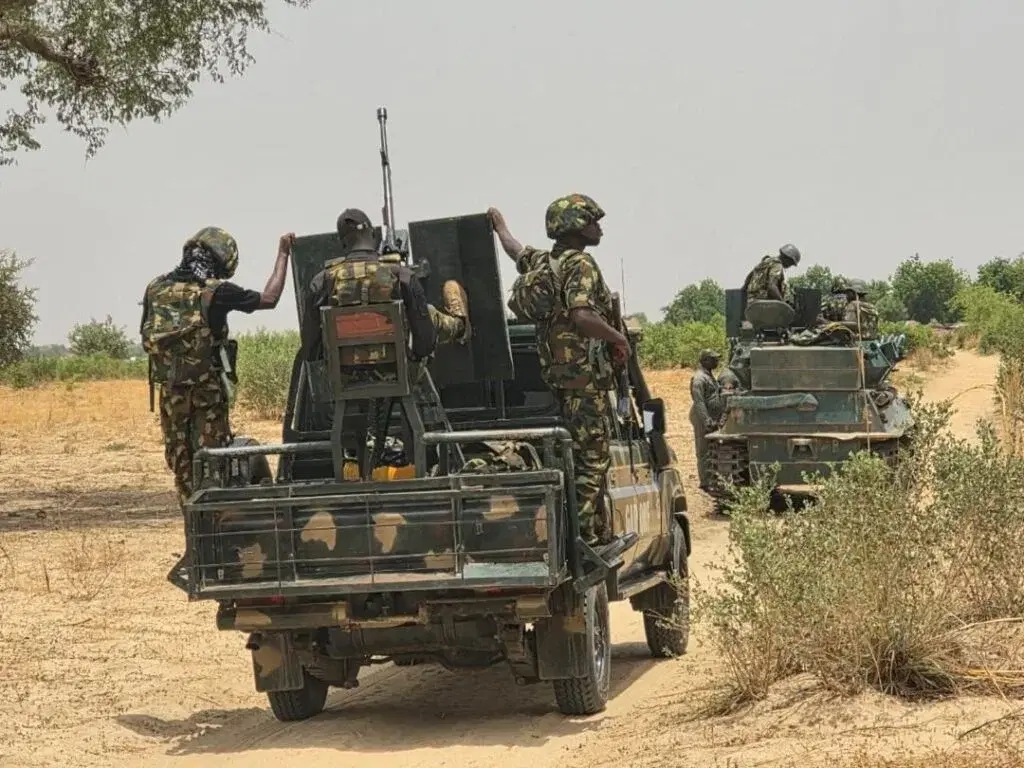
*Says renewed diplomacy among W’African nations yielding results *Hails reopening of Nigeria-Niger border *Urges terrorised African nations to fight poverty Emmanuel Addeh in Abuja The United Nations (UN) has warned that terrorist groups operating in northern Nigeria and across the West African and Sahel region are becoming increasingly sophisticated, deploying drones, advanced communications technology and cryptocurrencies to strengthen their operations. The warning came during a briefing to the United Nations Security Council by the Special Representative of the Secretary-General for West Africa and the Sahel and Head of the United Nations Office for West Africa and the Sahel (UNOWAS), Leonardo Simão, who presented the Secretary-General’s latest report on developments in the region covering the period from November 29, 2025 to June 30, 2026. The report was presented as the Security Council reviewed the security, political and humanitarian situation in West Africa and the Sahel, a region battling persistent terrorist violence, political transitions and growing humanitarian needs.It also comes against the backdrop of the council’s recent decision to extend the mandate of UNOWAS until January 31, 2029, reflecting continued international support for preventive diplomacy in the region.Addressing the council, Simão said terrorist organisations were evolving rapidly, making the threat more difficult to contain. “Armed groups are increasingly using drones, sophisticated communications and cryptocurrencies while coordinating operations across borders,” he said. According to him, the activities of the groups have become intertwined with transnational organised crime and are aimed at consolidating territorial and economic control while weakening public confidence in state institutions and damaging social cohesion.The UN briefing came just weeks after the US disclosed what it described as the largest seizure of terrorist equipment in Nigeria since the September 11, 2001 attacks. According to Dr. Sebastian Gorka, who serves as the United States Deputy Assistant and Senior Director for Counterterrorism, a joint counterterrorism operation with Nigerian forces led to the recovery of a vast cache of electronic devices and other operational materials from jihadist groups. He stated that it was so extensive that an additional aircraft was required to transport the confiscated equipment for forensic analysis by American intelligence agencies. The operation, he said, also resulted in the killing of 199 jihadists during a single raid.But Simão noted that Nigeria, Niger and Burkina Faso have continued to suffer terrorist attacks, kidnappings and significant civilian casualties. Simão told the council that ‘the human cost of the violence is devastating,’ disclosing that about 6.8 million people had been displaced across the region, while another 1.28 million had become refugees or asylum seekers.According to him, humanitarian access remained severely constrained by insecurity and funding shortages, leaving women, children and young people to bear the greatest burden of the crisis. “The problem is acute, especially in the central Sahel and northern Nigeria…Their actions intersect with transnational organised crime, and are aimed at consolidating territorial and economic control, erosion of public confidence in State authority, with serious damage to social cohesion,” he warned. Despite the deteriorating security situation, the UN pointed to signs of improving regional cooperation, citing the reopening of the Kamba border crossing between Nigeria and Niger as one of the practical outcomes of renewed diplomatic engagement.He also referenced progress by the Cameroon-Nigeria Mixed Commission in implementing the 2002 International Court of Justice (ICJ) judgment on the countries’ land and maritime boundary, describing it as evidence that dialogue could resolve longstanding disputes. “These are some examples of regional efforts towards dialogue,” he emphasised.The UN stressed that military operations alone would not eliminate terrorism, urging governments and the international community to tackle the underlying drivers of violent extremism. “Fighting poverty and vulnerability must therefore remain a common objective in the broader fight against terrorism,” he said.“Regional actors are working hard to find solutions,” he added, highlighting that ECOWAS has renewed efforts to operationalise its standby force, but at a lower dimension than needed, due to financial limitations. Besides, the 15 council members broadly agreed that terrorism in West Africa and the Sahel was becoming more sophisticated and increasingly linked with organised crime and illicit trafficking, underscoring the need for stronger regional cooperation.Several delegations, including those from the US, China , Russia, UK, France,
Don't miss out on breaking stories and in-depth articles.