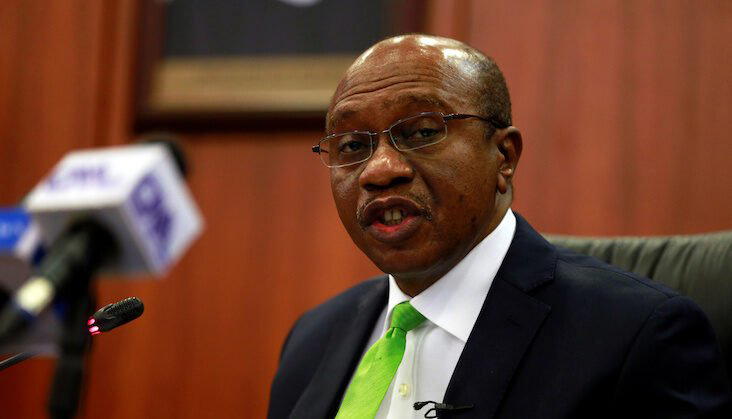
Experts have weighed in on the next steps the federal government can take following the final forfeiture order by the Supreme Court on the properties of former central bank governor, Godwin Emefiele Daily Trust reports that the Supreme Court last week 3Friday affirmed the final and permanent forfeiture of seven landed properties, as well as the sum of $2,045,000 and share certificates linked to Emefiele to the Federal Government. Reacting on the development, a stakeholder in Nigeria’s housing development sector, ESV Olufemi Adedamola Oyedele while commending the Supreme Court said the properties should be sold through bidding to Nigerians at affordable rates. “I give kudos to the Supreme Court of Nigeria for upholding the truth and for ensuring the proceeds of illegal activities by Godwin Emefiele are returned back to Nigeria. “The properties should be revalued to know the market values by estate surveyors and valuers and after the valuation, the Federal Government, through Federal Ministry of Housing and Urban Development should take over the housing estate to complete the houses and provide infrastructure like tarred roads, pipe borne water, sewerage and street lights in the estate. The properties should then be sold through bidding at affordable rates,” He however cautioned the federal government over past experiences where forfeited properties are relooted. “From past experience, we have seen cases where the government, for example, Ibrahim Magu was accused of converting over 100 seized properties by the Presidential Committee on Audit of Recovered Assets (PCARA). “So, I will advise the Economic and Financial Crimes Commission (EFCC) to dispose of the properties as soon as possible through an open bid or auction by professionals or set up a committee headed by a trusted Nigerian like Former Governor Babatunde Raji Fashola, Reverend Father Kuka, Professor Attahiru Jega and other, for transparency’s sake,” he added. Another expert, Bagudu Yunusa urged the government to offer the properties at below-market rates as a temporary solution to the country’s housing deficit Yunusa said “I believe that selling the properties at discounted prices would allow average Nigerians to access luxury homes and significantly help reduce the housing deficit. “It will also do much in reducing the housing deficit in the country. Aside from this one, there are a lot of unoccupied estates dotting the Nigerian landscape that need to be acted on so it will become a rule that since houses are built to be inhabited, anyone who builds without letting it out to the public should be asked why.” he added. Back story The Supreme Court set aside the judgment of the Court of Appeal and upheld the decision of the Federal High Court on the grounds that they were reasonably suspected to have been acquired with proceeds of unlawful activities. Daily Trust reports that a Federal High Court sitting in Lagos had earlier ordered the final forfeiture of the assets after which the appellate court upturned the decision. Specifically, the final forfeiture order was originally granted on November 1, 2024, by Justice D.I. Dipeolu in Suit No. FHC/L/MISC/500/24, following an application filed by the EFCC through its then counsel, Rotimi Oyedepo, a Senior Advocate of Nigeria (SAN). Oyedepo, who is now the Director, Public Prosecution, said its application was pursuant to Section 17 of the Advance Fee Fraud and Other Fraud Related Offences Act, 2006, and Section 44(2)(b) of the Constitution of the Federal Republic of Nigeria, 1999 (as amended). The application, according to the anti-graft agency, brought as an action in rem, sought the final forfeiture of properties reasonably suspected to have been acquired with proceeds of unlawful activities. Checks showed that the application for the forfeiture was supported by an affidavit deposed to by David Jayeoba, an investigating officer with the EFCC, who averred that investigations revealed that the assets were reasonably suspected to have been acquired with proceeds of unlawful activities. In its originating motion, the Commission urged the court to grant the final forfeiture under the provisions of Section 17 of the Advance Fee Fraud and Other Fraud Related Offences Act, 2006, contending that the assets were liable to forfeiture because they were reasonably suspected to have been acquired through unlawful means Following the final forfeiture order made by the Federal High Court, Emefiele challenged the decision before the Court of Appeal, which reversed the judgment of the trial court. Dissatisfied with the decision of appellate court, the anti-graft agency approached the apex court, contending that the assets were liable to forfeiture because they were reasonably suspected to have been acquired unlawfully. In a unanimous judgment delivered by a five-member panel of the apex court led by Justice Ibrahim Mohammed Saulawa, the court set aside the judgment of the Cou
Don't miss out on breaking stories and in-depth articles.