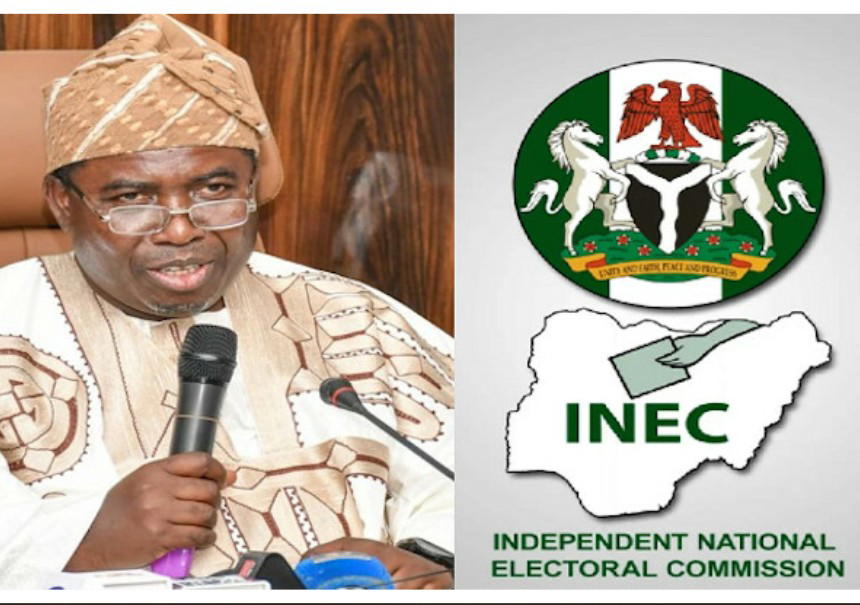
Iyobosa Uwugiaren writes that for Nigeria’s political parties preparing for 2027 general election, the recent conflicting pronouncements by the Court of Appeal create uncertainty and confusion. Nigeria’s journey toward the 2027 general election has entered a familiar yet unsettling phase—one in which the judiciary, rather than politicians, has become the centre of electoral uncertainty. Within days, two separate panels of the Court of Appeal sitting in Abuja delivered judgments that appear to pull the country’s electoral legal framework in different directions. One reaffirmed the Independent National Electoral Commission’s (INEC) authority to issue election guidelines and determine timelines for electoral activities. The other struck down crucial provisions of the Electoral Act 2026 governing political party membership registers and candidate nominations, declaring them inconsistent with the Constitution. Ordinarily, such conflicting pronouncements from the same appellate court would trigger concerns about the stability of the electoral process. Political parties, election monitors, and political analysts would question the legal framework governing party primaries, lawyers would anticipate another round of litigation, and observers would worry about the possibility of delays to election preparations. Yet INEC has remained remarkably calm. A senior official told THISDAY last week that the judgements, though significant, do not pose any threat to preparations for the 2027 polls or the commission’s ability to conduct free, fair and credible elections. Political analysts said the assurance reflected more than institutional confidence; it speaks to the constitutional architecture of Nigeria’s electoral system. Indeed, while individual provisions of the Electoral Act may be subjected to judicial scrutiny, the commission’s existence and powers are rooted in the constitution. According to a senior lawyer, “Unless the constitution itself is altered, INEC retains responsibility for organising elections, maintaining the voters’ register, supervising political parties during elections, accrediting observers and announcing results. In that sense, the latest court decisions affect aspects of electoral administration rather than the commission’s core mandate.” The first judgement, which overturned the Federal High Court’s nullification of INEC’s revised timetable for the 2027 election, the lawyer said, reinforces this constitutional position. The appellate court held that INEC acted within its lawful authority when it fixed timelines for party primaries and candidate nominations. In reaching that conclusion, the court effectively recognised that election management requires a degree of administrative discretion that should not be lightly interfered with by the judiciary. This is an important principle and feature for any democracy. Elections are not organised overnight. They involve years of planning, procurement, recruitment of personnel, voter education, security coordination and logistical deployment across thousands of polling units across the country. Every stage depends on carefully coordinated schedules. Without the authority to determine timelines, an election management body like INEC would struggle to coordinate political parties, security agencies and electoral officials. The Court of Appeal’s decision therefore strengthens INEC’s operational independence at a critical stage of preparations for the 2027 elections. However, the second judgement in the estimation of a legal mind presents a more complicated legal landscape. According to the lawyer, by invalidating Sections 77(5), (6) and (7), as well as Section 84(2) of the Electoral Act 2026, the appellate court questioned the legal framework governing party membership registers and the nomination of candidates. True, these provisions are central to Nigeria’s electoral process because they regulate how political parties determine who qualifies to contest elections under their platforms. Candidate’s nomination has historically been one of the weakest points in Nigeria’s democracy. Most election-related litigation begins long before voters cast their ballots. Aggrieved aspirants frequently challenge the conduct of party primaries, alleging manipulation of delegates, irregular membership registers or breaches of internal party rules. By striking down statutory provisions governing these processes, the Court of Appeal has reopened debates about the constitutional limits of legislative regulation of political parties. For political parties preparing for 2027 poll, this creates uncertainty and confusion. If the invalidated provisions remain unenforceable, parties may need to rely more heavily on their constitutions and internal guidelines, while awaiting either Supreme Court clarification or legislative amendments. This cou
Don't miss out on breaking stories and in-depth articles.