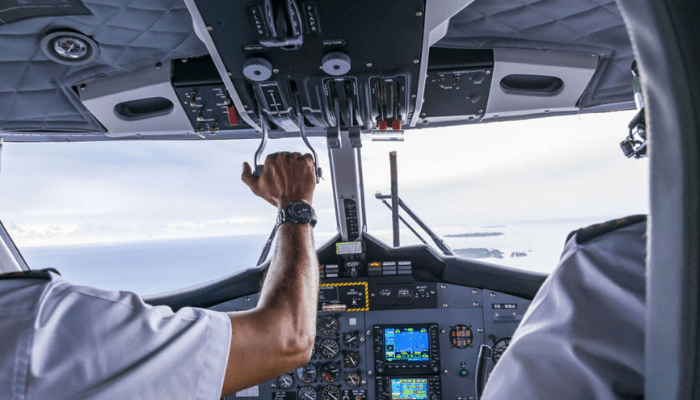
Nigeria’s private jet fleet has grown to nearly three times the size of the country’s commercial airline fleet, a development that industry stakeholders say reflects weak regulatory oversight and has cost the federal government more than N120 billion through illegal charter operations over the past decade. The minister of Aviation and Aerospace Development, Festus Keyamo, recently disclosed that Nigeria now has the largest business aviation market in Africa, with about 240 private jets in operation compared to roughly 80 aircraft serving the country’s scheduled commercial airline sector. Rather than signifying a thriving aviation industry, experts say the rapid expansion of private aviation has exposed regulatory loopholes that allow many operators to conduct unauthorised commercial charter services while evading taxes, regulatory fees and safety requirements. A report by the Ministerial Task Force on Illegal Private Charter Operations, constituted by the minister, revealed that Nigeria has lost over N120 billion in revenue due to tax evasion, regulatory gaps and weak enforcement by the Nigerian Civil Aviation Authority (NCAA). The report also identified major security concerns, poor inter-agency collaboration and outdated regulations that continue to undermine the orderly development of the aviation industry. According to the findings, many private jet owners exploit the Permit for Non-Commercial Flight (PNCF) licence, which is strictly for private use, to operate commercial charter services without complying with the stricter regulatory and financial obligations that apply to commercial operators. The task force further found that some of these illegal operations are facilitated through collaboration with holders of valid Air Operator Certificates (AOCs), who allegedly disguise unauthorised charter flights under their operating licences. Security agencies have also expressed concern over the activities of foreign-registered private aircraft operating within Nigeria. Authorities, including the Office of the National Security Adviser, warn that opaque passenger manifests and inadequate monitoring make such aircraft vulnerable to misuse for money laundering, drug trafficking and illegal cross-border movements. Speaking, an aviation security expert, Capt. John Ojikutu (rtd), called for a comprehensive audit of private jet operations in Nigeria, urging the Federal Government and aviation regulatory agencies to investigate the ownership, registration status and security compliance of aircraft operating within the country’s airspace. Ojikutu, who is the Chief Executive Officer of Centurion Aviation Security Services, said the growing number of private jets in Nigeria raises critical national security and regulatory concerns that require urgent attention from relevant authorities. He urged the government to identify the beneficial owners of the aircraft and examine any relationships among the owners, public officials, and the management of aviation agencies to ensure transparency and accountability in the sector. According to him, regulators should also verify the number of foreign-registered aircraft operating in Nigeria, determine whether they possess valid security clearances to enter and operate within the country’s airspace, and establish whether such operators are complying with the terms and duration of their permits. The aviation expert further called on the authorities to identify aircraft that may have exceeded the validity of their security clearances and ascertain whether they have been properly registered under the Nigerian aircraft registry where required. Ojikutu also urged security agencies to investigate whether any private aircraft have been used to facilitate illegal mining, mineral scavenging, banditry, kidnapping or other criminal activities, stressing that such investigations are necessary to strengthen national security. “There are many questions for everyone to ask those in our government administration and the management of the aviation agencies,” he said. His comments come amid increasing scrutiny of private jet operations in Nigeria, with stakeholders raising concerns over regulatory oversight, compliance with aviation rules and the potential misuse of private aircraft. Ojikutu maintained that a thorough audit of private jet operations would help improve transparency, enhance regulatory compliance and reinforce confidence in Nigeria’s aviation security framework. Also speaking, a former Nigerian Airways pilot, Capt. Muhammed Gbadamasi, said private jet owners exploited regulatory loopholes to evade taxes and other statutory obligations in Nigeria. Speaking to LEADERSHIP, Gbadamasi described the practice as a longstanding challenge that has persisted for decades, saying successive governments had largely overlooked tax evasion in the private aviation sector for political reasons, allowing operators to exploit weaknesses in the regulatory framework.
Don't miss out on breaking stories and in-depth articles.