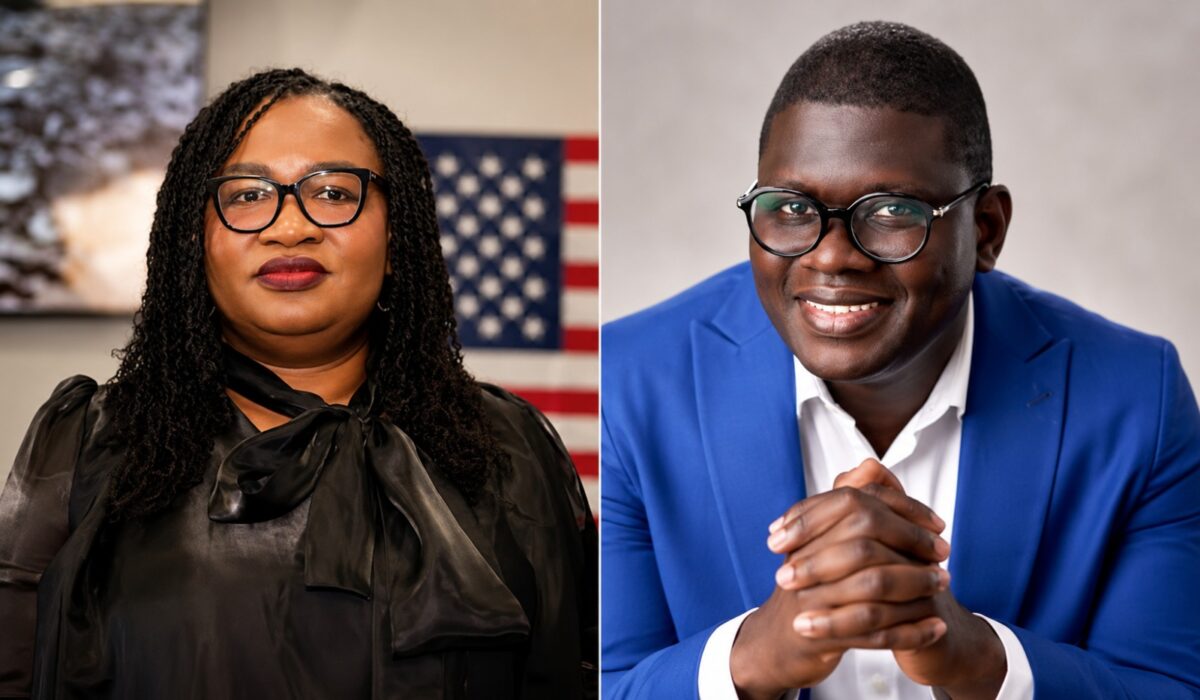
Chief Executive Officer of Winhomes Limited, Engr. Stella Okengwu, and chairman of Gtext Holdings, Mr Stephen Akintayo, have called for an independent investigation into whether the alignment and design of the Lagos-Calabar Coastal Highway contributed to the severe flooding recently experienced in parts of Lagos State. The two real estate stakeholders, who spoke separately during a television programme monitored in Lagos, argued that while the state has historically experienced flooding, the scale of the flooding this year has raised legitimate questions that require technical and environmental assessment rather than political arguments. Okengwu commended Governor Babajide Sanwo-Olu and the Lagos State commissioner for the Environment, Tokunbo Wahab, for their efforts to mitigate the flooding, but insisted that experts should objectively examine whether changes made to the original 2006 gazetted alignment of the coastal highway and aspects of its drainage design may have worsened the flooding. “Lagos has always experienced flooding. This is not in dispute. But many residents would agree that what we are witnessing today appears more widespread and severe than in previous years. “I believe it is both reasonable and necessary for experts to objectively examine whether aspects of the road design, construction, drainage system and any departure from the 2006 gazetted alignment may have contributed in any way to this current situation,” she said. She said she had raised similar concerns during the project’s planning stage, stressing that her objections were based on engineering considerations rather than personal interests. According to her, the original gazetted route had already undergone the necessary environmental assessments before the alignment was altered. Okengwu, an engineer by profession, alleged that after questioning the project, the road alignment was redirected through her estate, resulting in the demolition of properties. She further claimed that the engagements she had with the Minister of Works over the issue were unsatisfactory, alleging that concerns about the environmental impact assessment were dismissed. The Winhomes CEO also renewed her call for compensation, saying she and other investors had committed significant resources to Nigeria after encouraging diaspora and foreign investors to invest in the country. She expressed concern that the experience had undermined investor confidence, noting that many investors now question whether properties developed with valid government approvals could still be demolished without compensation. According to her, attracting investment requires not only infrastructure development but also respect for due process, environmental regulations and the rule of law. On the role of the Lagos State Government, Okengwu maintained that the state should not be blamed for the demolitions, arguing that the Federal Ministry of Works handled the exercise. In contrast, the state government has focused on mitigating the impact of the flooding. Akintayo, also speaking on the programme, said the flooding was the result of several factors, including blocked drainage channels, poor environmental planning, and the construction of the coastal highway at a level significantly higher than that of surrounding communities. He argued that the highway’s elevation had made it difficult for floodwater to drain naturally from adjoining areas. According to him, the challenge was not the coastal highway itself but the decision to deviate from the original gazetted route closer to the Atlantic coastline. He explained that moving the road further inland created what he described as a “valley effect,” making it more difficult for water to flow out of neighbouring communities. Akintayo also rejected suggestions that property developers were primarily responsible for the flooding, noting that developers obtain government approvals before embarking on projects and are subjected to inspections by relevant agencies. He alleged that irregular approvals granted by some government officials should also be investigated, rather than placing blanket blame on developers. While acknowledging that some developers may have violated regulations, he insisted that those found culpable should face sanctions rather than the wholesale demolition of investments worth billions of naira. The real estate investor proposed establishing an independent compensation fund, jointly managed by the Federal Government, Lagos State Government, and industry stakeholders, to address losses arising from the coastal highway project. He also called for greater collaboration between government and the private sector to restore investor confidence, warning that uncertainty surrounding property rights was discouraging both local and diaspora investment in Nigeria’s real estate sector. Akintayo maintained that while the Lagos-Calabar Coastal Highway remains an important infrastructure projec
Don't miss out on breaking stories and in-depth articles.