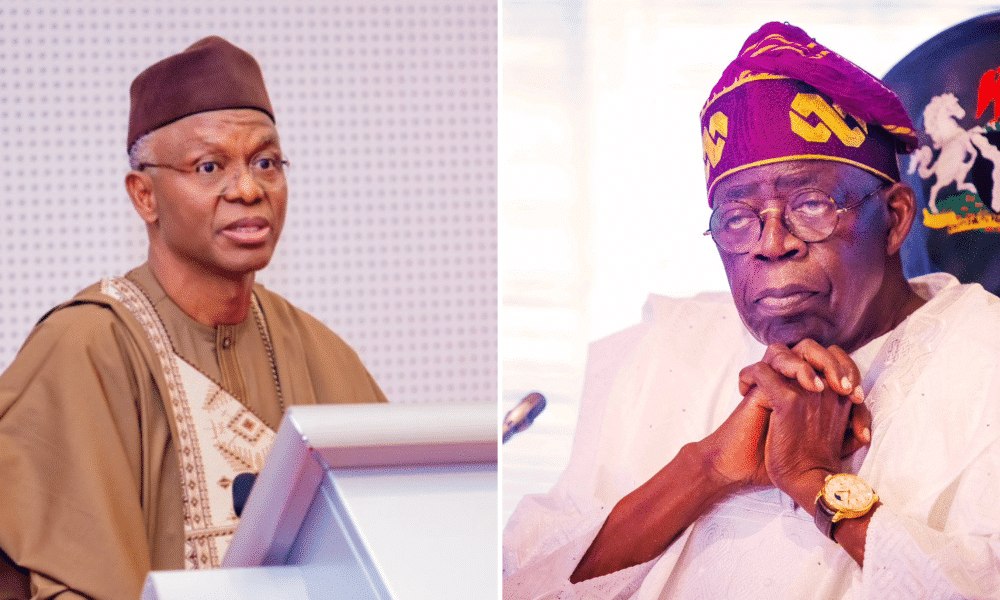
SAMBO TURAKI urges ADC to allow due process to prevail When politicians can no longer defend the facts, they often resort to propaganda. When evidence becomes inconvenient, they manufacture conspiracy theories. And when criminal prosecution begins to follow due process, they suddenly discover the language of political persecution. This appears to be the unfortunate strategy now being deployed by the African Democratic Congress (ADC) over the ongoing prosecution of its embattled chieftain and former Kaduna State Governor, Mallam Nasir El-Rufai. The recent claim by the party’s National Publicity Secretary, Bolaji Abdullahi, that the federal government intends to keep El-Rufai in custody until after the 2027 general election is cheap political propaganda, false alarm and an attempt to intimidate institutions charged with administering justice. The first principle that ADC conveniently ignored is that President Bola Ahmed Tinubu neither files criminal charges nor grants bail. Nigeria operates a constitutional democracy founded on the doctrine of separation of powers. The Independent Corrupt Practices and Other Related Offences Commission (ICPC) is a statutory investigative and prosecutorial agency created by law. The Department of State Services (DSS) equally exercises powers granted under relevant legislation. The courts determine bail applications independently. Judges evaluate evidence. Judges interpret the law. Judges determine whether bail conditions have been satisfied. To suggest that President Tinubu personally controls judicial decisions is an affront to the independence of Nigeria’s courts. Ironically, the ADC claims to defend democracy while simultaneously implying that judges merely carry out presidential instructions. That allegation is insulting. If the party genuinely believes the judiciary lacks independence, it should produce credible evidence instead of relying on political speculation masquerading as analysis. Even more disturbing is the attempt to portray El-Rufai as a “political prisoner.” Political prisoners are individuals incarcerated solely because of their political beliefs or peaceful political activities. El-Rufai is not standing trial for belonging to the ADC. He is not before the courts because he criticised government policies. He is not being prosecuted for contesting elections. He is answering criminal charges filed by competent law enforcement agencies regarding allegations arising from his tenure as governor of Kaduna State and in a separate matter involving alleged unlawful interception of communications. Whether those allegations are true or false is precisely what the courts exist to determine. That is due process. ADC’s repeated attempts to substitute courtroom proceedings with political rhetoric betray a profound misunderstanding of constitutional democracy. Perhaps the most revealing statement came when the party declared that it believed El-Rufai would remain in custody because his release would strengthen the opposition ahead of the 2027 elections. That statement inadvertently exposes the party’s real concern. Its focus is not justice. Its focus is electoral arithmetic. The implication is unmistakable: criminal proceedings should somehow be adjusted to accommodate opposition political calculations. That proposition is both dangerous and unconstitutional. Justice cannot be suspended because elections are approaching. Public officers cannot become immune from prosecution simply because they occupy influential political positions. Democracy would collapse if criminal accountability became subordinate to electoral convenience. Equally troubling is ADC’s attempt to personalise the judicial process by threatening to hold President Tinubu personally responsible should anything happen to El-Rufai in custody. Such rhetoric amounts to emotional blackmail. Nigeria’s criminal justice system operates under established legal procedures. Correctional authorities have responsibilities. Medical services are available subject to court directives. Indeed, courts have reportedly granted access to medical attention where appropriate. To transform every procedural issue into presidential responsibility is nothing more than political theatre designed to generate public sympathy. It is worth recalling that when El-Rufai wielded enormous political power as governor of Kaduna State, he consistently defended the supremacy of institutions whenever his administration exercised authority. Today, his supporters appear uncomfortable allowing those same institutions to perform their constitutional responsibilities. One cannot advocate strong institutions only when they produce favourable outcomes. The rule of law demands consistency. Even more ironic is ADC’s portrayal of El-Rufai as a
Don't miss out on breaking stories and in-depth articles.