
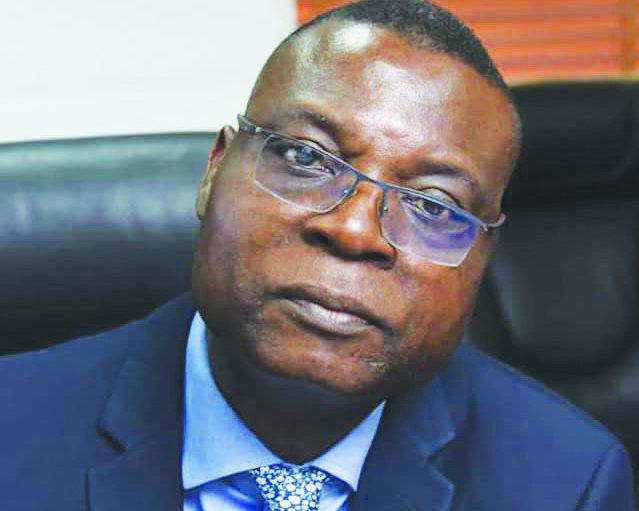
The holy book tells us that the poor will always live with us in our societies. It means you can never wish away the poor even if you are offended by their existence. No magic wand will obliterate the presence of the poor, except concerted efforts to change their status. Apart from individual efforts, nations and societies are challenged to do something about their poor, to elevate their standard and give them an acceptable modicum of reasonable living. It is common knowledge that nations that fail to take decisive action run the risk of plunging their population into multidimensional poverty. The telecom sector is more civil in this respect, quite urbane in the way it categorises poverty. You will hear expressions like access gap, the digital divide, the unconnected, the unserved and underserved but never anything related to the telecoms poor who have to be accommodated and helped by the system to get connected to the rest of humanity. There is digital poverty all over-within communities, within states and even within nations-but it is never so called because the operators are more careful in using words that can shade their potential customers. Nations and international organisations have continued to make pointed efforts to reduce the communities of the digitally disadvantaged. The other day, the International Telecommunications Union (ITU) announced that commitments under its Partner2Connect (P2C) Digital Coalition have surpassed $100bn, thus “exceeding a milestone in the global effort to expand global Internet connectivity and bridge the digital divide.” Ironically, the UN agency for digital technologies stated that, with one-quarter of the world’s population offline, commitments to Partner2Connect will directly support the goal of achieving universal, meaningful connectivity-ensuring everyone has access to affordable and reliable Internet and the skills to use it safely and effectively. It is not just a pile of cash the ITU is raising through P2C. Some of the pledges will come in kind. For instance, the Asian Development Bank (ADB) has pledged to implement the Asia-Pacific Digital Highway, aiming to mobilise $20bn in public and private investments by 2035 to improve digital connectivity for up to 650 million people across the region through expanded cross-border digital infrastructure, regional digital hubs, and improved broadband access. And part of Microsoft’s $18bn pledge is to advance inclusive digital transformation by connecting more than 450 rural and underserved community hubs in Kenya through satellite-enabled infrastructure integrated with Azure Space. The good news is that Nigeria is very much part of this salutary global effort to accommodate and solve the problems of the digital poor by getting them connected to the footprints of modern technology. Dr Bosun Tijani, Minister of Communications, Innovation and Digital Economy, is a tech evangelist in this respect. As Chair of the 2026 ITU Council, Tijani has tried to mobilise his African colleagues into action to ensure they build enough digital capacity to cover the needs of even the disadvantaged. While welcoming participants to the 7th Ordinary Session of the Conference of Plenipotentiaries-African Telecommunications Union (ITU), Tijani stressed that only cooperation among member states can help enhance regional digital integration, innovation and sustainable economic development across Africa. Working within the global digital coalition to P2C goals for Nigeria, Tijani, encouraged by his boss, President Bola Ahmed Tinubu, has introduced a cocktail of programmes, part of which will derive from commitments by the Nigerian Communications Satellite Limited (NIGCOMSAT). They include the following key targets that are measurable: Local Government Connectivity-connecting all 774 local government secretariats across Nigeria to enhance internet access and promote e-governance; Public Service Infrastructure-broadening coverage to 30,000 Primary Health Centres and 100,000 schools to bridge the rural-urban digital divide; and Satellite Infrastructure Expansion-deploying multi-band and dual-band satellites to expand coverage for the roughly underserved population in sub-Saharan Africa. The minister’s other measurable programmes include: Project BRIDGE-partnering with the International Finance Corporation (IFC) to secure private equity for a $2bn initiative to roll out 90,000 km of open-access fibre optic cable across Nigeria; China’s Connectivity Support-funding from China Industrial Bank and SINOSURE under the Nigeria Universal Access Project (NUCAP) to connect over 20m Nigerians in underdeveloped communities; EU Digital Economy Package; and Digital Villages-collaborating with Globacom and Huawei to establish solar-powered, telemedicine-enabled digital learning hubs in rural communities. A major attraction in what Minister Tijani is doing is that all the programmes are measurable, and it will not be out of place for stake
Don't miss out on breaking stories and in-depth articles.