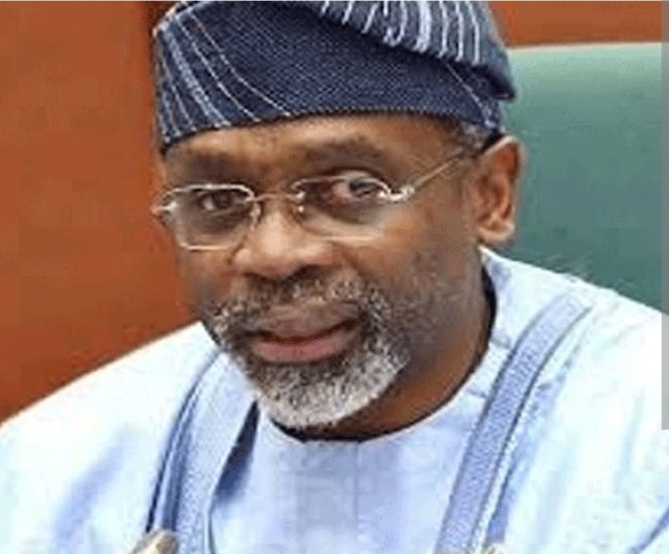
President Olusegun Obasanjo inadvertently created what has become a political dilemma for President Bola Ahmed Tinubu. In his memoir My Watch, Obasanjo explained that he introduced the office of Chief of Staff in 1999, drawing inspiration from the White House model. The intention was straightforward. It was to create an efficient gatekeeper who would coordinate presidential activities, manage information flow, oversee access to the President, and ensure that government functioned smoothly. When the action or inaction of such powerful unelected officials dominates public discourse, the attention of government shifts from governance to damage control. In any presidential system, the Chief of Staff is expected to be influential, but discreet. The office derives its authority entirely from the President. Its greatest strength is often its invisibility. As former White House Chief of Staff Leon Panetta famously observed, “The Chief of Staff succeeds when the President succeeds.” The office exists to amplify the President’s agenda, not to compete with it. Perhaps recognising the enormous influence that could accumulate around such an office, President Umaru Musa Yar’Adua later abolished the position during his administration and instead relied more heavily on a network of senior advisers. Whether one agrees with that decision or not, it reflected an awareness that concentration of influence around one unelected official could create political complications. This brings us back to President Tinubu. He appointed Femi Gbajabiamila as his Chief of Staff on June 2, 2023. Given Gbajabiamila’s extensive legislative experience and political stature, many expected him to provide strategic coordination for the administration. However, over time, controversies surrounding the Chief of Staff have increasingly competed with the government’s policy agenda. Allegations; ranging from claims relating to appointments and contract awards to more recent controversies connected with the Presidential Foreign Intervention Promotion Council (PFIPC), have generated sustained public debate. While allegations remain allegations unless established through due process, their cumulative political effect cannot be ignored. The PFIPC controversy has become particularly significant because it shifted public attention from government programmes to questions surrounding access, influence and accountability within the Presidency. The self-proclaimed Director-General of the organisation publicly claimed that the Chief of Staff had questions to answer. Political figures, including the National Chairman of the Social Democratic Party, Professor Sadiq Gombe, and former presidential spokesman Laolu Akande, publicly called for greater accountability, with some suggesting that the Chief of Staff should either step aside or be relieved of his duties while issues were clarified. In response, Gbajabiamila filed a N15 billion defamation suit against his accuser, choosing the courts as the forum for resolving the allegations. That is entirely within his legal rights. Yet litigation does not necessarily eliminate political consequences. Court proceedings may determine legal liability, but they rarely end political narratives. Before public attention shifted away from the PFIPC issue, another controversy emerged. An exclusive report by Peoples Gazette alleged that shortly after President Tinubu assumed office, the Chief of Staff relied on a purported legal basis to direct the allocation of substantial funds connected to oil sector revenue collections. The report further alleged that the legal authority cited did not exist and questioned the justification for the expenditure. These are serious allegations that deserve transparent clarification by the relevant institutions. Equally important, any conclusion should await verifiable evidence and the appropriate legal or administrative processes. Nevertheless, politics often operates differently from the courtroom. Perception frequently travels faster than proof. The challenge for President Tinubu is therefore not merely legal. It is political. Successful incumbents seeking re-election usually insist that every member of the inner circle contributes positively to the central campaign narrative. The administration wants voters to discuss economic reforms, infrastructure, security improvements and governance outcomes; not recurring controversies surrounding senior aides. Political communication experts often observe that every administration has the President as the only principal messenger. When an aide consistently becomes the subject of national headlines, the government’s strategic messaging becomes fragmented. Instead of asking whether government policies are working, public debate begins asking whether the Presidency itself is effectively managing its own house. This phenomenon is not unique to Nigeria. A useful historical example is the Iran-Contra affair, which came to light in 1986 during Pre
Don't miss out on breaking stories and in-depth articles.