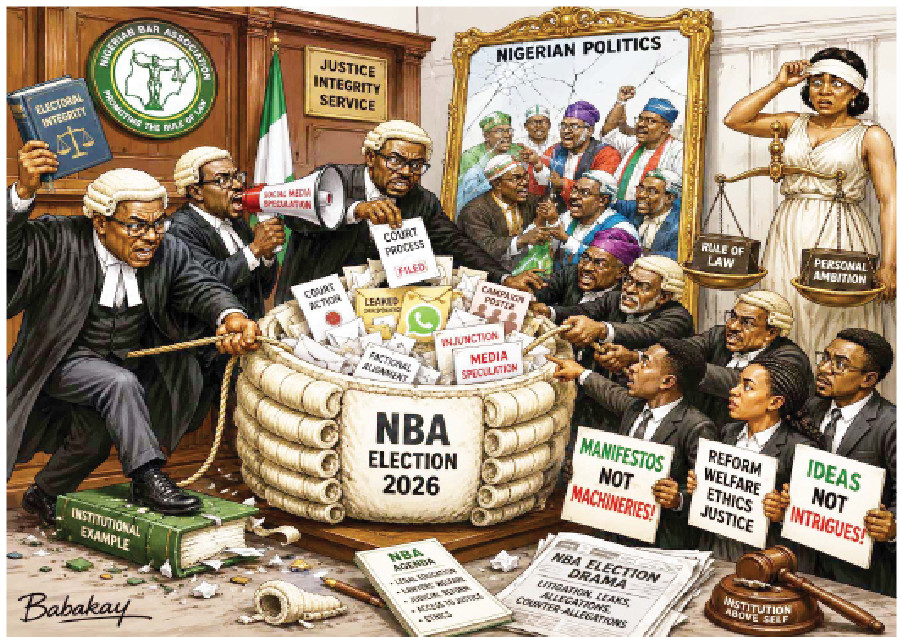
I have a simple philosophy: wherever people gather (especially men), there is personal interest and profit to be made therein. Human beings rarely compete for leadership purely out of altruism. Whether in politics, religious organisations, estate associations, traditional institutions or professional bodies, positions confer influence, prestige, networks and the opportunity to shape outcomes. Ambition, therefore, is inevitable. The Nigerian Bar Association (NBA) is no exception. The recently concluded election into the national leadership of the Bar demonstrated that lawyers, despite their revered role as custodians of the rule of law, are as susceptible to the intrigues of power as any other group. What should have been a celebration of ideas and competing visions became crowded by allegations, counter-allegations, lobbying, litigation, factional alignments, social media battles and endless media speculation. None of this should surprise us. Lawyers are skilled advocates. They understand strategy, persuasion and the mechanics of power. Yet there is something unsettling when the very institution that routinely demands transparency, due process and electoral integrity begins to resemble the political contests it so often critiques. That is why this election matters beyond the legal profession. The NBA is not merely another professional association. It is one of Nigeria’s most important democratic institutions. It has consistently defended constitutionalism, challenged executive excesses, spoken against authoritarianism and championed judicial independence. Its president often becomes a national voice on governance and the rule of law. Nigerians therefore expect the Bar to model the democratic values it advocates. The Politics Behind The Wig Competitive elections are healthy. They allow members to debate ideas, scrutinise candidates and choose the leadership they believe can best serve the institution. But elections should never become more important than the institution itself. Much of the public conversation around the NBA election focused less on competing agendas for reforming the profession and more on endorsements, zoning arrangements, campaign machinery, procedural disputes and factional loyalties. Court actions, leaked correspondence and public accusations frequently overshadowed substantive discussions about legal education, lawyers’ welfare, judicial reform, ethics and access to justice. For many observers, the distinction between NBA politics and Nigeria’s partisan politics became increasingly blurred. Perhaps that should give the profession pause. The issue is not that lawyers engage in politics. Politics is simply the negotiation of interests, and every organisation has interests to negotiate. The issue is whether those contests are conducted in ways that strengthen rather than diminish the institution. The intensity of the contest is hardly surprising. The NBA President is one of the most influential figures in Nigeria’s civic space, shaping debates on constitutionalism, judicial reform and the rule of law while serving as the public face of the legal profession. A position with such prestige and influence will inevitably attract fierce competition. Professional bodies should demonstrate that elections can be fiercely competitive without becoming destructive. They should show that disagreements can be resolved without permanently fracturing relationships. Above all, they should remind Nigerians that democratic contests need not descend into bitterness and suspicion. When professionals fail to lead by example, they weaken their moral authority to demand better conduct from politicians. A Dangerous Precedent The most troubling aspect of this election was the reported intervention of government through the arrest by the Department of State Services (DSS) of the Managing Director of the NBA’s election service provider on the eve of the poll. Whatever explanation is ultimately offered, the optics are disturbing. Independent professional associations are essential pillars of any democracy. Their legitimacy depends on their ability to govern themselves without undue interference from the state. When security agencies become entangled—directly or indirectly—in the internal electoral processes of such institutions, confidence is eroded, suspicion deepens, and dangerous precedents are established. Today it is the NBA. Tomorrow it could be the Nigerian Medical Association, the Academic Staff Union of Universities, the Nigerian Society of Engineers or any other independent body expected to hold government accountable. Professional associations exist not merely to regulate their members but to provide independent voices on matters of national importance. If they cannot freely determine their own leadership, their ability to speak truth to power is inevitably weakened. Lawyers, more than anyone else, understand the importance of precedent. Every compromise today can bec
Don't miss out on breaking stories and in-depth articles.