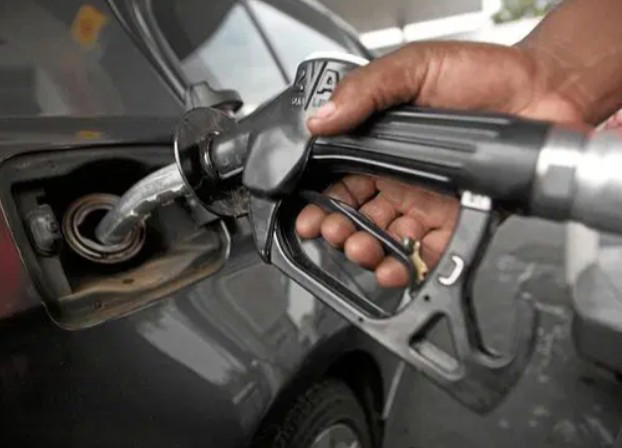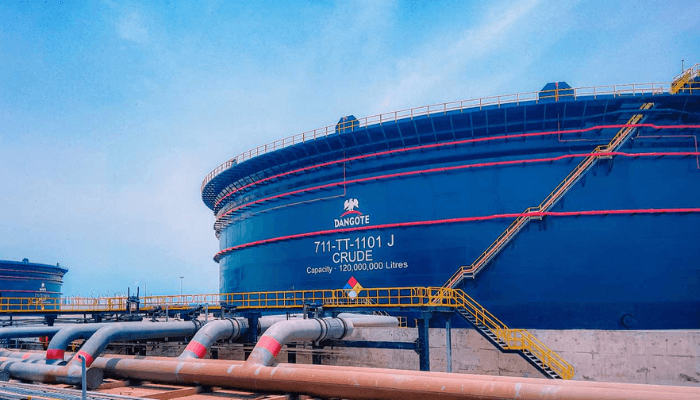
Transport fares have risen again in parts of the country as petrol price climbed to as high as N1,400 per litre, Daily Trust reports. The latest increase followed a surge in global crude oil prices, with Brent crude rising above $100 per barrel amid renewed tensions in the Middle East. Fresh loading data obtained from petroleum marketers showed an upward movement in ex-depot prices across Lagos, Warri and Calabar. In Lagos, A.A. Rano increased its ex-depot price from N1,275 to N1,279 per litre; while African Terminal, Ascon, Gulf Treasure, Integrated and T.Time hiked their rates to N1,275. Opposition lawmakers protest as Reps pass state police bill Make Big Tech pay Nigerian media for contents Aiteo, Heyden and Nipco maintained existing prices of N1,275; while Emadeb bucked the trend by reducing its rate from N1,278 to N1,274 per litre. Dangote Refinery, the dominant fuel supplier, had on Thursday resumed gantry loading of Premium Motor Spirit (PMS) in naira after a week-long suspension, while raising its ex-depot petrol price to N1,215 per litre. The refinery had suspended gantry and coastal loading on July 15 after introducing a dollar-denominated pricing template for refined petroleum products. With the adjustment, the ex-depot price increased by N140 per litre, representing a 13.02 per cent rise from the previous price of N1,075 per litre. Daily Trust reports that Dangote Refinery had cited difficulties in accessing sufficient crude oil under the federal government’s naira-for-crude arrangement to justify the introduction of dollar-based transactions. Under the temporary dollar-based pricing template, PMS was sold at $0.779 per litre, Automotive Gas Oil (diesel) at $1.087 per litre, and Jet A1 aviation fuel at $0.942 per litre. Citizens express frustration Residents lamented that marketers are quick to adjust pump prices when there is an increase but delay in reducing prices when the reverse is the case. It would be recalled that prior to the renewed hostilities in the Middle East, Brent crude came down to $70 per barrel which was the price it was traded before the war in February. However, marketers did not bring down the prices below N1,000 although PMS was sold at N700 litre before the US-Iran war. The federal government had to summon marketers to ensure the fuel prices reflect the drop in international crude price. But no significant reduction was carried out until the renewed hostilities. In the Federal Capital Territory, residents expressed frustration over the latest increase, saying transportation cost consumes a significant portion of their earnings. Grace Okeke, a civil servant, said every fuel price increase immediately translates into higher transport fares. “My salary has not changed, but I now spend much more just getting to work and back. It is becoming impossible to survive in Abuja,” she said. Another resident, Musa Ibrahim, warned that higher transport costs would inevitably push up food prices. “Transportation affects everything. Farmers, traders and transporters will simply transfer the additional cost to consumers. Ordinary Nigerians are the ones paying the price.” Commercial drivers, who spoke to our correspondents, said they were helpless. A taxi operator, Emmanuel Ujah, explained that frequent price changes make it difficult to plan daily operations. “You don’t know what petrol will cost tomorrow. That uncertainty affects our business and our families.” Another driver, Ganiyu Jide, said fuel now consumes the largest share of his daily income. “If we don’t adjust transport fares, we cannot maintain our vehicles or even feed our families,” he said. Although transport fares in parts of Abuja have not risen uniformly, commuters reported paying between 20 and 40 per cent more on several routes compared with a few weeks ago. In Lagos, transport operators have begun adjusting fares on some busy corridors, although competition among commercial buses has prevented across-the-board increases. Fuel marketers are dispensing petrol at varying prices depending on location and supplier, creating uncertainty for transport operators who often buy fuel several times daily. In Ibadan, Oyo State Capital, however, transport fares have remained relatively stable despite pump prices ranging from N1,260 to N1,300 per litre. BOVAS sold petrol at N1,260, while Amazing Filling Station dispensed at N1,300. Commercial driver Kamoru Iyanda said operators could not simply increase fares whenever petrol prices rose. “It is difficult to adjust fares every time because passengers cannot afford it. Sometimes we absorb the losses,” he said. Another driver, Amoo Saheed, echoed similar concerns, saying unstable fuel prices had eroded operators’ earnings. In Ilorin, Kwara State, several major and independent marketers yesterday adjusted their prices upward by between N35 and N85 per litre. AP raised its pump price to N1,290 from N1,220; B
Don't miss out on breaking stories and in-depth articles.