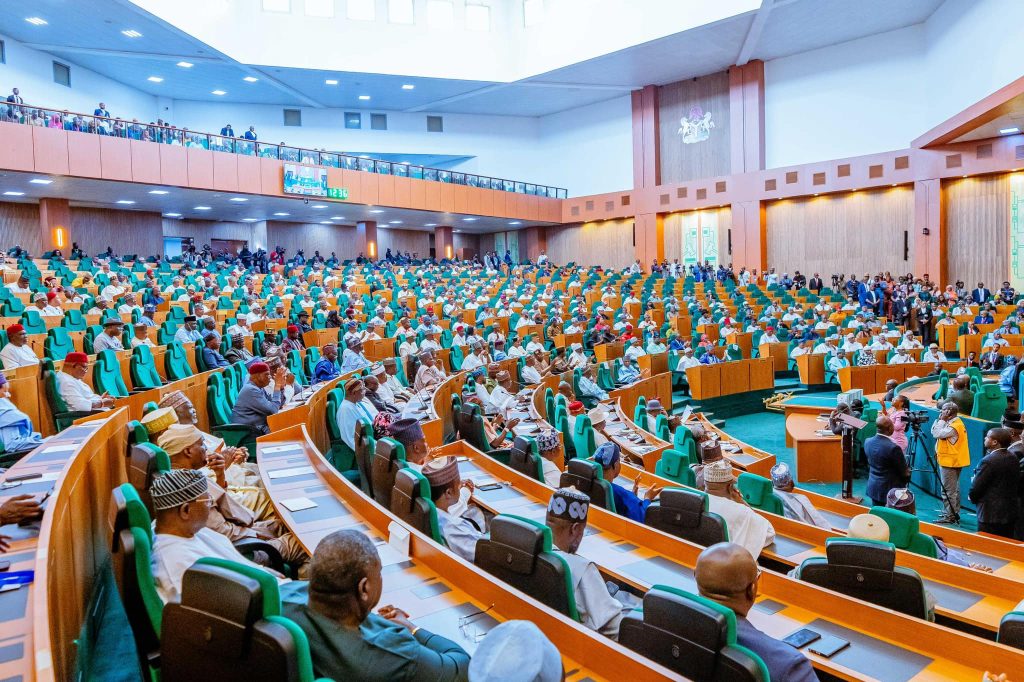
The House of Representatives on Thursday passed an executive bill seeking to establish state police across the country after adopting the report of its Committee on Constitution Review, amid a walkout by members of the minority caucus. President Bola Tinubu had transmitted the Constitution of the Federal Republic of Nigeria (Alteration) (State Police) Bill, 2026, to the House seeking constitutional approval for the establishment of state police services across the country. The President said the proposed legislation seeks to amend the 1999 Constitution to provide the legal framework for the creation of state police as part of efforts to strengthen Nigeria’s security architecture. The chairman of the constitution review panel, Benjamin Kalu, while presenting a synopsis of the proposed constitutional amendment, explained that the amendment only provides the constitutional foundation for State Police, while detailed implementation issues, including recruitment, training, operational standards, funding, accountability and intergovernmental coordination would be addressed through subsequent legislation. Publish election results transmission protocol, Yiaga Africa tells INEC Reps want work on alternative road linking Abuja, Keffi-Karu expedited Following the presentation of the synopsis, the Speaker, Abbas Tajudeen, provided details of the lawmakers participating in the voting process. He said 211 members physically present in the chamber were from the All Progressives Congress, while 65 members belonged to other political parties. He added that 35 members participated virtually through the National Assembly’s electronic platform and declared their support for the bill. According to him, the total number of members who had signed the attendance register and those who participated virtually stood at 311. “If you add the total members who have signed our register, totalling 276, plus the 35 members that have joined us on the platform of the House, we have a total of 311 members,” Mr Tajudeen said. He stressed that the constitutional requirement for the passage of the bill was two-thirds of the 360-member House, which translates to 240 members. He said the report before the House contained 26 clauses, an explanatory memorandum and the long title of the bill. During the consideration process, the Speaker merely read the long title of the bill and put it to a voice vote. The bill was subsequently passed without the clause-by-clause consideration of its provisions, as required for constitution alteration bills. Before the passage, the Minority Leader, Fred Agbedi, sought to raise a point of order before the House concluded proceedings, but was ruled out of order by the Speaker. The development sparked protests from members of the minority caucus, who accused the presiding officer of denying Agbedi the opportunity to be heard. Shortly after the passage of the bill, members of the minority caucus staged a walkout from the chamber in protest, accusing the House leadership of violating constitutional procedures during the consideration of the constitutional amendment. Minority caucus faults voting process Addressing journalists after the walkout, the Minority Caucus’ spokesman, Victor Afam Ogene, faulted the voting process, alleging that the House failed to comply with established parliamentary procedures. Ogene alleged that the Speaker, while presiding over the Committee of the Whole, disregarded the provisions of Section 9(2) of the 1999 Constitution (as amended), which requires the support of two-thirds of members for constitutional alteration. According to him, constitutional amendment bills ought to be determined based on the participation of members whose attendance is reflected in the House register and not through procedures that, in the caucus’s view, fell short of constitutional requirements. Ogene also said the minority members had prepared proposed amendments to several clauses of the bill, but were denied the opportunity to present them during the clause-by-clause consideration. Also speaking, Minority Leader Fred Agbedi said the caucus fully supported the creation of state police as a measure to address insecurity, but maintained that the House must strictly adhere to its rules and constitutional provisions in processing such legislation. He argued that both the Constitution and the House Standing Orders require constitutional amendment bills to be considered clause-by-clause and supported by a two-thirds majority of members, rather than by voice vote. Agbedi said the caucus had intended to vote in support of the bill while proposing amendments to some provisions, but was prevented from doing so after the Speaker declined to entertain his point of order. The minority leader warned that failure to follow laid-down legislative procedures could undermine the credibility of the National Assembly and Nigeria’s democratic institutions, stressing that th
Don't miss out on breaking stories and in-depth articles.