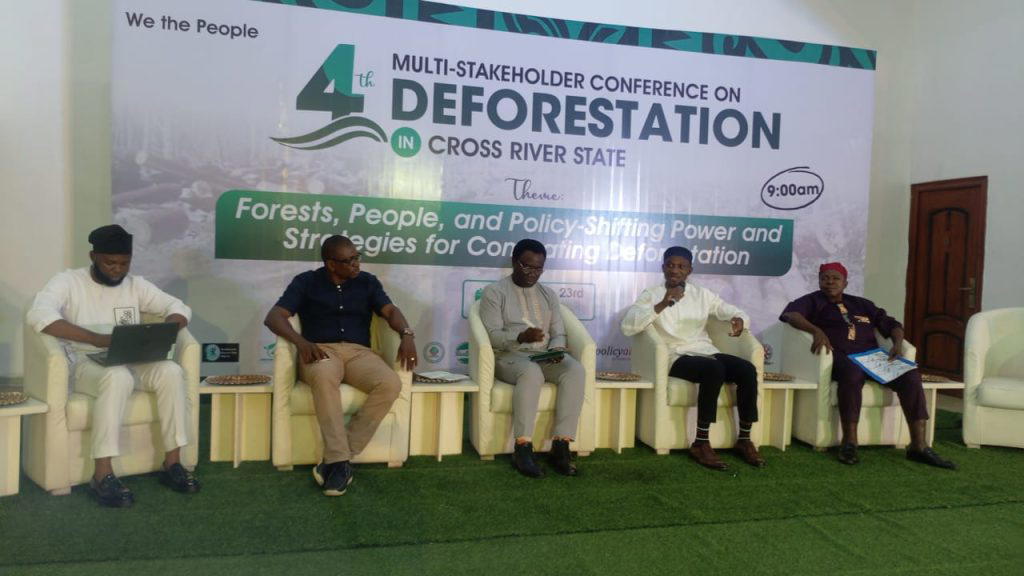
By Ike Uchechukwu, CALABAR The Conservator of the Cross River National Park, Mr. Joseph Ntui, has raised alarm over the rapid depletion of Cross River’s rainforest, disclosing that about 14,000 hectares of tropical rainforest were lost in 2025 alone, resulting in the emission of an estimated eight million tonnes of carbon dioxide. Ntui gave the warning Thursday while speaking to Vanguard on the sidelines of the 4th Multi stakeholders’ Conference on Deforestation Cross River State with theme: ” Forest, People, and Policy-Shifting power abd Strategies for combating Deforestation orgsnised by We the people in Calabar Ntui described the rate of deforestation as a major environmental threat, warning that the continued destruction of the forest is endangering biodiversity, worsening climate change and contributing to recurring floods in the state. According to him, global research data indicate that the destruction of about 14,000 hectares of rainforest last year released approximately eight million tonnes of carbon dioxide into the atmosphere. “The Cross River forest, which is globally recognised as a refuge for endangered wildlife, is disappearing at an alarming rate. “As the forest disappears, species such as the Cross River gorilla, Nigeria-Cameroon chimpanzee, forest elephants and pangolins are losing their habitats, making them more vulnerable to poaching and eventual extinction,” he said. The conservator explained that part of the Cross River rainforest was designated a national park in 1991, covering about 4,000 square kilometres across Akamkpa, Boki, Obanliku Local Government Areas of the state. He said the park’s management had continued to intensify efforts to safeguard the protected area through armed patrols, community engagement, scientific research and collaboration with conservation organisations. According to him, the park currently has about 250 armed rangers deployed to protect biodiversity and forest resources from illegal activities. “We cannot protect these resources alone. That is why we work closely with host communities, conservation partners and researchers. We also carry out conservation education to sensitise people on the dangers of deforestation,” he stated. Also Speaking , the Executive Director of We the People, Ken Henshaw, said the state’s existing forestry law had become obsolete and no longer reflected emerging environmental challenges, particularly climate change. He said participants at the previous edition of the conference resolved to review the Cross River State Forestry Law 2010, leading to the production of a document titled Recommended Reviews for the Cross River Forestry Law 2010. According to Henshaw, the recommendations were developed through months of consultations involving conservation groups, legal experts, academics, community representatives and other stakeholders to address gaps in the law and strengthen forest governance. He said, “The existing forestry law says almost nothing about climate change because it is an obsolete law. We examined the gaps and developed consensus-based recommendations to modernise the law and bring it in line with current realities.” Henshaw noted that despite the state’s forest conservation policies over the past two decades, deforestation had continued at an alarming rate, with illegal logging evolving into an organised enterprise involving local collaborators and foreign interests. He also identified illegal mining as a growing threat to the state’s forests, saying it had contributed to environmental degradation, pollution of water sources, destruction of farmlands and insecurity in forest communities. The post Flooding, Climate Crisis: C’River lost 14,000 hectares of rainforest in 2025 — Conservator appeared first on Vanguard News.
Don't miss out on breaking stories and in-depth articles.