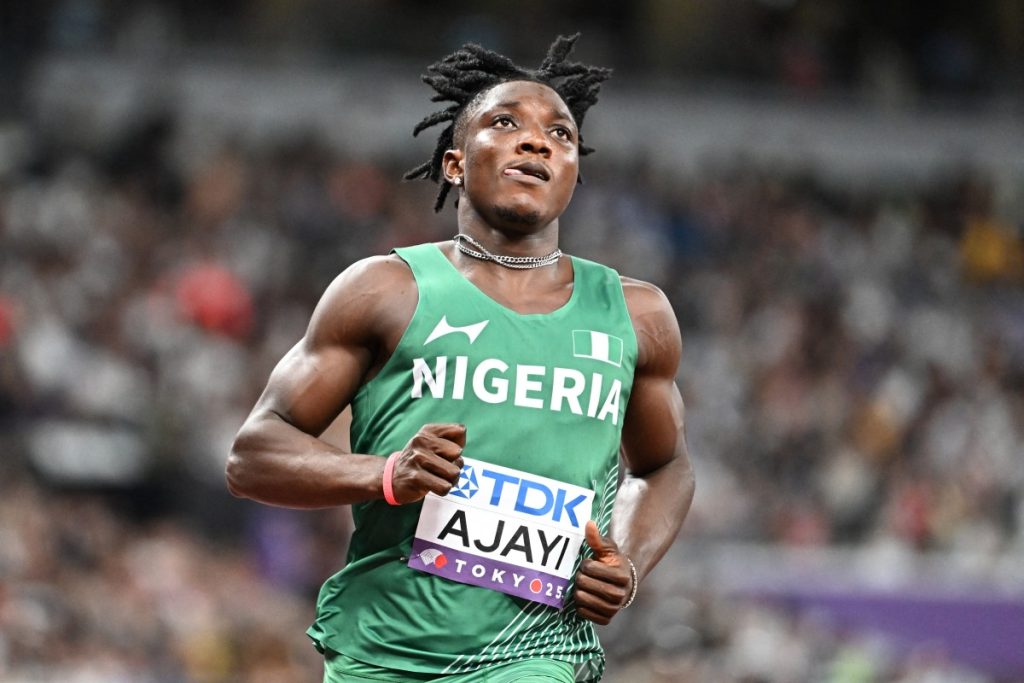
By Douglas Baye-Osagie Athletics historians can’t wait for a better opportunity than now to believe Nigeria is on the verge of winning one of the most elusive gold medals in our sports history. Despite a rich avalanche of great sprinters, a men’s 100m gold medal at the Commonwealth Games has been embarrassingly elusive. For 96 years, the Commonwealth Games have rolled around like clockwork. The gun first cracked in Hamilton 1930, the steel city of Canada. Then it echoed in London 1934, and through the Commonwealth in cities like Sydney, Auckland, Cardiff, Kingston, Edinburgh, Kuala Lumpur, Manchester, Brisbane, Victoria, Delhi, and Birmingham 2022. Now, the circuit returns once again to Glasgow 2026, and with it, Nigeria’s 96-year wait for a men’s 100m crown. Our women have already left their mark with pride. Mary Onyali gave us fire and fight, winning 100m gold in Victoria 1994. Blessing Okagbare gave us grace and dominance, winning 100m gold in Glasgow 2014 and setting the Commonwealth Games record at 10.85s on that same track. Tobi Amusan continued the tradition in the last edition, taking 100m hurdles gold in Birmingham 2022 and setting a Games record of 12.30s. The green and white has danced on the podium in the sprints before. The Nigerian women have answered the call. And we’ve proven it can be done in para sports too. Nigeria already holds a Commonwealth 100m mark, just not in the able-bodied category. Adekunle Adesoji stormed to gold and set the para sports 100m record of 10.76s in Manchester 2002. It was a reminder that speed runs in our DNA. That a Nigerian can go to the Commonwealth Games, face the world, and leave with the fastest time. If we could do it in para athletics, why not in the marquee men’s 100m? But the men’s 100m? That has been our ghost story. It wasn’t always this way on the track. Some men have tried and pushed for the ultimate prize, but it never came home. Nigeria first announced herself as a sprinting giant in the relays. Christchurch 1974 — Benedict Majekodunmi, James Olakunle, Kola Abdulai, Timon Oyebami won bronze in the 4x100m in 39.70s. Our first men’s sprint medal at the Games and at international level. Eight years later, Brisbane 1982 — Lawrence Adegbehingbe, Iziaq Adeyanju, Ikpoto Eseme, Samson Oyeledun took it further and won GOLD in 39.15s, beating a Canadian team with the great Ben Johnson (the fastest man in the 1980s and the first to break the 9.90 and 9.80 seconds barriers). That was the statement. Nigeria had sprinters. Nigeria could run. Nigeria could win. The world took notice. But somehow, the magic never translated to the individual 100m – the stage where just one man is the leader and pride of the pack. The 1990s once gave us hope, as it was a decade of fantastic sprinters. Auckland 1990 was supposed to be the breakthrough. For the first and only time in Commonwealth history, Nigeria put three men into the same 100m final — Davidson Ezinwa, Osmond Ezinwa, and Abdullahi Tetengi. The country buzzed. Finally, we would have our man on the podium. But the dream died on the line at Mount Smart Stadium in January 1990. Ezinwa finished 4th in 10.26s. Osmond was 6th. Tetengi 8th. Gold went to Linford Christie of Great Britain. The green and white left empty-handed again. That Auckland final remains Nigeria’s biggest showing in the event. It heralded hope, but also began a pattern: close, but not close enough. After 1990, it would be 12 years before another Nigerian — Uchenna Emedolu — won silver in 2002. Then Fasuba took silver again in 2006. Since then, only Enoch Adegoke made the final in 2018, finishing 7th. Despite producing some of Africa’s fastest men — Davidson Ezinwa who ran 9.94, Chidi Imoh, Seun Ogunkoya, Olusoji Fasuba who held the African record at 9.85, Deji Aliu with his Olympic bronze pedigree — no Nigerian man has ever stood atop that Commonwealth 100m podium. Not in 22 editions. Not once. We’ve been at the arena, smelt it, but never tasted victory. It is the one gap in an otherwise proud sprinting CV. This is not the Olympics where the Americans hold sway, it is the Commonwealth Games. The Yorubas will say Kilode! What is our problem? And in Glasgow 2026, that gap may finally close. Waiting in the blocks now is Kanyinsola Ajayi. As we say in local parlance, “our hope don rise, eyes dey shook.” The expectations are palpable and the National Sports Commission is already rehearsing its victory dance in anticipation of history. The boy from Oreyo, Ikorodu, is no longer running to escape schoolwork like he did in Secondary School in Lagos. He is running to make history. At 21, Ajayi has already done things Nigerian sprinting has begged for. He stands toe-toe with the world’s best and, after making an Olympic semi-final in Paris 2024, he has been a phenomenon on the track. He has broken Olusoji Fasuba’s 20-year-old 100m
Don't miss out on breaking stories and in-depth articles.