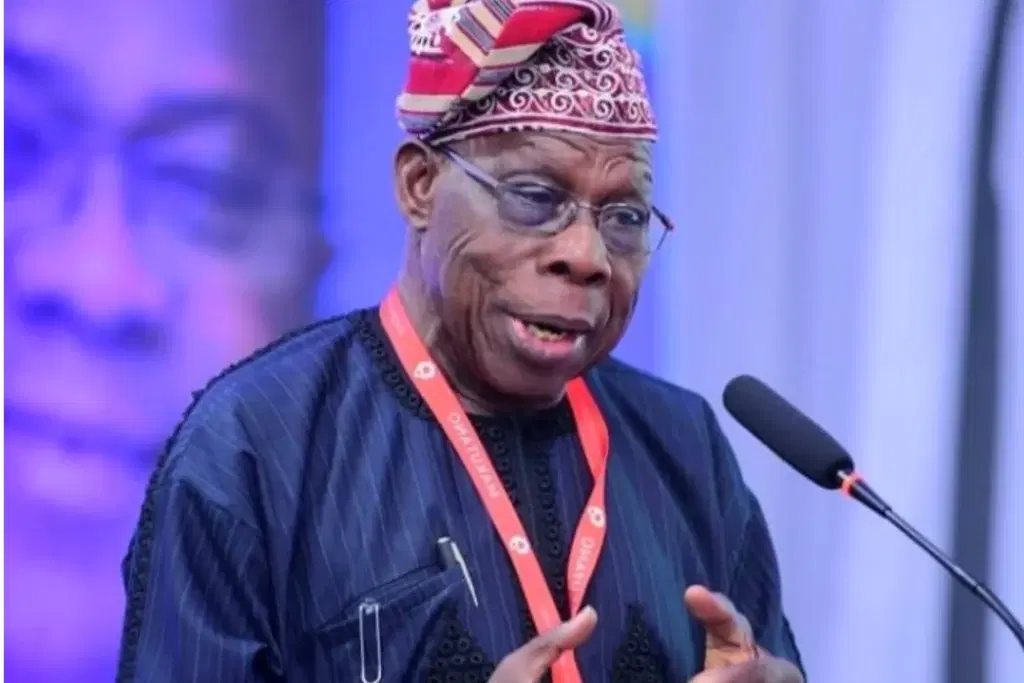
By Adeola Akinremi In some obvious ways, the whole episode is sad: the situation should never have descended into insults. But in other ways, the moment revealed something fundamental: transactional politics. In an era of sound bites, viral outrage, and performative politics, what happened between Senator Iyabo Obasanjo and Senator Solomon Olamilekan Adeola (famously known as Yayi) should not surprise us. In political optics, public altercations are rarely just personal; they are symptomatic of broader structural shifts. The political brawl may appear on the surface as another episode of viral outrage. Yet, as the electoral cycle approaches and the political temperature rises across Ogun State, the episode serves as a clarifying lens through which to view the changing dynamics of politics and power. It is simply friction between legacy establishment dynamics and a modern, strategy-driven ground game. Nearly a decade ago, I analyzed this emerging dynamic in an article published in THISDAY Newspaper on March 10, 2017, titled “Senator Adeola in an Age of Disruptive Politics.” Drawing on former British Prime Minister Tony Blair’s dictum—“Outrage is easy; strategy is hard. Outrage provides necessary motivation. But only strategy can deliver victory”—I argued that Adeola was systematically redefining voter engagement in Ogun State. As a stakeholder with personal roots cutting across the three geopolitical zones of the state—with a mother from Ilaro, a father from Abeokuta, and a wife from Ijebu—my interest in the governance of our dear state is both personal and professional. As a policy advisor and entrepreneur, I am essentially concerned about how policy initiatives can drive economic growth, make the state a destination for businesses, and attract people seeking a great place of residence. In that 2017 piece, I wrote that “Yayi is moving away from the traditional ways of connecting and interacting with voters. An early bird in political campaigns with unusual money in his wallet, town hall meetings, field organizers approach, conclaves with influencers, and mixed media have been used by Yayi to get to where he is… Interestingly, political establishments in Ogun State, where Yayi now has a superior ground game, building political infrastructure to become the next governor, are not looking through the prism of Yayi’s politics; they are stuck with the old ideas of regions and endorsements of the establishment.” With just a few months until the elections, the temperature in politics is rising, but the tension this time in Ogun State politics is healthy for democracy. At least we now know what happened in the kitchen that burnt the palace. Of course, the public mood is supportive of Senator Adeola’s response to blackmail politics. But the challenge before him is to continue to focus on building coalitions and prioritizing what matters to the people of Ogun State. Selectively focusing on this will be essential to his success, not only at the polls but when he starts to govern the state. Indeed, few figures in Nigeria’s politics have cut through the noise quite like Senator Adeola, who epitomizes industrial grit and now stands as a quiet model of renewal. What makes Adeola remarkable is not the flash of his campaigns or the polish of his rhetoric, but the steady, almost old-fashioned wisdom that marked him long before he ever sought higher office. Voters didn’t just elect him to his previous and current political offices—they adored the version of leadership he genuinely represented: thoughtful, substantive, and rooted in lived experience rather than ideology. Adeola’s ascent began not as a career politician, but as an accountant who knows what the outcome of a budget line item will mean for business and people. As a gubernatorial candidate, he entered the race at a time when his state needed someone of his pedigree to build more than roads, but economic prosperity leveraging its abundant resources. While others chased national headlines with culture-war theatrics, Adeola ran on something simpler and rarer: practical problem-solving. His first campaign for the Ogun West Senate seat emphasized listening tours—hundreds of them—where he took notes more than he gave speeches. Residents spoke of years of neglect by previous governments, failing schools, and families leaving for brighter prospects elsewhere. Adeola’s response was never a slogan; it was data-driven pilots: workforce retraining tied directly to local needs, incentives for small business owners and manufacturers to stay and expand, and education reforms that prioritized vocational paths alongside college tracks. In his current ambition, critics initially dismissed him as too earnest and an impostor from Lagos. He reminded them of his cradle years in Ilaro, explaining that his return to his root was for good governance. His campaigns gained momentum pr
Don't miss out on breaking stories and in-depth articles.