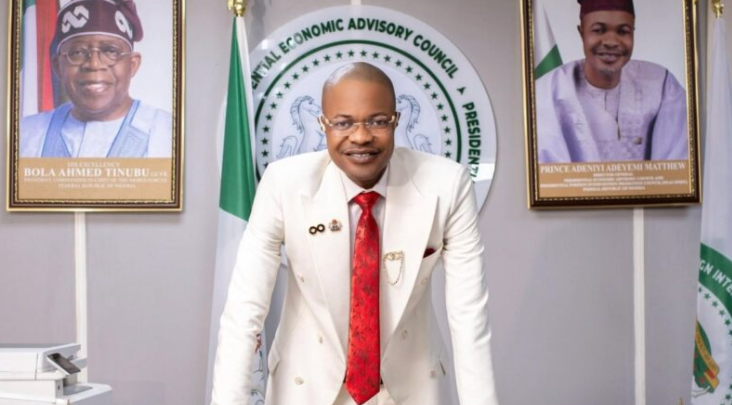
•Insists payroll, overhead, capital votes never matured into lawful spending •Declares Budget Office ordered Finance Ministry, Accountant-General to halt payments •Pledges full cooperation with probe James Emejo in Abuja The Director General, Budget Office of the Federation (BoF), Mr. Tanimu Yakubu, yesterday insisted that no public funds were released to the controversial Presidential Economic Advisory Council/Presidential Foreign Intervention Promotion Council (PEAC/PFIPC), adding the country’s expenditure control mechanisms prevented budgetary provision from translating into actual spending.Appearing before the House of Representatives’ Committee probing the matter, Yakubu, in a detailed clarification on the council’s appropriation in the 2026 budget, said although the National Assembly approved funds for the body, the legal and administrative conditions required to access public funds were never fulfilled. He stressed that the appropriated amount remained only a statutory provision and never became an expenditure, stating that the country’s public finance safeguards worked exactly as designed by stopping the release of funds before any payment could occur.The controversy followed the discovery that the 2026 Appropriation Act contained budgetary provisions for the PFIPC, triggering widespread public debate over the council’s legal status and how it found its way into the federal budget.The Nigerian Police Force last week arrested Adeniyi Adeyemi, the disowned Director-General of the non-existent Presidential Foreign Intervention Promotion Council (PFIPC). Adeyemi’s arrest came hours after Justice Mohammed Umar of the Federal High Court in Abuja issued a warrant for his arrest following an oral application by the prosecution lawyer, Wisdom Madaki.This was after the federal government accused Adeyemi of operating the purported PFIPC, an agency the government had said does not exist. The controversy became public after Chief of Staff to the President, Femi Gbajabiamila disowned Adeyemi and the PFIPC and President Bola Tinubu ordered the ICPC to probe the matter.Owing to this, the budget office came under scrutiny over its role in the appropriation.However, Yakubu maintained that his office neither created nor established the council, insisting that it merely discharged its statutory responsibility by costing personnel requirements based on official government instruments already issued by the appropriate authorities.According to him, “not one kobo” of the personnel allocation was drawn, while neither the overhead nor capital provisions matured into lawful releases. He said, “An appropriation is authority in law to make provision for an expenditure. It is not a cheque. It is not a warrant. It is not cash released from the Treasury. Before money can move, other conditions must be met. Different institutions must act. Each must complete its own part. If one condition fails, the chain stops. That is what happened here.“Until Financial Clearance is issued, a personnel provision remains a figure in the budget. It cannot create employees. It cannot place anyone on payroll. It cannot produce a salary payment.” The DG Budget explained that public debate had wrongly assumed that once an appropriation appeared in the budget, the beneficiary automatically gained access to the funds.According to him, appropriation merely provides legal authority for possible expenditure and should not be mistaken for a warrant, cash release or payment from the treasury.Yakubu explained that before any government agency could spend public funds, several statutory institutions must independently complete their responsibilities, including approvals relating to establishment, remuneration, financial clearance, warrants, cash backing and procurement. He further noted that because the expenditure process was deliberately divided among different government institutions, no single office could create an agency, recruit staff, approve salaries, release funds and authorise expenditure simultaneously.According to him, the PEAC/PFIPC case never progressed beyond the appropriation stage because the chain of approvals required under Nigerian public finance laws never opened.Providing details, Yakubu disclosed that although the council initially requested about N3.85 billion for personnel costs, the budget office rejected that estimate and independently computed personnel requirements using approved government staffing templates and salary structures. That exercise, he said, produced a personnel estimate of N802.98 million, which eventually formed part of the Executive Budget proposal and was subsequently appropriated by the National Assembly.He maintained that the figure was an independent fiscal determination by the budget office and not a negotiated reduction of the council’s request. Yakubu further explained that des
Don't miss out on breaking stories and in-depth articles.