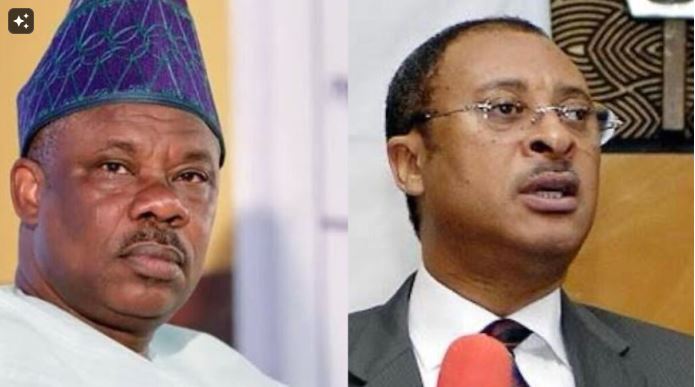
• Says personal ambitions, political narcissism threaten Nigeria’s destiny and Africa’s future •As Galadima blames Electoral Act for opposition primary crises, urges aggrieved aspirants to embrace reconciliation •NDC inaugurates reconciliation panel as Cleopas declares 2027 mission ‘bigger than individual ambitions’ Sunday Aborisade in Abuja Chairman of the National Reconciliation Committee of the Nigeria Democratic Congress (NDC), Professor Pat Utomi, on Thursday challenged Nigeria’s political class to abandon personal ambitions and partisan bitterness in favour of national unity, declaring that the country must reclaim its historic responsibility of leading Africa’s political and economic renaissance. Utomi warned that Nigeria could not inspire confidence across Africa or attract the investments required for continental transformation if its political leaders remained consumed by personal rivalries and what he described as “political narcissism.” The presidential candidate of the African Democratic Congress (ADC) in the 2007 general election spoke in Abuja shortly after the inauguration of the NDC National Reconciliation Committee. The renowned political economist said the assignment before the committee extended far beyond resolving disputes arising from the party’s congresses, convention and primaries. He insisted that it was fundamentally about building a political culture capable of rescuing Nigeria and repositioning Africa. “I feel humbled and challenged by this assignment because I know that the future of our country rests on it in very many ways, more than we immediately imagine,” Utomi said. He stressed that Nigeria’s political elite must begin to appreciate the enormous responsibility history had placed on the country as Africa’s most populous nation. According to him, reconciliation among party members should not merely be viewed as an internal political exercise but as a necessary step towards creating the kind of stable leadership capable of driving economic development across the continent. Utomi lamented that despite Africa’s abundant natural resources, youthful population and vast market opportunities, the continent continued to be perceived internationally as a region of instability and missed opportunities. Recalling his recent interactions with global policymakers and investors in Geneva, he said many influential investors still doubted Africa’s investment readiness because of weak infrastructure and persistent political instability. He said, “I recently reminded an international audience that 12 individuals in California control more capital than the entire African continent. “One respected British investment banker argued that Africa lacks the infrastructure to absorb major investments. “But rather than seeing that as a setback, we should see it as an opportunity. If that capital is invested in developing Africa’s infrastructure, this continent, with its vast natural resources and youthful population, will become the future of global economic growth,” he said. Utomi disclosed that in collaboration with the African Export-Import Bank (Afreximbank) and in his capacity as Chairman of the African Union Private Sector Pan-African Trade and Investment Committee, efforts were already underway to project what he described as “a new narrative for Africa.” According to him, the global conversation about Africa often ignores the achievements of the continent’s entrepreneurs, innovators and young people who are quietly driving economic transformation. He urged political leaders to create an environment that allows those talents to flourish rather than stifle them through endless political conflicts. Invoking the African philosophy of Ubuntu—”I am because we are”—Utomi regretted that the communal values that once defined African societies had gradually been replaced by excessive individualism and selfish political competition. He said, “We thrive only when the collective thrives. If we remember who we are as Africans, reconciliation becomes easy because these disagreements are small compared to the greater opportunities before us. “Our politics should not be driven by ego. It should be driven by service, sacrifice and commitment to the common good. “The future that awaits Nigeria and Africa is far greater than the offices we seek today,” he declared. The former ADC presidential candidate also challenged the NDC to evolve into a genuinely youth-driven political movement capable of producing transformational leaders. Noting that Nigeria’s median age is approximately 19.5 years, he said the country’s future depended largely on how effectively it invested in its young population. He said, “There is nobody who entered
Don't miss out on breaking stories and in-depth articles.