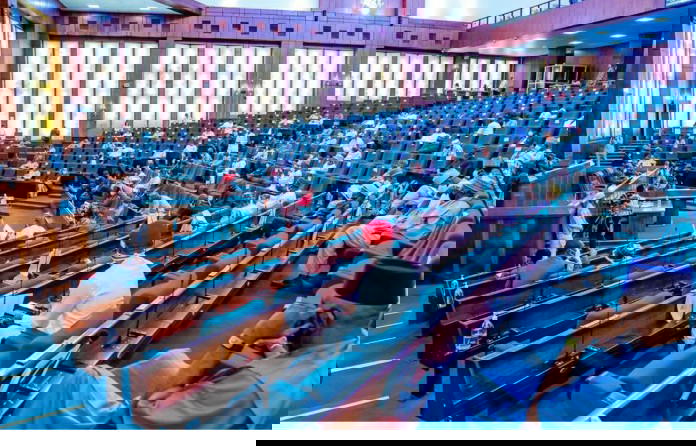
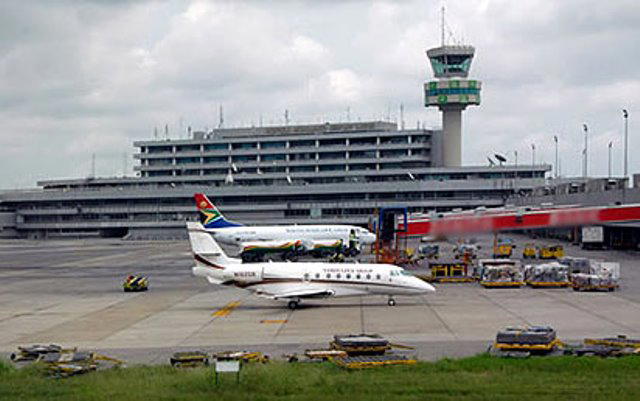
Unde Ekpen Nogah The recent public hearing of the House of Representatives Committee on Aviation on the proposed amendment of the statutory revenue-sharing formula for aviation agencies has generated significant interest within Nigeria’s aviation industry. Much of the public attention has understandably focused on the request by the Nigerian Airspace Management Agency (NAMA) for an increase in its share of the existing five per cent Ticket, Charter and Cargo Sales Charge (TCSC). Equally noteworthy, however, was the Agency’s proposal that obstacle evaluation services and Aviation Height Clearance (AHC) should be recognised as technical services rendered by NAMA, with 90 per cent of the associated fees remitted to the Agency and only 10 per cent retained by the Nigeria Civil Aviation Authority (NCAA). At first glance, the proposal may appear logical. NAMA designs instrument flight procedures, carries out WGS-84 aeronautical surveys, maintains navigation infrastructure and conducts technical obstacle assessments in support of air navigation. These are highly specialised responsibilities requiring significant expertise and investment. No objective observer would dispute the importance of these functions. Indeed, Nigeria cannot achieve safe, orderly and efficient air navigation without a technically competent and adequately funded Air Navigation Service Provider. However, the issue before the National Assembly is not simply one of institutional funding. It is one of aviation safety governance. Before any decision is taken regarding Aviation Height Clearance, it is necessary to understand exactly what Aviation Height Clearance represents within the global aviation safety system. More Than a Permit To many Nigerians, Aviation Height Clearance is simply the document issued before a telecommunications mast, high-rise building, transmission tower or other tall structure is erected. That perception is understandable. But it is incomplete. Aviation Height Clearance is one of the State’s most important preventive aviation safety mechanisms. Its objective is to ensure that no structure is constructed in a manner that endangers aircraft operations or compromises the safe use of Nigerian airspace. Contrary to popular belief, the issuance of the clearance is only the final stage of a comprehensive regulatory process. Long before an approval is granted, aviation safety inspectors examine the proposed development against Obstacle Limitation Surfaces (OLS), verify geographical coordinates and elevations, review technical data, conduct aeronautical studies where necessary, assess potential operational impacts, consult relevant stakeholders and carry out site inspections. Even after approval has been granted, the responsibility continues. The regulator monitors compliance, conducts post-construction inspections and enforces corrective measures where violations occur. These are not commercial services. They are statutory regulatory oversight responsibilities performed in the interest of public safety. What the Law Provides Fortunately, this matter is not left to interpretation. The Civil Aviation Act, 2022 clearly assigns the responsibility for regulating structures capable of constituting hazards to air navigation to the Nigeria Civil Aviation Authority. The Authority is empowered to evaluate proposed structures, determine whether they constitute hazards, issue Aviation Height Clearances, undertake continuing surveillance and enforce compliance with aviation safety requirements. The same legal framework recognises Aviation Height Clearance fees as statutory revenues collected to recover the cost of performing these regulatory functions. That distinction is extremely important. Aviation Height Clearance fees are not payment for operational services. They are regulatory cost-recovery charges designed to ensure that the State safety regulator possesses the financial capacity to discharge its statutory mandate independently and effectively. International Practice Leaves Little Room for Doubt Nigeria is a contracting state to the Convention on International Civil Aviation. As such, the country is expected to implement ICAO Standards and Recommended Practices. ICAO Annex 14 requires every State to establish effective systems for obstacle control around aerodromes. ICAO Doc 9137 (Airport Services Manual, Part 6 – Control of Obstacles), the principal international guidance on obstacle management, identifies obstacle control as a responsibility of the competent aviation authority. Likewise, ICAO’s Universal Safety Oversight Audit Programme (USOAP-CMA) evaluates a State’s implementation of obstacle control, Obstacle Limitation Surfaces, land-use coordination, obstacle marking and lighting, guidance to industry and continuing surveillance against the Civil Aviation A
Don't miss out on breaking stories and in-depth articles.