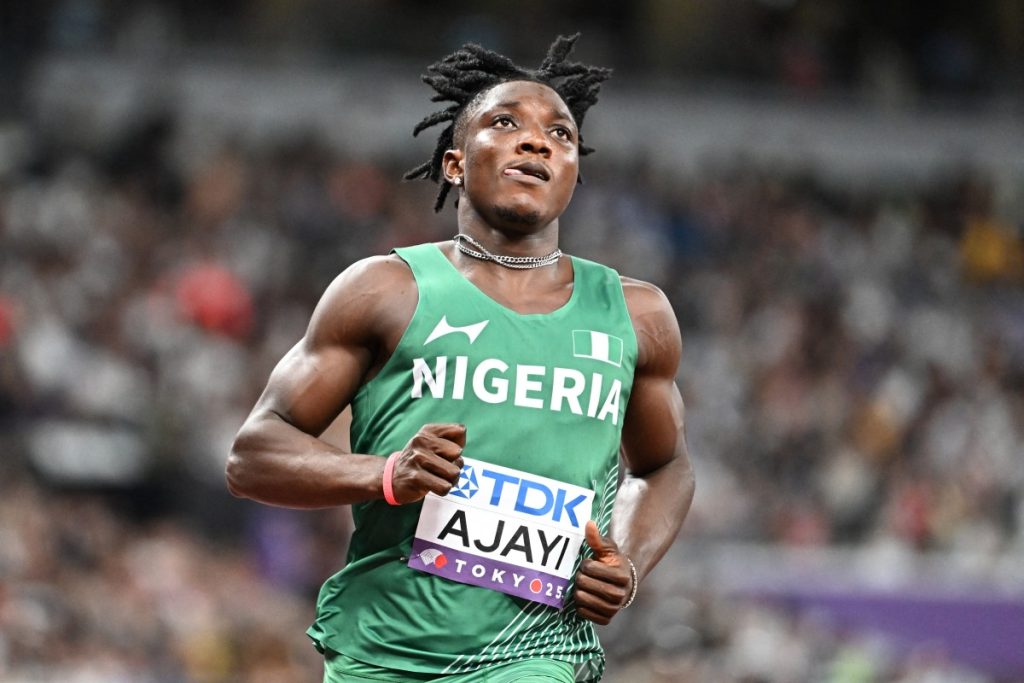
Every sport has its defining barrier, a historic ceiling that athletes from a particular nation chase for generations but can never quite break. For Nigerian men’s athletics, that barrier was the 400-metre track at the Commonwealth Games. For nearly a century, legendary Nigerian quarter-milers had stepped onto the global stage, only to fall just short of the ultimate prize. But on a crisp, electric night in Scotland, a 20-year-old sensation from Kaduna did what no Nigerian man before him had ever accomplished. With a blinding burst of speed and unparalleled grit, Samuel Ogazi did more than just win a race, he rewrote the record books, inspired a nation, and asserted himself as the new king of the track, writes Kunle Adewale The stadium lights of Glasgow caught the sweat glistening on Samuel Ogazi’s shoulders, but it was the clock that held the world captive. 44.25 seconds. In the time it takes to draw a few deep breaths, the 20-year-old sprinter from Kaduna did what no Nigerian man before him had ever accomplished in the 96-year history of the Commonwealth Games. He didn’t just win the 400-metre gold medal; he completely rewrote the narrative of Nigerian quarter-mile running. For decades, Nigeria’s athletic identity had been built on raw, explosive speed—the short sprints of the 100m and 100m hurdles. The 400 metres, a brutal discipline requiring an excruciating mix of aerobic endurance and tactical pacing, was often seen as the domain of the Caribbean giants or American titans. Yet, on that cool Scottish night, Ogazi shattered the status quo. His golden run was not a stroke of luck; it was the explosive culmination of a journey defined by calculated discipline, collegiate dominance, and an unyielding self-belief. The Genesis of a Quarter-Mile Prodigy Long before he became the toast of the Commonwealth, Samuel Ogazi was a quiet teenager running on the dusty tracks of Nigeria’s school sports festivals. Unlike many sprinters who stumble into the 400 metres after failing to make the cut in shorter races, Ogazi embraced the event early. He understood the rhythm of the track. He knew how to conserve his energy through the backstretch and when to launch his assault on the final bend. His breakthrough on the domestic scene caught the attention of international scouts, eventually earning him a scholarship to the University of Alabama in the United States. It was a well-trodden path for Nigerian athletics talent, but Ogazi’s transition was seamless. Under the elite collegiate system, his raw, natural stride was refined into a mechanical weapon. He learned the science of the “death zone”—the final 100 metres where lactic acid turns the legs of ordinary men to lead. Ogazi didn’t fear the pain; he mastered it. By the time the 2026 collegiate season came around, Ogazi was already dropping ominous times. He wasn’t just competing; he was dominating, stepping up to the biggest stages with the composure of a veteran. Yet, the true test of his mettle would not be in the colours of his university, but in the green and white of his motherland. The Perfect Storm in Glasgow The 2026 Commonwealth Games arrived at a critical juncture for Team Nigeria. While the country’s para-athletes and weightlifters had historically carried the medal burden, the track team was desperate for a new icon—particularly on the men’s side. The expectations were high, but few outside the Nigerian camp predicted a historic golden sweep in the men’s long sprints and field events. Ogazi arrived in Glasgow focused and unbothered by the media pressure. Through the heats and the semi-finals, he ran with a relaxed, almost casual grace. While rivals burned precious energy trying to make statements early in the rounds, Ogazi did just enough to secure prime lane assignments. On the night of the final, the atmosphere inside the stadium was electric. Standing in his blocks, Ogazi looked down his lane. He knew the history. He knew about the legends of Nigerian athletics—Innocent Egbunike, Sunday Bada—men who had come close but had never climbed the highest step of the Commonwealth podium in this specific event. When the gun went off, Ogazi executed a flawless race plan. He didn’t panic when the inside lanes made an early push. As the runners hit the 200-metre mark, he began to turn the screw, using his long stride to eat up the track. Coming off the final bend, he was neck-and-neck with the world’s best. Then came the legendary Ogazi kick. While others began to fade, tying up under the immense physical strain, Ogazi found another gear. He crossed the line, eyes fixed on the timer, stopped at a magnificent Games record of 44.25 seconds. Breaking a Century-Old Jinx The sheer weight of Ogazi’s victory reverberated far beyond Glasgow. For 72 years, Nigerian men had chased this particular glory. By capturing the 400m gold, Ogazi
Don't miss out on breaking stories and in-depth articles.