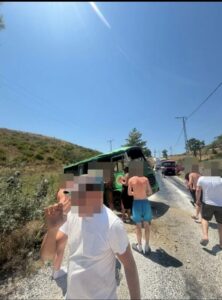
There is a peculiar talent that governments sometimes acquire after years in office. It is the ability to mistake the symptom for the disease, to become so captivated by the manageable inconvenience that the genuine emergency fades into the wallpaper. Nations reveal themselves not only by the crises they endure, but by the crises they choose to confront. Some spend decades strengthening schools, courts and hospitals because they understand that institutions outlive administrations. Others become fascinated by the theatre of governance, where visible action is mistaken for meaningful progress. The recent controversy surrounding the Federal Road Safety Corps amendment bill and its provision on preaching, hawking and trading inside commercial vehicles belongs to that familiar theatre. Whether the clause merely restated an existing prohibition or represented a fresh legislative impulse is almost incidental. The real story was never a preacher standing in the aisle of a commercial bus. It was our astonishing ability to invest enormous public energy in a question that sits comfortably on the margins while the centre continues to collapse. If anyone wishes to understand why that instinct has become so deeply Nigerian, they should spend a single morning inside a commercial bus. A woman climbs aboard carrying two bags of tomatoes. To everyone else, they are groceries waiting to become sales. To her, they are school fees, cough syrup, transport fare and, if the day is kind, a piece of meat in the evening pot. She settles into a cracked seat and instinctively draws the bags closer, knowing that tomatoes bruise almost as easily as profit. Around her sits a country held together by quiet endurance. An elderly man keeps opening a brown envelope to reassure himself that the hospital test results are still inside. Across from him, a university graduate studies the reflection on the dark screen of his phone, silently rehearsing answers for interviews that rarely become employment. A young mother rocks a sleepy child while calculating how long she can postpone buying another tin of infant formula. Beside the window, a mechanic with grease permanently worked into his fingernails sleeps with the heavy exhaustion of someone who has mistaken survival for rest. Nobody asks another passenger’s name. It is unnecessary. In a Nigerian commercial bus, introductions are a luxury. Everyone arrives carrying a private burden, and everyone leaves with it. The conductor slaps the body of the bus. “One more! One more!” It is the oldest fiction in public transportation. There is never one more. There are always four. The engine coughs awake and the bus joins the slow procession of a city already bargaining with itself. Hawkers drift effortlessly through the traffic selling bottled water, handkerchiefs, chargers and biscuits. Office workers weave between vehicles with the urgency of people who know that lateness in Nigeria is often punished more severely than incompetence. Somewhere ahead, a broken-down tanker has converted an ordinary road into a lesson in collective patience. Inside the bus, the country’s parliament is already in session. “My landlord says the rent is going up again.” “My son graduated two years ago. He’s still looking.” “Rice was cheaper last week.” No one raises a voice. Hardship rarely requires volume. It simply settles into the empty spaces between ordinary conversations. The woman with the tomatoes says nothing. She is occupied by a mathematics that no university teaches. If she sells everything before noon, she can restock tomorrow. If prices rise again, she will buy fewer baskets. If her youngest daughter’s cough refuses to disappear, medicine will compete with school fees. If nothing unexpected happens, and in Nigeria that is always the most expensive assumption, perhaps tomorrow will resemble today. Then the bus crashes into a pothole. The tomatoes lurch forward. She catches them before they spill into the aisle. The old man instinctively shields his envelope. The graduate grips his phone. For a brief moment, every passenger reaches for the one fragile thing that cannot afford to break. At the next junction, a man rises from the back seat with a small Bible in his hand. His faded blue shirt has survived too many washings to remember its original colour. He smiles, clears his throat and begins softly. “My brothers and sisters…” Half the passengers already know how the story will unfold. Some bow their heads. Others continue staring through the window. The conductor keeps demanding exact change with unwavering commitment. The preacher speaks quietly about gratitude, uncertain journeys and the dangerous confidence of believing tomorrow has already made promises to us. When he finishes, he thanks the passengers, returns to his seat and becomes anonymous once again. The bus m
Don't miss out on breaking stories and in-depth articles.