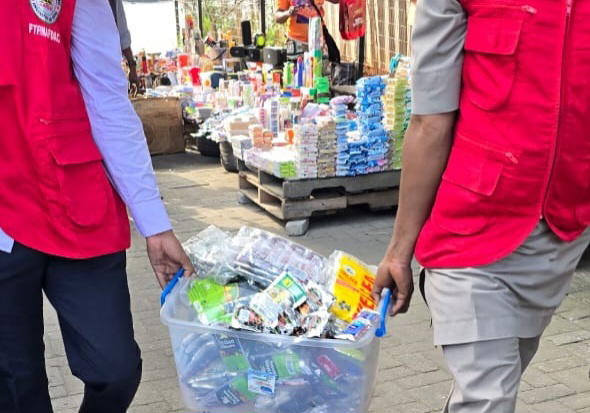
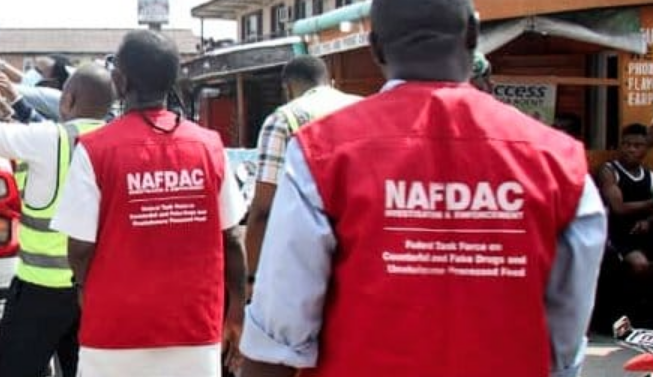
By Chioma Obinna At the age when most children are still learning how to spell their names, count money and tell the difference between right and wrong, nine-year-old Ade already knows the taste of alcohol. He does not hide it. Neither does he consider it unusual. Read Also: 25 children from Kebbi, Kwara, Niger died in terrorists’ captivity — Lawmaker The provided text describes the serious issue of underage alcohol consumption and the environmental factors that contribute to it. It highlights stories of young children being introduced to alcohol by family members and the normalized presence of alcoholic substances in their daily lives. Underage drinking poses significant risks to a child’s physical and mental development. Early exposure to alcohol can lead to dependency, impaired judgment, and long-term health complications. Public health experts and child advocates emphasize the importance of parental supervision and the enforcement of laws to protect minors from accessing regulated substances. For those seeking help or more information on protecting children from substance use, resources are available through local child welfare services and public health organizations dedicated to substance abuse prevention. me to buy as usual and an uncle I met there offered to buy one for me. He said he wanted to know if I could drink it or not. So, I proved him wrong that I could take alcohol,” he recalled. “Since then, each time I go to buy, he will buy for me. That is how it all became an everyday thing.” Today, Chibuike said he drinks two to three sachets of alcohol a day, sometimes buying it with his own savings. When errands become dangerousThe stories of Ade and Chibuike expose a troubling reality in Nigerian society. Children are often expected to obey adults unquestioningly, especially when sent on errands, yet little attention is paid to what they are being sent to buy, deliver or do. It is a practice deeply rooted in African family and social structures. Parents, older relatives and other adults exercise authority over children, while society often interprets obedience as a virtue. In religious settings, children are similarly taught to obey their parents and elders. But what happens when obedience becomes a pathway to danger? What happens when the child sent to buy alcohol eventually becomes the child who drinks it? Across Nigeria, children are exposed to alcohol not only through friends and social gatherings, but through their homes, relatives and neighbourhood shops. Some are introduced to it by adults they trust. Others obtain it themselves from retailers who do not ask their age. The result is a disturbing cycle in which some children encounter alcohol years before they can understand its implications. The disturbing numbersA 2021 national survey conducted by Research and Data Solutions Limited, Abuja, for the National Agency for Food and Drug Administration and Control, NAFDAC, and the Distillers and Blenders Association of Nigeria, DIBAN, found widespread access to alcohol among minors and underage persons. The study covered 1,768 respondents in six states representing the six geopolitical zones. Respondents below 13 years were classified as minors, while those aged 13 to 17 were classified as underage. The findings showed that 54.3 percent of minors and underage respondents obtained alcohol by themselves. Nearly half, 49.9 percent, accessed alcohol through friends and relatives, while 43.9 percent obtained it at social gatherings. Another 21.7 percent had access to alcohol in their parents’ homes. Among those who procured alcohol themselves, 57.2 percent of minors and 48.8 percent of underage respondents bought drinks in sachets, while 41.2 percent of minors and 47.2 percent of underage respondents procured alcohol in PET bottles. The survey also found that 63.2 percent of minors and 54 percent of underage respondents consumed alcohol occasionally, while 9.3 percent of minors and 25.2 percent of underage respondents reported drinking daily. The state-level analysis reveals disturbing variability of alcohol use by the survey; Gombe, Kaduna, the Federal Capital Territory, Anambra, Lagos and Rivers, Rivers recorded the highest procurement of alcohol in sachets and PET bottles among minors and underage persons, with 68.0 percent and 64.5 percent respectively. Lagos followed, with 52.3 percent procuring alcohol in sachets and 47.7 percent in PET bottles, while Kaduna recorded 38.6 percent and 28.4 percent respectively. The figures show that the problem is not confined to one region or one type of community. In neighbourhood shops, markets, motor parks, social gatherings and even homes, alcohol can be within easy reach of children. The health warning But the danger, according to health experts, goes beyond access. The World Health Organisation, WHO, warns that alcohol use during childhoo
Don't miss out on breaking stories and in-depth articles.