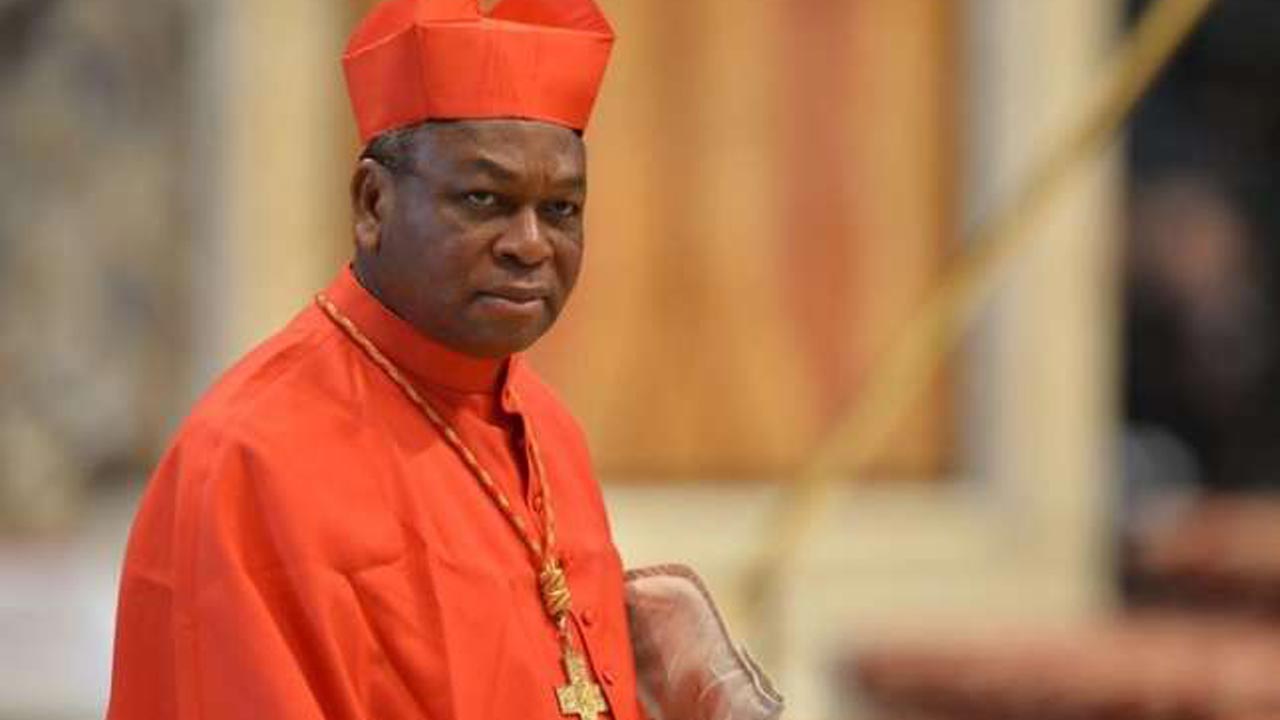
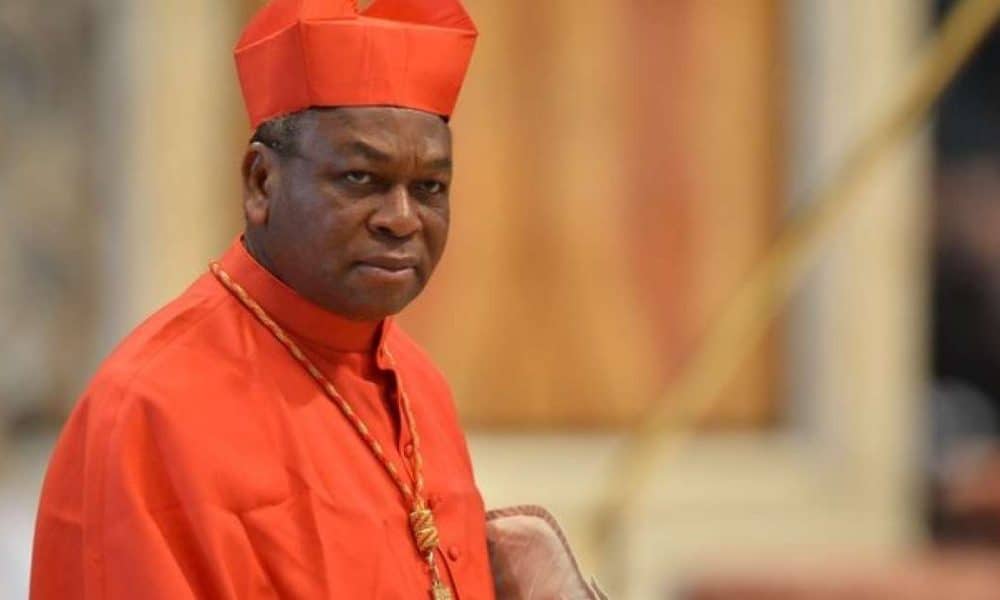
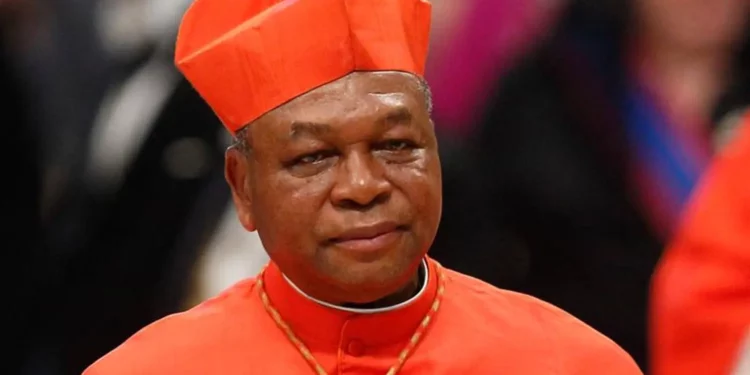
Am I the only Nigerian alive who is neither surprised nor stunned by the drama that played out between President Bola Ahmed Tinubu and Cardinal John Olorunfemi Onaiyekan, the archbishop emeritus of Abuja? The Catholic Bishops Conference of Nigeria (CBCN) had held a closed-door meeting with the president at the presidential villa. Initially, what we saw thereafter were short videos of Tinubu talking about his administration’s achievements, pointing out that a four-year undergraduate course now runs for four years because of the end of perennial strikes, insisting that INEC is not biased as alleged, and adding that he would not give his opponents a rope to hang him. Onaiyekan later appeared on Charles Aniagolu’s programme on ARISE TV to reveal the details of the meeting, saying they told Tinubu the “home truths” about economic hardship, insecurity and the state of our democracy. He said: “When the nation is bleeding, you cannot expect a polite meeting with the head of state. We told him the economy is not helping our poor people; he told us the economy is doing fine. Frankly speaking, he told us quite clearly that he did not agree with us. We didn’t expect him to agree with us. We have done our duty, we have delivered our message, and we have a feeling that, somehow, along the line, somebody will show him a few of the things we said.” By the way, “Emilokan”, the word famously uttered by Tinubu in June 2022 while venting at those trying to frustrate his presidential bid, and “Onaiyekan” — a contraction of “oni aiye kan”, also rendered as “eni aiye kan” — roughly mean the same thing: “my turn”. But that is where the similarity ends. Tinubu is from the south-west, Onaiyekan is from the north-central. Tinubu is a Muslim, Onaiyekan is a Christian. Tinubu is of the All Progressives Congress (APC), Onaiyekan is of the Nigerian church establishment that brands the ruling party as Islamic — or even Islamist. I thought I was missing something when the bishops visited him. I was not surprised at how it ended. But what did the bishops say that riled up Tinubu’s supporters so much? Is there economic hardship in the land or not? If it were possible to remove fuel subsidy and the people would not suffer, President Muhammadu Buhari would have done it. He kept the subsidy for years, borrowed trillions to pay for it and at a point mortgaged future oil revenues to import petrol at N500/litre and sell at N185/litre because he was worried about the masses. They would be disproportionately impacted. He knew the subsidy was unsustainable but dragged his feet on its removal. The delay plunged Nigeria into a dire fiscal crisis. The masses still suffered. But some people call it the good old days. The very first thing Tinubu did upon assumption of office was to announce the death of fuel subsidy. The price of petrol tripled immediately. Transportation costs followed accordingly. Prices of goods and services went along the same trajectory. You cannot end a subsidy regime that Nigerians had been living on since the 1970s and expect that there would be no hardship. Tinubu followed suit by ending the distortions in the forex market and the inevitable outcome was a plunge in the value of the naira. In an import-dependent (some prefer the euphemism, “export-deficient”) country, the cost of living would invariably head for the skies. Economic hardship was automatic. It was inescapable. The absolute truth, of course, is that reforms come with pains. Onaiyekan said Tinubu disagreed with them about the economic hardship and insisted that the economy was doing fine. It is true that after the initial shocks of 2023 to 2024, there has been some macro-economic stability since 2025 as can be seen in the stability of the naira, GDP growth, stock market boom and improved performance in oil production and non-oil exports. But the question many of us have been asking is: when will the burden on ordinary Nigerians be lightened? Without minimising their concerns, Tinubu could have assured them he was not unaware of the problems and challenges that come with such reforms. Tinubu could have expressly admitted that reforms indeed bring pains but that in due season, we will reap if we faint not. Good things take time. Nothing is called gold until it passes through fire. I do not think Tinubu talked rudely to the bishops, but the subsequent response of his supporters did not help matters. It is the duty of the government and its agents to sell Tinubu’s policies to the people without being argumentative or confrontational. I do not think they needed to respond to Onaiyekan at all — or in the tone with which they did. There is no doubt that Tinubu is cocksure he is on the right path in charting a course for the economy, but he owes Nigerians assurances at every turn. The bishops, Onaiyekan said, also raised the issue of the democratic space. When the opposition figures came together e
Don't miss out on breaking stories and in-depth articles.