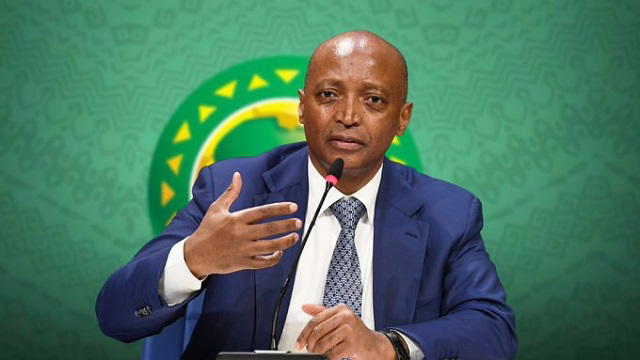
By Paul Lucky Okoku Barely weeks after the conclusion of a commercially successful 2026 FIFA World Cup, world football has found itself confronting a very different contest. This one is not being played inside a stadium. It is being fought over money, governance, transparency, power — and ultimately the question of who owns the future of the world’s game. At the center is FIFA President Gianni Infantino and the now-abandoned FIFA Forward Enterprise proposal, an ambitious plan that would have created a new FIFA-controlled commercial company valued at approximately $20 billion and opened a minority stake to private investors. The proposal collapsed following intense international opposition. But the controversy did not collapse with it. Instead, it has opened a much larger debate about Infantino’s leadership and exposed significant divisions within the global football family. And perhaps the most uncomfortable question is also the simplest: Was this about growing football — or had the commercialization of football finally gone too far? First, What Was Actually Proposed? There is an important distinction. FIFA was not proposing to “sell the World Cup for $20 billion.” Under its proposal, FIFA Forward Enterprise — FFE — would have consolidated many of FIFA’s commercial and event-related activities into a separate FIFA-controlled company with an initial valuation of approximately $20 billion. FIFA proposed selling a minority, non-controlling interest in that company to outside investors, potentially raising up to approximately $4.2 billion. FIFA maintained that it would retain ultimate control over football governance, sporting regulations, competitions and the international match calendar. And Infantino’s argument was compelling on its surface. The additional commercial capital, FIFA said, could help generate more than $10 billion in development funding over future cycles for its 211 member associations. For countries where football infrastructure remains inadequate, women’s football remains underfunded, youth development remains inconsistent and national federations struggle commercially, that is not an insignificant proposition. Infantino called it an opportunity to accelerate — even “turbocharge” — football development around the world. That argument deserves to be heard. But so does the opposition. The Question Wasn’t Only About Money The controversy was not simply about whether private investment is good or bad. It was about process. Who conceived the proposal? Who was consulted? Why was such a consequential restructuring presented on such an accelerated timetable? What rights would private investors ultimately acquire? What return would those investors expect? What influence might economic ownership eventually create, even where sporting control technically remained with FIFA? And perhaps most importantly: Should an organization entrusted with stewardship of the world’s game monetize future revenues today without an extraordinary level of consultation and transparency? Those questions ignited resistance. UEFA emerged as perhaps the strongest opponent. Concacaf’s 41 member associations also rejected the proposal, expressing serious concerns about process, governance and consultation. Opposition emerged elsewhere, while senior figures inside FIFA itself reportedly raised objections. Then came a significant resignation. Carlos Cordeiro, a senior adviser to Infantino, former president of U.S. Soccer and former Goldman Sachs executive, stepped down while publicly questioning the wisdom of the proposal. His objection went directly to the financial argument. If FIFA is already financially strong, possesses substantial reserves and carries no comparable commercial desperation, why should it exchange part of the future economic value of its greatest assets for billions of dollars today? That is a legitimate question. Private capital is rarely charitable capital. Investors invest because they expect returns. Football therefore needed to know not merely how much money would enter the game, but eventually where the return on that money would come from. More matches? Higher ticket prices? Greater commercial saturation? New competitions? More expensive broadcasting rights? Greater pressure on supporters? Or efficiencies capable of generating the promised returns without changing the character of the game? Those questions were never sufficiently settled before the proposal unraveled. Infantino Retreats Facing escalating opposition, Infantino withdrew the FIFA Forward Enterprise proposal. But withdrawal did not end the political crisis. FIFA’s leadership subsequently gathered in Rabat, Morocco, for extraordinary discussions over the fallout. FIFA acknowledged mistakes in both the process surrounding the proposal and its communication. Infantino and FIFA Secretary General Mattias Grafström apologized. And FIFA’s management l
Don't miss out on breaking stories and in-depth articles.