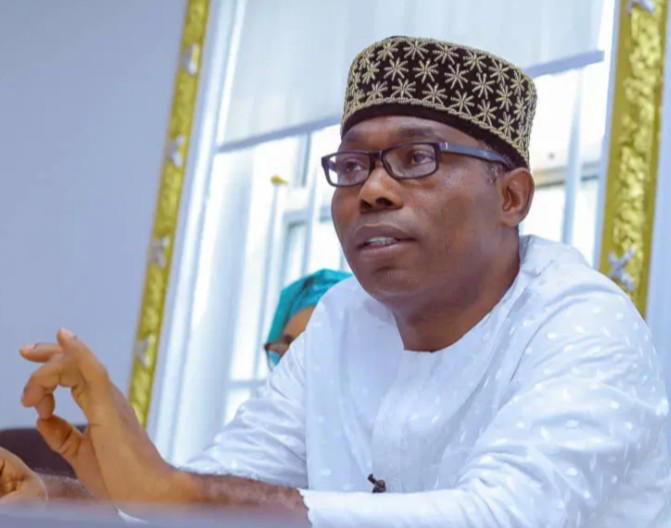
Babafemi Fakorede There comes a point in the life of every public institution when repeated errors of judgment can no longer be explained away as isolated missteps. A pattern becomes discernible. Confidence begins to erode. Questions about an individual’s decision gradually give way to more fundamental concerns about the competence, temperament and suitability of the person exercising such enormous public power. For the Chairman of the Economic and Financial Crimes Commission (EFCC), Mr. Ola Olukoyede, that moment may finally have arrived. President Bola Tinubu’s intervention in the controversy surrounding the freezing of an Osun State Government bank account should not be treated as an ordinary presidential correction of an overzealous agency. It was far more consequential than that. In political and administrative terms, it amounted to a devastating vote of no confidence in the judgment that produced the action. The president did not merely ask the EFCC to reconsider its position. He directed the commission to return to court, vacate the freezing order and discontinue the action against the Osun State Government. More significantly, Tinubu said he was “deeply embarrassed” by the timing of the EFCC’s action, coming barely days before the August 15, 2026 governorship election in the state. He warned that nothing should be done to create the impression that a federal institution was being deployed to interfere with the electoral process. Those words are not routine. Presidents do not ordinarily describe the conduct of agencies headed by their appointees as deeply embarrassing. Nor do they publicly countermand such agencies on matters with enormous political, constitutional and electoral implications unless something has gone seriously wrong. To be clear, Tinubu did not say that the EFCC lacked the power to investigate the Osun State Government. He expressly recognised the commission’s statutory mandate and indicated that the freezing order had judicial backing. The President’s objection was to the timing, the political implications and the damage the action could inflict on confidence in the fairness of the approaching election. That distinction is important. But it does not exonerate Olukoyede. It strengthens the case against his continued leadership. The EFCC chairman’s responsibility is not limited to identifying a possible offence, obtaining an order and deploying the coercive powers of the state. Leadership of such a sensitive institution demands judgment: the ability to weigh legality against proportionality, urgency against public interest, and enforcement against the wider political and constitutional environment. An action can be legally available and still be administratively reckless. It can be technically defensible and yet institutionally disastrous. That is precisely why the EFCC requires leadership capable of seeing beyond the next warrant, arrest, freezing order or press conference. The commission said its investigation into the handling of approximately ₦11 billion in Ecology Funds, intervention funds and Federation Account allocations had begun in March 2026. It claimed that substantial transfers into corporate accounts, which it considered suspicious, started around August 2 and compelled it to place a Post No Debit restriction on the state account. The EFCC denied acting for partisan purposes and maintained that it was trying to prevent public funds from being dissipated. Those are serious claims and they deserve proper investigation. No government should be permitted to hide suspected financial misconduct behind an election timetable. Public money does not cease to require protection because citizens are preparing to vote. But the crucial question is not whether the EFCC should investigate. It is why, after investigating since March, the commission allowed the matter to culminate in the freezing of a critical state government account just 10 days before a governorship election. Was there no less disruptive method of securing the funds? Could the allegedly suspicious recipient accounts not have been individually identified and restricted? Could the commission not have secured the evidence, traced the transfers, summoned the relevant officials and pursued the corporate beneficiaries without placing a major government account under restriction at such an inflammatory moment? Did anyone at the highest level of the commission conduct a political-risk, constitutional-impact or public-interest assessment before the action was approved? These questions go directly to Olukoyede’s judgment. It is not enough for the EFCC to say that it was performing its statutory duty. Every institution of coercive power must perform its duty intelligently. The greater the power, the greater the obligation to anticipate consequences. A President’s Pain
Don't miss out on breaking stories and in-depth articles.