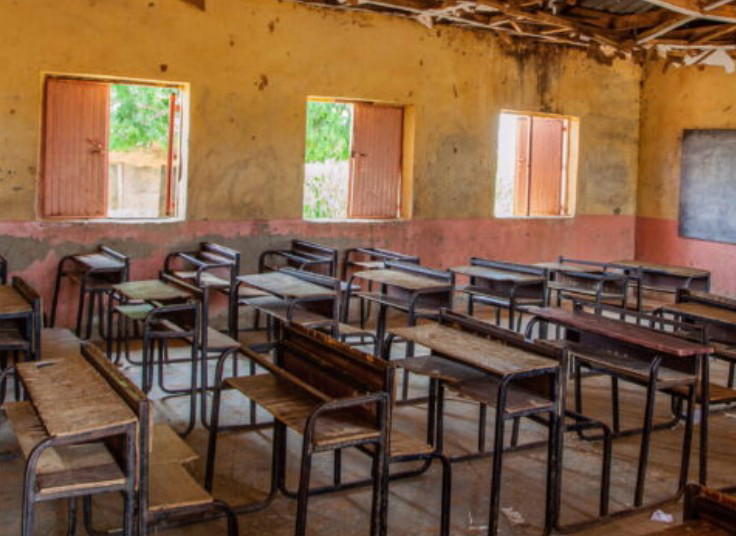
•Three states worst hit as non-state actors disrupt learning•Experts warn closures worsening out-of-school crisis, child labour, early marriage, radicalization By Nnamdi Ojiego, Musa Ubandawaki, Umar Yusuf, Ibrahim Hassan-Wuyo, Peter Duru, Ndahi Marama, Golok Nanmwa, Haruna Aliyu, Yauziyya Lawal & Maryam Usman At least 65 secondary and primary schools have been shut or rendered non-functional by insecurity across northern Nigeria, findings by Sunday Vanguard have shown, with the closures cutting across dozens of local government areas and leaving thousands of children without normal access to classroom education. Affected schools are spread across Sokoto, Benue, Plateau, Borno, Kaduna and Kebbi, while insecurity has also disrupted academic activities in parts of Katsina, Adamawa and other northern states. The closures have been triggered by terrorist and bandit attacks, abductions, displacement of communities and fears of further attacks on pupils, students and teachers. In some communities, schools have remained shut for prolonged periods. In others, authorities have merged affected schools with institutions in safer locations or moved students to alternative centres to keep them in school. The development has raised fresh concerns over Nigeria’s already severe out-of-school crisis and the long-term consequences of keeping children away from classrooms. It has also persisted despite years of government and donor-backed interventions aimed at protecting schools from attacks, including the Safe Schools Initiative launched in 2014 after the abduction of 276 schoolgirls from Government Girls Secondary School, Chibok, Borno State. The initiative was established as a partnership involving the Federal Government, the United Nations and the private sector to protect schools in high-risk communities and ensure that children could continue their education despite insecurity. More than $30 million has been mobilised for the Safe Schools Initiative since its establishment, according to the Global Business Coalition for Education. The Federal Government later introduced the National Plan on Financing Safe Schools for 2023 to 2026, with a projected investment of ¦ 144.86 billion. The plan envisaged ¦ 32.58 billion in 2023, ¦ 36.98 billion in 2024, ¦ 37.15 billion in 2025 and ¦ 38.03 billion in 2026. Yet, more than a decade after the Safe Schools Initiative was launched, attacks continue to drive children away from schools. Sokoto shuts schools in 20 LGAs Sokoto State has recorded one of the most extensive current disruptions. Schools in 20 of the state’s 23 local government areas have been shut following security concerns, according to the state government. The Commissioner for Basic and Secondary Education, Prof Ahmad Ladan Ala, said the closure followed a directive from the Federal Government. He said schools across the state, including primary schools, had been closed indefinitely, with schools within Sokoto North, Sokoto South and Wamakko exempted. The President of the All Nigerian Conference of Principals of Secondary Schools, Muhammad Ikililu, said insecurity had also disrupted boarding education in the state for several years. According to him, boarding schools were moved to the state capital during the administration of former Governor Aminu Tambuwal because of insecurity in the North-West and Sokoto State in particular. He said some of the affected schools remained closed. Sunday Vanguard identified 14 schools affected by the current security situation across the state. They include Government Secondary School, Tureta; Government Secondary School, Tangaza; Government Girls Secondary School, Bodinga; Government Girls Secondary School, Tambuwal; Government Technical College, Goronyo; Government Secondary School, Gudu; Government Secondary School, Gwadabawa; Government Girls Secondary School, Illela; Government Secondary School, Yabo; Government Girls Secondary School, Rabah; Government Technical College, Binji; Government Secondary School, Kebbe; Government Secondary School, Dange; and Government Secondary School, Shagari. The governorship candidate of the African Democratic Congress (ADC) in the state, Manir Muhammad Dan’iya, described the situation as a major setback to education and human capital development, saying the closures had deprived thousands of children of access to education. Benue In Benue, insecurity has forced the closure of numerous primary schools across Kwande, Gwer West, Guma and Logo local government areas. Repeated attacks and displacement have made several communities unsafe for teaching and learning, forcing schools to close and families to move to safer locations. Sunday Vanguard identified 35 affected schools in the state. They inc
Don't miss out on breaking stories and in-depth articles.