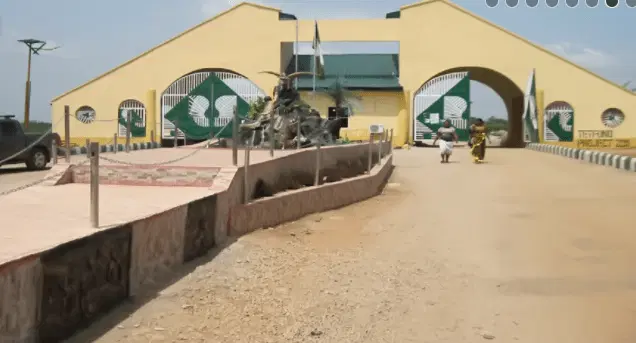
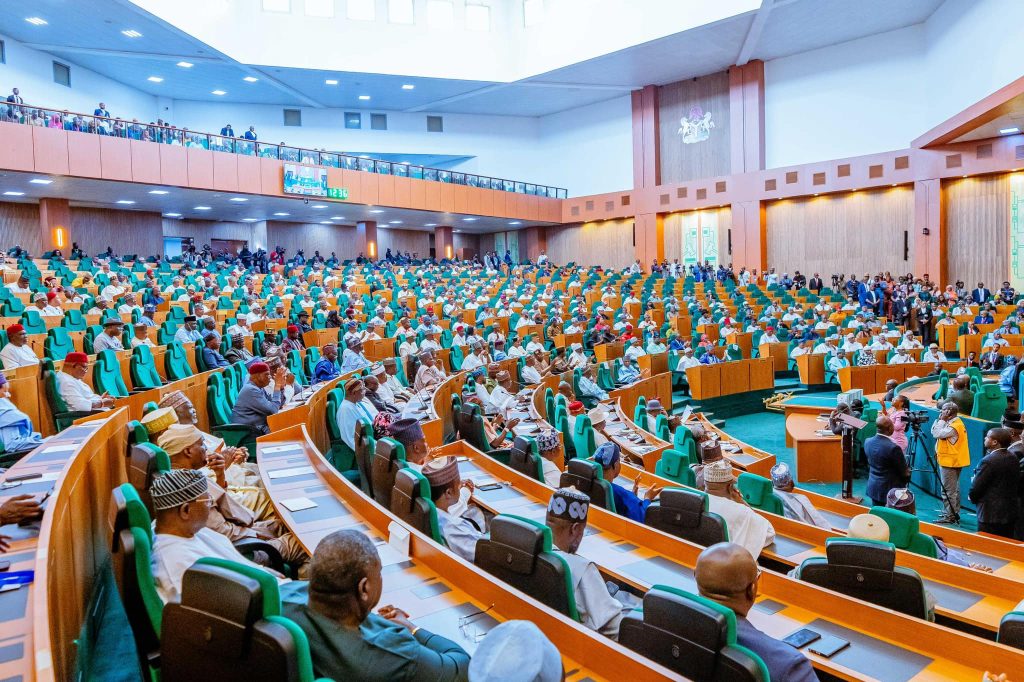
Gbenga Sodeinde in Ado Ekiti Former Senator representing Ekiti North Senatorial District, Senator Ayo Arise, has sought to set the record straight on the establishment of the Federal University Oye-Ekiti (FUOYE), recounting how his intervention and engagements with the Federal Government initiated the process that eventually brought the institution to Oye-Ekiti. Arise, who served in the National Assembly between 2007 and 2011, said recent narratives crediting other individuals with the establishment of the university amounted to a distortion of the history of the institution and a disservice to those who worked to secure its location in Oye-Ekiti. Addressing journalists in Ado-Ekiti, the former lawmaker said the process began shortly after the then President, Goodluck Jonathan, announced on November 28, 2010, that the Federal Government would establish six new federal universities in states without such institutions. According to Arise, he acted the following day by writing to the Minister of Education through the ministry’s then Permanent Secretary, Professor Oladapo Afolabi, requesting that one of the proposed universities be established in Oye-Ekiti. He said Professor Afolabi subsequently directed him to present the request to the then Minister of State for Education, the late Kenneth Gbagi. Arise recalled that he immediately visited Gbagi’s office, where he met the minister alongside the then Executive Secretary of the National Universities Commission (NUC), Professor Peter Okojie, and Professor Mahmood Yakubu of the Tertiary Education Trust Fund (TETFund), who later became Chairman of the Independent National Electoral Commission (INEC). He said it was during the meeting that Gbagi indicated that Oye-Ekiti had already been identified as one of the locations for the proposed universities, alongside Otuoke.Arise said his intervention was driven by the conviction that Oye-Ekiti had the facilities and historical connection necessary to accommodate a federal university. He recalled telling Gbagi that Oye was ready to host the institution, pointing to the existence of a Federal Government teachers’ college established in the community in the 1970s. The former senator said the subsequent inspection of facilities led to another phase of the process, which eventually generated controversy over whether the university should be located in Oye or Ikole-Ekiti. He said the controversy intensified after officials visited Ekiti and the then newly sworn-in Governor, Dr Kayode Fayemi, took them to Ikole-Ekiti for an inspection. According to him, the late Gbagi subsequently declared that he had established a Federal University of Agriculture in Ikole, a development that created tension between the two communities. Arise, however, said the controversy was eventually resolved through a dual-campus arrangement, with Ikole-Ekiti hosting the Faculty of Agriculture while Oye-Ekiti remained the main campus as approved by the Federal Executive Council. He disclosed that he met Fayemi on July 31, 2011, for nearly two hours to address the land and Certificate of Occupancy issues surrounding the project. While acknowledging Fayemi’s role in resolving the location-related challenges, Arise maintained that the initial request for the university to be established in Oye-Ekiti came from him. He also addressed the role of Dr Femi Ajayi, a former Director-General of the National Drug Law Enforcement Agency (NDLEA), who he said had been credited in some quarters with securing the university. Arise described Ajayi as a “decent gentleman” who played a supportive role but was not the initiator of the process. According to him, Ajayi had a longstanding relationship with President Jonathan, having served with him at Iresi and later occupied several federal positions, including Senior Special Assistant to the President on Diaspora Affairs, Director-General of NDLEA and Executive Secretary of the Petroleum Technology Development Fund (PTDF). He said Ajayi was particularly useful to him because he was the person he could most easily reach at the Presidency and who reliably conveyed his messages to President Jonathan. “Dr. Femi Ajayi was the person I could most easily reach at the Presidency, and he reliably conveyed my messages to Mr. President,” Arise said. He stressed, however, that Ajayi’s supportive role should not be confused with initiating the establishment process. “As far as I am concerned, Dr. Femi Ajayi remains a good man,” he said, adding that Ajayi was “one of the contributors that supported me as needed.” Arise further explained that his relationship with President Jonathan predated the university project, dating back to his tenure as Chairman of the Senate Committee on Privatization in 2007.
Don't miss out on breaking stories and in-depth articles.