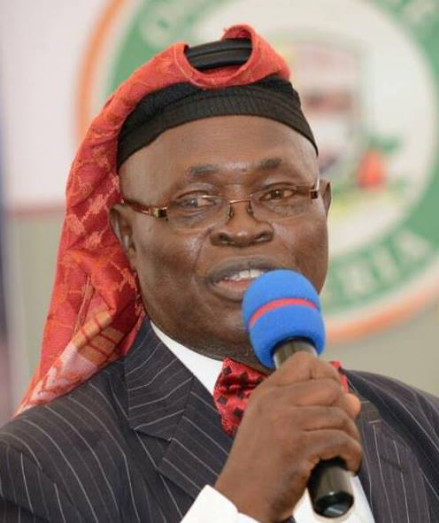
The Corps Marshal of Federal Road Safety Corps (FRSC), Shehu Mohammed was a special guest at the recent Nigeria Auto Industry Summit (NAISU) convened by the Nigeria Auto Journalists’ Association (NAJA) with the theme, “Nigeria’s Clean Mobility Future: The EV and CNG Journey under the President Bola Ahmed Tinubu Administration.” In an interview after the programme, the Corps Marshal speaks on the Presidential Initiative on the compressed natural gas (CNG) and Electric Vehicle (EV). What is your impression of the Presidential Initiative on CNG and EV? Let me first of all appreciate President Bola Tinubu, one for allowing me to represent him at the recent United Nations Summit on Global Road Safety to address the General Assembly. Also, I want to thank him for the Presidential initiative on the CNG and the Electric Vehicle. You can see that it has aligned with Goal 13 of the United Nations Sustainable Development Goal on green energy. Green energy is a motorized transport system, where pedestrians and cyclists are more encouraged for a healthier and cleaner environment. This initiative has brought in so many investments. As we can see we have so many assemblies and manufacturing assemblies that are producing electric vehicles and CNG vehicles. You can also see companies that are manufacturing CNG cylinders, the conversion kits, and also the technology brought in to take greater part of our youths to be part of this technical initiative to create jobs for them. Really, it’s a massive investment that is coming into Nigeria, and also producing massive jobs for our unemployed people. And I also want to appreciate Mr. President and his entire government machinery for also giving road safety all the support to be a part of this project and process. I believe that with this initiative going into this administration, we hope that with the Lagos-Calabar Coastal Highway and the Sokoto-Badagry Super Highway and many massive renovations on the entire midland roads, we are going to achieve what the United Nations really requires on Goal 11.2, which is to provide a safe, accessible, affordable, reliable and sustainable, efficient transport system for all Nigerians by Year 2030. I think we are moving towards that. We hope that every Nigerian should support this administration for this initiative to be achieved. What about enlightenment of road users? When FRSC started, one of the cardinal mandates was public education and sensitisation. And you can agree with me that the FRSC has been doing that for the past three decades, but we are not there yet. The issue of road safety agenda, road safety principle, we keep on saying, has to be a shared and collective responsibility. It shouldn’t just lie on FRSC. FRSC is just an organ, an agency of government that can drive it, but the entire citizens of Nigeria are supposed to drive this. You have shown me that most of the mixed loading, where loads packed in trailers and trucks – load and passengers normally come from the North, where the literacy level is still low. So, the government, citizens, community leaders, traditional leaders are supposed to be involved in sensitisation, not just the FRSC. We are only creating the platform for everyone to be involved. That’s why we designed our campaign. Instead of going just to the motor parks and garages, we now went back to the grassroots by creating what we call town hall engagements, bringing everyone on board – the driver, the passenger, community leader, entire citizens and potential passengers so that we can tell them what we require, sensitisation on good culture of driving. It shouldn’t just lie on FRSC. It should come across all citizens of this country. I think we are getting a bit of progress on it, but we need to do more. Society, citizens, everyone must come on board to support the FRSC. When you see a bad driving culture, stop the person, tell him, let him be embarrassed, that is shared responsibility. What about the bad driving culture in Abuja as observed by one of the speakers? That’s also the thing that will require every citizen to support us. What is going on in Abuja, as you mentioned earlier, this bad driving culture, everyone wants to create lanes. Before you know it, 10 lanes have been produced in one road. Before you know it, everybody is speeding. Before you know it, everybody is taking overloading, both in load and in passengers. We need to come together to talk to ourselves. Wherever we find ourselves, let’s talk. And that’s why we tell passengers, when you see a driver over-speeding, speak out. Also, the Nigerian Auto Journalists Association (NAJA), you have provided a platform for us to meet with a lot of Nigerian citizens, bringing in the journalists because you have been supporting us right from the day FRSC started. This shows that you have that conviction and dedication to move this Nigeria forward by putting in whatever you have to support FRSC to reduce road traff
Don't miss out on breaking stories and in-depth articles.