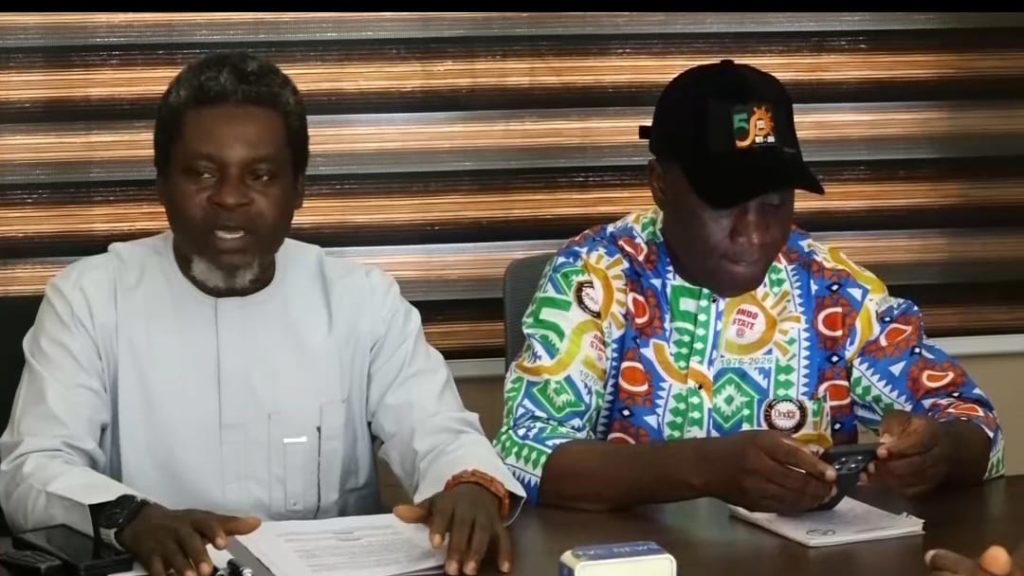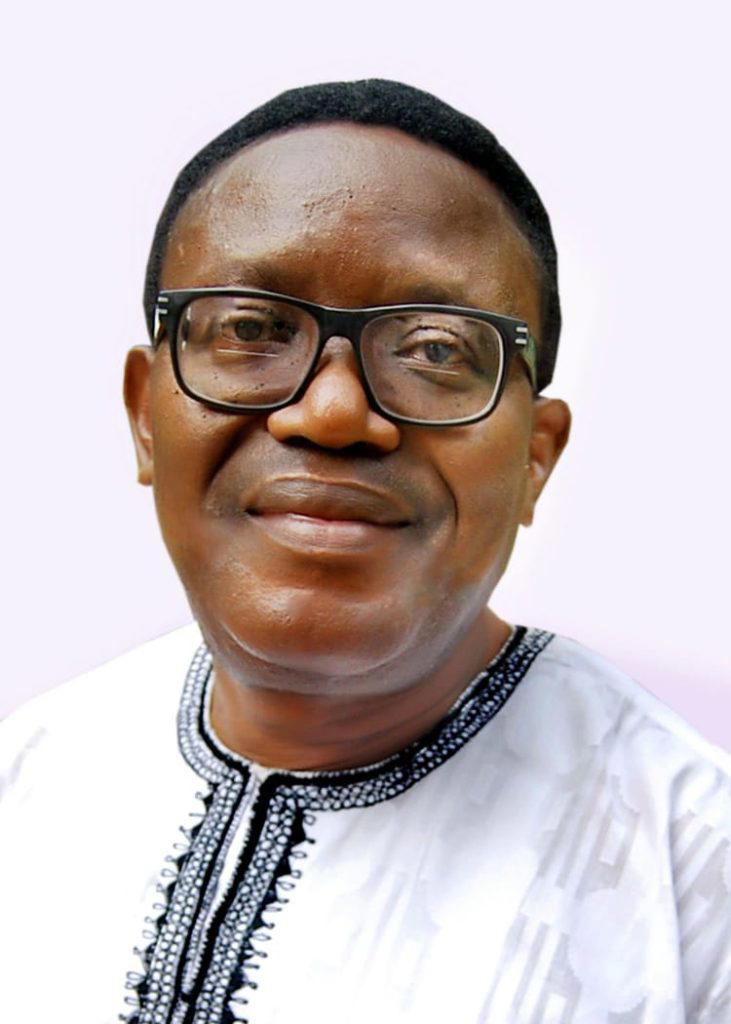
Life is in flux and labour in Nigeria is caught in its crosswinds. To navigate the strong currents of change, and produce a compass, the Petroleum and Natural Gas Senior Staff Association of Nigeria, PENGASSAN, Port Harcourt Zone, turned to the union’s 2003–2005 president, Louis Brown Ogbeifun. They asked the 71-year-old former manager, Employee Relations of the conglomerate Nigeria National Petroleum Company, NNPC, to dissect the key issue of “Navigating Change.” The President of the Trade Union Congress of Nigeria, TUC, Festus Osifo, who also doubles as PENGASSAN President, at the August 5, 2026, meet in Port Harcourt, laid bare the climatic changes in the oil industry and the unprecedented managerial and labour winds sweeping through the sector. For instance, he said, a primary reason why workers joined the union was for the protection of their jobs. So, when redundancy occurred, members were anxious that their names should not be included on the list. He said now workers in successful companies, who eye the attractive redundancy packages offered, lobby for their names to be included on redundancy lists. Secondly, he said, the focus of unions in the highly casualized oil industry was how to convert contract staff to permanent employees. This, he said, has changed, with the unions realizing that they need to focus more on contract staff welfare, including high income and job security. This is more so as some workers are serving up to one or two decades as contract staff. So, the union strategy now is to unionize them and carry out Collective Bargaining Agreements, CBAs, for them. He explained that managements maintain the contract staff system in order to pay them low wages, but that if the pay packages of contract and permanent staff are narrowed, employing contract staff would become a disincentive. Osifo cited a third challenge: the acquisition or sale of companies in the industry. In order to protect the workers, he said the union insists that existing CBAs must be inherited by the acquiring company. He added that under such circumstances, the primary change would be the CBA’s change of name to that of the new owner and the union. On the need for the workshop, Osifo said: “Across the globe and within our nation, institutions are confronting unprecedented political, economic, technological and industrial transformations. The world of work is evolving rapidly, and the energy industry is undergoing significant structural changes driven by the global energy transition, technological advancement, regulatory reforms and shifting economic realities. These realities demand that labour unions evolve beyond traditional methods of engagement.” The TUC President posited that: “Throughout history, periods of transition have always tested institutions. While some organisations become weakened by uncertainty, others emerge stronger because they possess visionary leadership, organisational discipline and a united membership.” As the January 2027 general elections approach, he urged workers to obtain or update their voters’ cards and encourage peaceful, issue-based elections. Labour, he added, should promote electoral transparency, accountability and respect for the rule of law. Dr. Ogbeifun, in his submission titled ‘Navigating Change: Strengthening Labour Unions for Effective Leadership and Member Representation during Transition Periods,’ argued that there is a “triple transition” afoot in the country’s energy sector. The first is that global decarbonization is accelerating and Nigeria is under pressure to diversify beyond fossil fuels even when the industry still powers 90 percent of the country’s export earnings. Part of the implications is the shrinking permanent workforce in upstream operations, growth in renewables and “skills obsolescence risks for traditional roles.” The second transition he identified is the country’s four-year electoral cycle, which may result in labour policy changes, altered regulatory practices, budget reprioritization and the emergence of new ministers of Petroleum and Labour. These, he argued, would tantamount to “creating a moving target for union strategy.” He advised labour to engage in pre-election manifesto engagement with political parties, present workers’ demands and, if possible, obtain written commitments on issues like minimum wage and workers’ rights. In the post-election era, he suggested formal requests for stakeholder meetings. The third fundamental challenge he identified is economic and just transition. This, he said, would be driven by forces such as subsidy removal and Naira devaluation. The implications of these to the worker, he posited, include real wage erosion as inflation outpaces pay and a rise in contract employment. The union, which he said operates at the intersection of the triple transition, is not a bystander, so must critically engage the process. Ogbeifun suggested a labour s
Don't miss out on breaking stories and in-depth articles.