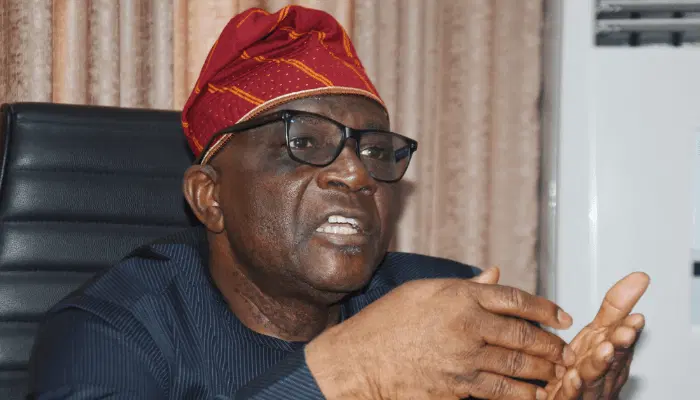
*… says APC deserves 2027 benefit of doubt By Johnbosco Agbakwuru Mr Bayo Onanuga is Special Adviser to President Bola Tinubu on Information and Strategy. In this interview, he talks about the temporary pains and lasting gains of the Tinubu administration’s reforms. He also speaks on the chances of the All Progressives Congress, APC, in the 2027 elections, as well as state police and the possibility of its implementation before the end of the President’s first four-year tenure. Excerpts: The government’s economic reforms appear to be creating hardship for the people. Don’t you think it may affect the ruling APC in the 2027 elections? Well, I think the message this President, on his own and through the ministers—Finance and others—has been passing on is that there’s no way you can carry out any reform without its attendant pains. This President has been consistent in saying so, consistent in showing empathy and promising to ensure that the gains of the reforms cascade down to the ordinary people. The President understands the problems of the high cost of living. He is doing a lot to give the vulnerable some relief. Just recently, he launched a $3.5 billion ward-centric programme that will address some of the problems of living and productivity. President Tinubu is optimistic that the pains are temporary and will ease over time. My advice to Nigerians is to remain positive and look at the bright side of the reforms. If President Tinubu had failed to institute the reforms, the country would have headed for bankruptcy. And there were already signs of the problems when he took over. People forget that the NNPC, the sole fuel importer, was having problems paying suppliers of refined products. There was fuel scarcity in May 2023. People forget that the CBN was having problems remitting money earned by foreign airlines, about $800 million. We could not fund letters of credit running into over $7 billion, and we had ways and means that had accumulated to about N30 trillion. Worse was that, contrary to the picture of exchange reserves that Emefiele projected, our net reserve was less than $4 billion. These were signs that we were heading for financial insolvency. President Tinubu had to act fast to save the nation from collapse. But today, we have moved from the brink of financial collapse. The economy is shaping up well. The country now has $52 billion in reserves. We have a stable exchange rate. We have had trade surpluses since, I think, the third or fourth quarter of 2023. Investors are coming, willing to bet on us. And if you look at what’s going on with many companies in Nigeria—those which are on the stock exchange—they are making money for their Nigerian investors. When Tinubu came into office, the ASI was about 50,000 points. Today, the All-Share Index has risen more than five times. Our stock market is the best in the world in terms of returns to investors. Since 2023, we have had NELFUND to help our indigent students; we have introduced free vocational education, with the students given stipends. We have CrediCorp. Pensioners are being paid about 10 times what they were getting before. Those workers Atiku cast into the cold after selling government companies and assets are now being paid by the Tinubu government. These are the bright sides of the administration. Yes, the government removed fuel subsidy. But the same government introduced a cheaper, indeed five times cheaper, fuel, Compressed Natural Gas, CNG. Many commercial buses and taxis have converted, and I can tell you that many of them, even though they have not transferred the benefits they enjoy to their passengers, have really benefited from the introduction of CNG and reduced operating costs. One of my cars is also running on CNG, and I am happier for it in terms of saved costs. So many positive things are going on. There are other things the government has done, increasing the minimum wage, for instance, reducing the cost of kidney treatment for people who have kidney problems, and so on. And then you find even at the state level, governors are doing all kinds of empowerment programmes, distributing foodstuffs to vulnerable people. The Ministry of Humanitarian Affairs is also spending billions of naira sending money to vulnerable Nigerians. I think the last time, about eight million households or so were sent money. So many things are being done because the government realises it has a responsibility to protect the vulnerable in society. With the high cost of living arising from the reforms, even though there appears to be light at the end of the tunnel, do you think the APC has a chance in 2027? Well, I think people will look at the balance sheet and compare the bright sides with the temporary pains. They’ve seen the positive side of the reforms, even though, as I say, they have unintended effects.
Don't miss out on breaking stories and in-depth articles.