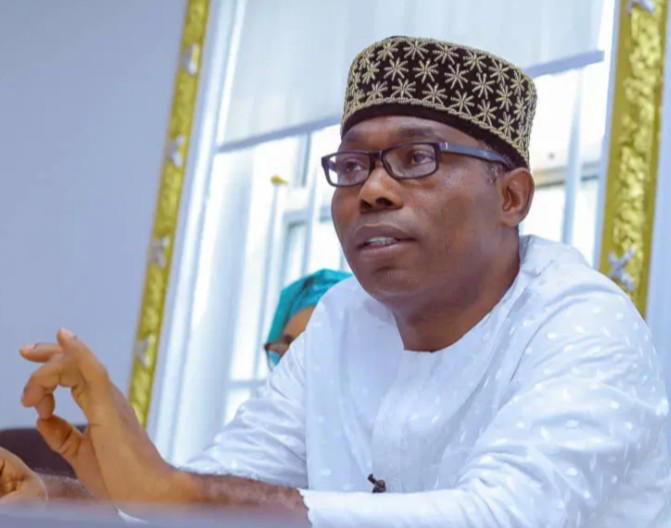
Recent move by the Economic and Financial Crimes Commission to freeze Osun state government’s account reignites debate over timing, independence and results of the country’s anti-graft war. Iyobosa Uwugiaren writes. Baarely days before the Osun State governorship election, the Economic and Financial Crimes Commission (EFCC) found itself at the centre of another political storm. Reports emerged that the commission had frozen a bank account belonging to the Osun State Government. Governor Ademola Adeleke and his supporters immediately accused the EFCC of political interference, warning that the action was capable of crippling government activities on the eve of a crucial election. The controversy dominated headlines and social media, apparently forcing President Bola Tinubu to publicly distance himself from the commission’s action. While critics have questioned the timing and alleged political motives, others have argued that anti-corruption agencies should not suspend investigations simply because elections are approaching. As the debate intensified, attention once again shifted to the man leading Nigeria’s foremost anti-graft agency — Ola Olukoyede, the Executive Chairman of the EFCC — whose three years in office have become one of the most closely scrutinised in the commission’s history. The Osun incident is only the latest example of how the EFCC’s work inevitably places it at the intersection of law, politics and public opinion. The criticism that trailed the Osun account freeze is hardly surprising. In Nigeria, every major anti-corruption drive has generated controversy, especially when investigations touch politically exposed persons, state governments, or strategic sectors. For the EFCC Chairman, the political headwinds are part of the job description. The agency’s mandate — to investigate, prosecute and prevent economic and financial crimes — inevitably puts it on a collision course with powerful interests. Yet beyond the partisan noise and daily headlines lies a more fundamental question: has the current leadership of the EFCC remained faithful to its constitutional mandate of fighting corruption without fear or favour? To answer the question, it is necessary to look beyond the controversies and examine what the commission has done, how it has done it, and the constraints within which it operates. Available evidence suggests that despite enormous political pressure, legal battles and relentless public scrutiny, the commission has intensified its enforcement activities under Olukoyede. The approach has been three-pronged: pursue high-profile cases, prioritise asset recovery, and expand the fight into new frontiers like cybercrime while strengthening institutional capacity. One of the most remarkable examples of this commitment is the ongoing investigation into the alleged diversion of funds allocated for the rehabilitation of Nigeria’s state-owned refineries. The probe is regarded as one of the largest corruption investigations in the country’s oil and gas sector in recent years. It touches on billions of public funds approved over several years for projects that Nigerians are yet to feel the impact of. The EFCC has so far recovered over N9.4 billion, US$21.2 million, and several landed properties allegedly linked to individuals under investigation in connection with the programme. Beyond the impressive figures, the exercise demonstrates the commission’s determination to follow financial trails, recover proceeds of crime and ensure accountability in one of the country’s most strategic and opaque sectors. For many observers, pursuing such a case illustrates the chairman’s willingness to confront corruption in areas traditionally regarded as politically sensitive. The petroleum industry has long been associated with enormous public expenditure and allegations of financial misconduct. Investigating it inevitably attracts resistance from influential interests. Nevertheless, the commission has pressed ahead, reinforcing the principle that no institution or individual should be beyond the reach of the law. Also, asset recovery has become one of the defining hallmarks of the current EFCC leadership. The commission has disclosed that under Olukoyede, it has recovered over N566 billion in the last three years, alongside millions of dollars, pounds, euros, luxury vehicles, landed properties and other assets linked to proceeds of crime. Rather than focusing exclusively on arrests and media parades, the commission has prioritised tracing, confiscating and recovering illicit assets. These recoveries do two things. First, they return stolen wealth to the public treasury. Second, they send a powerful message that corruption carries tangible consequences. “Crime does not pay” has ceased to be a slogan and becomes a financial reality for offenders.
Don't miss out on breaking stories and in-depth articles.