
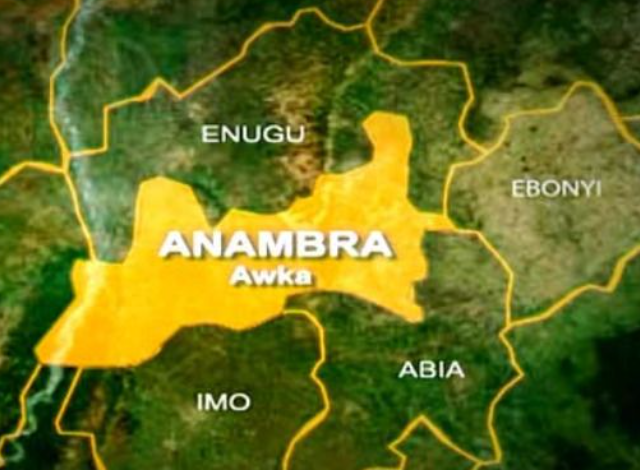
By Vincent Ujumadu, Awka AWKA — The President of the Aircraft Owners and Pilots Association of Nigeria, AOPAN, and Second Vice President of the Aviation Safety Round Table Initiative, ASRTI, Dr Alex Nwuba, has said the Anambra State Government is not building a second passenger airport, but a new economic city with an airport as its transport hub. Nwuba, in a statement sent to Vanguard on Monday, said the project, known as the Anambra Aerotropolis Export Free Trade Zone in Orumba North Local Government Area, was being misconstrued in public discourse as a second airport. He said the distinction was important because the project was designed as a planned economic city built around a cargo-led international airport, rather than simply another passenger gateway. According to him, the project is intended to serve as a logistics and industrial hub connecting air, road, rail and inland water transport while supporting manufacturing, agriculture, pharmaceuticals, commerce and exports in the South-East. Nwuba said: “Anambra is not building a second airport. The government itself said as much in its earlier statements, and on the evidence of the documents, it was telling the truth. “What it did not go on to clarify is that it is building a new Anambra city with an airport within it.” He explained that the project was formally designated the Anambra Aerotropolis Export Free Trade Zone, with Ndikelionwu serving as a reference point and one of several host communities within the project area. Nwuba admitted that he had previously described the project as a second airport, saying the position was based on incomplete information. “I am guilty of the second airport framing myself. That story was the product of partial information, and it was that publication which led government to share the details of its plans with me so that the record could be corrected,” he said. The aviation expert argued that the economic value of an airport should not be assessed primarily by its proximity to existing airports, but by the economy within its catchment area and the specific function for which it was developed. According to him, the proposed facility is designed primarily as a cargo and logistics gateway to support the industrial and commercial activities of Onitsha, Nnewi and other parts of the South-East. He said the facility would potentially handle cargo from international destinations while providing a platform for the consolidation, processing, certification and export of agricultural produce, pharmaceuticals and manufactured goods from the region. Nwuba noted that businesses in the South-East currently depend heavily on Lagos and Port Harcourt for imports and exports, resulting in additional transportation costs, delays and loss of competitiveness. He listed Innoson Vehicle Manufacturing, Ibeto Group, Cutix Cables, the Nnewi auto parts and components cluster, Onitsha Main Market and the rice-producing areas of the Omambala plain among the economic activities the proposed gateway is expected to serve. He said Nigeria’s air freight market was projected to grow significantly in the coming years, while increasing cross-border e-commerce and the implementation of the African Continental Free Trade Area, AfCFTA, were changing Africa’s logistics landscape. Nwuba said the Orumba North location had an estimated 12.5 million people within a 100-kilometre radius, with major commercial centres including Onitsha, Nnewi, Awka, Enugu, Owerri, Asaba and Aba within varying road travel times. He described the location as defensible for a cargo and industrial hub, particularly because of the availability of land and its proximity to major commercial centres. On the existing Chinua Achebe International Airport at Umueri, Nwuba said the project would not diminish its importance, noting that states with more than one airport were not unusual. He, however, said the availability of large, contiguous land was a major consideration in the development of a planned city. According to him, the Orumba North project is planned on a large land bank already acquired by the state, while the Umueri area presents challenges because of its low-lying agricultural terrain and fragmented private land ownership. Nwuba said the masterplan covers about 12,700 hectares and includes an airport city, Anambra Mixed-Use Industrial City, agro-industrial park, pharmaceutical hub, logistics, commercial, residential and leisure districts. He said the development was also designed to integrate road, rail and inland water transportation. “The logistics thinking in the documents is multimodal by design. The state’s rail masterplan runs a line beside the site, linkin
Don't miss out on breaking stories and in-depth articles.


