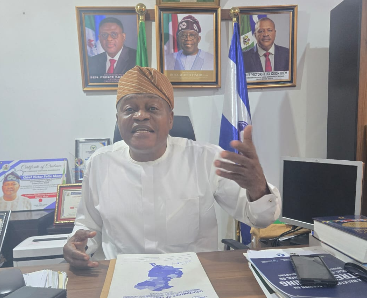
By Henry Obetta THREE years into the administration of Governor Senator Bassey Out of Cross River State, the state government says it has embarked on far-reaching reforms aimed at repositioning the local government system as the true engine of grassroots development. In this interview, the Commissioner for Local Government Affairs, Chief Victor Idem, reflects on the achievements, challenges and reforms that have shaped the state’s third tier of government. Idem speaks on strengthening council administration, the Out’s plan to compel chairmen to reside in their respective local government headquarters, ongoing efforts to deepen grassroots governance, and the controversy surrounding the controversial local government recruitment exercise. It has been three years since you assumed office as Commissioner for Local Government Affairs. Looking back, what would you describe as the most remarkable achievements during this period? If I were to assess our performance over the last three years, I would say we have made appreciable progress in repositioning local governments as institutions of grassroots development. While there is still room for improvement, many councils have undertaken projects that directly impact the lives of their people, despite operating under financial and administrative constraints. It is important to appreciate that local government administration is a specialised field. Most of the chairmen came into office with little or no practical experience in public administration. Some had backgrounds in business, politics or other professions, but governing a local government requires a different set of skills. It involves managing public funds responsibly, understanding the law, engaging communities, and balancing competing developmental priorities. Naturally, it has been a learning process. Recognising this from the outset, the Ministry placed significant emphasis on capacity building. We have consistently organised orientation programmes, workshops and policy sessions to expose the chairmen and other council officials to the principles of modern local government administration. We have impressed upon them that leadership at the grassroots is not about occupying an office; it is about solving problems, responding to the aspirations of the people and ensuring that government is visible in every community. Many chairmen have become more responsive, more development-oriented and more conscious of the need to justify the confidence reposed in them by Governor Otu and the people of Cross River State. There is a widespread perception that many local government chairmen are disconnected from the people because they prefer residing in Calabar instead of the councils they administer. Doesn’t this undermine effective grassroots governance? I believe that perception is understandable because leadership is most effective when it is visible and accessible. A chairman who spends most of his time outside his local government cannot fully appreciate the day-to-day realities confronting his people. This is exactly why I must commend Governor Bassey Otu for the bold initiative he is championing. The Governor has conceived a housing scheme that will provide official residences for local government chairmen, vice chairmen, council secretaries and leaders of legislative councils in all eighteen local government headquarters. The thinking behind this initiative goes beyond providing accommodation. It is about institutionalising grassroots governance. Public officials should live where they work, interact daily with their people and have firsthand knowledge of community challenges. Governance should not be conducted remotely from the state capital. We discovered that while some chairmen reside within their councils, others shuttle between Calabar and their local governments because of accommodation challenges. Some stay in rented apartments, others in family houses, while a few have no suitable accommodation at all. Once the Governor’s housing programme is completed, that excuse will no longer exist. Chairmen will be expected to live among their people, supervise projects directly, attend community engagements promptly and respond more effectively to emergencies. That is the true spirit of grassroots governance, and we are determined to make it a permanent feature of local government administration in Cross River State. Some people believe that several local government chairmen lack the vision to initiate meaningful developmental projects. How is the Ministry addressing this concern? Every local government has peculiar developmental needs. What may be considered a priority in one council may not necessarily be the immediate concern in another. Therefore, we encourage every chairman to engage
Don't miss out on breaking stories and in-depth articles.