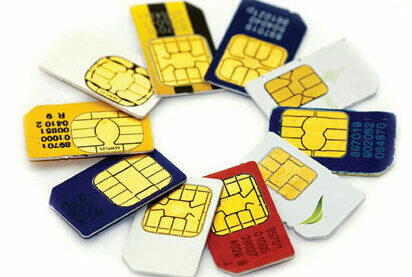
…Knocks NCC, Telcos for poor handling of refarm lines ..It’s not our fault-NIMC By Juliet Umeh When Victory Ibezim walked into the registration point of one of the telecom operators in Lagos to purchase a new SIM card, he believed he was taking ownership of a fresh mobile identity. Like millions of Nigerians, he submitted his National Identification Number, NIN, had his biometric details captured and posed for a head-shot, expecting the line to be registered solely in his name. Hours later, after the SIM became active, he made a startling discovery. Instead of displaying his identity, the phone line showed the name of someone else. “I bought the SIM from one of the authorised vendors. They captured my details and took my photograph. I thought I was getting a brand-new SIM. They told me it would become active in about four hours. But when I eventually used it, I was shocked to discover that another person’s name appeared instead of mine. “Perhaps, NCC and the Telcos didn’t do a good job of cleaning the data of the lines they recovered from dormant users,” he told Vanguard. His story is not isolated and not limited to one network. All the networks appear to be in the same hole.In Abia State, a businesswoman, Nkechinyere Nso recounted a similar experience. “Recently, I bought a SIM of one of the networks. After registering and submitting all my information, I discovered that instead of my own name appearing, somebody else’s name came up. I sincerely don’t understand how that happened,” she said. The incidents have raised fresh concerns over the integrity of Nigeria’s SIM registration process at a time when mobile phone numbers have become the key to banking, digital identity, government services and online authentication. More than just a phone number In today’s Nigeria, a mobile number is no longer just a communication tool. It is linked to bank accounts, one-time passwords, OTPs, USSD banking, fintech wallets, National Identification Numbers, NIN, social media accounts and numerous digital platforms. This means that any weakness in the management or reassignment of phone numbers could expose subscribers to identity theft, financial fraud and privacy breaches. The growing concern has become so significant that the Nigerian Communications Commission, NCC, recently announced plans to introduce a Telecoms Identity Risk Management System, TIRMS, a platform designed to reduce fraud associated with recycled, swapped, churned and barred SIM cards. Speaking at a stakeholders’ consultative forum in Abuja, Executive Vice Chairman of the NCC, Dr Aminu Maida, said mobile numbers have not only evolved into critical digital identifiers but have also become attractive targets for fraudsters. According to him, the proposed platform will enable organisations across different sectors to verify whether a phone number has been flagged for suspicious activity before granting access to sensitive services. The Commission also proposed new rules requiring telecom operators to notify subscribers at least 14 days before inactive numbers are recycled and to upload details of churned numbers into the new risk management platform. NIMC distances itself Reacting to complaints from subscribers who found unfamiliar identities attached to newly acquired SIM cards, Director-General of the National Identity Management Commission, NIMC, Engr. Abisoye Coker-Odusote, said the issue does not originate from Nigeria’s identity database. Speaking with Vanguard, she maintained that the National Identification Number system relies on biometric verification, including fingerprints and facial recognition, making identity duplication extremely difficult. “That’s not possible with the NIN,” she said. “You can’t have that with the NIN. Your NIN contains your fingerprints and your facial identity. The purpose of the NIN is to eliminate fraud, not create cyber fraud.” She explained that if subscribers encounter such anomalies after SIM registration, the issue is likely to lie within the telecom operator’s processes rather than the national identity database. She encouraged subscribers to verify their identities through the NINAuth application, stressing that their official identity records remain intact within the NIMC system. Why the risk extends beyond telecoms Industry experts say the problem goes far beyond telecommunications. Chief Corporate Services and Sustainability Officer of MTN Nigeria, Tobechukwu Okigbo, said the convergence of telecoms and financial services has transformed phone numbers into one of the most sensitive digital credentials Nigerians possess. “The phone number has effectively become part of the password,” he said. According to him, one of the biggest vulnerabilities lies in what happens after phone numbers are recycled.
Don't miss out on breaking stories and in-depth articles.