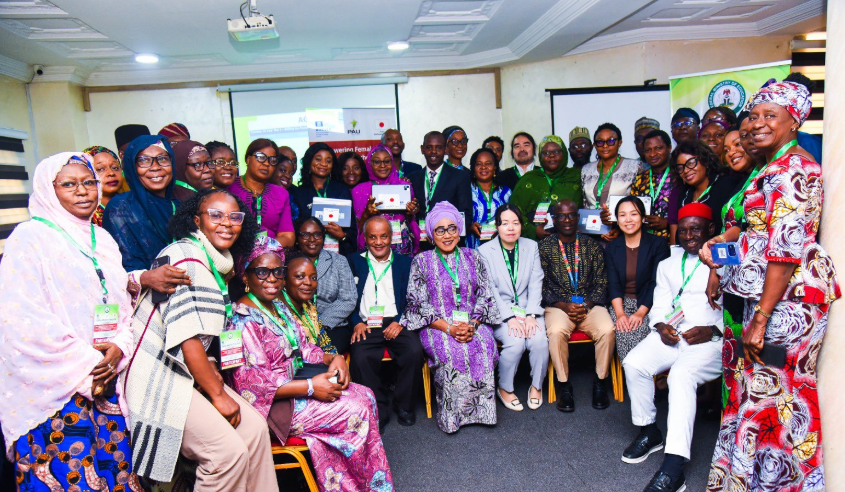
Michael Olugbode in Abuja United Nations Educational, Scientific and Cultural Organisation (UNESCO), the federal government, and National Board for Technical Education (NBTE) have called for fundamental digital transformation of Nigeria’s Technical and Vocational Education and Training (TVET) system. They stressed that technology must ultimately translate into jobs, productivity, innovation, and greater opportunities for young Nigerians. The call was made on Tuesday in Abuja at the Validation Workshop on the National Strategy for the Digital Transformation of TVET and Skills Development System in Nigeria. The two-day workshop, holding from August 11 to 12 at the United Nations House, Abuja, brought together senior government officials, regulators, TVET institutions, development partners, the academia, industry, and other stakeholders to review and validate the proposed national strategy. Head of UNESCO Office and UNESCO Representative to Nigeria, Dr. Isaias Barreto da Rosa, said the world of work was changing at an unprecedented pace, as digital technologies, automation, and artificial intelligence transformed occupations and altered the skills required by economies and societies. Barreto da Rosa, who was making one of his first official engagements since assuming office as UNESCO Representative to Nigeria, said TVET could no longer remain static. “TVET must anticipate change rather than simply react to it,” he said. According to him, Nigeria’s TVET system has enormous potential to expand opportunities for young people, strengthen employability and entrepreneurship, support innovation, and contribute to inclusive and sustainable economic growth. He however said the potential could only be realised if there was a strong connection between what people learn, the skills employers require and opportunities created by the changing economy. The UNESCO representative described the national strategy as an important roadmap, but warned that its validation should not become an end in itself. Barreto da Rosa said, “Our task is not simply to validate a document. It is to ensure that Nigeria has a strategy that is relevant, realistic and capable of producing measurable results.” He said a strategy became meaningful only when it changed what happened in institutions, classrooms, workshops, communities, and workplaces. Barreto da Rosa identified some of the challenges that must be addressed, including poor connectivity and unreliable electricity, inadequate access to digital infrastructure and devices, limited digital competencies among teachers, instructors and learners, sustainable financing, weak institutional coordination and insufficient alignment between training and labour-market needs. He also warned that digital transformation must not deepen existing inequalities. According to him, learners from disadvantaged and low-income communities must have access to opportunities created by digital technologies. He said the central principle guiding the transformation should be that “digital transformation must ultimately be about people, not technology”. Barreto da Rosa said, “Technology is a means, not an end.” The UNESCO representative said the success of the strategy should, therefore, not be measured by the number of computers acquired or digital platforms created, but by whether young Nigerians acquired relevant skills and found decent work, whether instructors became better equipped to teach, whether institutions responded more effectively to industry needs, and whether technology expanded opportunities for people who might otherwise be excluded. He further emphasised partnership, saying no single institution could achieve digital transformation of TVET alone. He called for stronger government leadership and institutional coordination, empowered teachers and trainers, active participation by employers and the private sector, and collaboration with development partners, academia and civil society. Barreto da Rosa challenged participants to move beyond broad aspirations and focus on implementation. “Let us ask not only what needs to be done, but also who will do it, how it will be financed, when it will be delivered, and how we will measure success,” he said. He reaffirmed UNESCO’s commitment to working with the Nigerian government and other partners to build an inclusive, innovative and future-ready TVET and skills development system. Minister of Education, Dr. Tunji Alausa, described digital transformation of TVET as a national priority. Alausa, who was represented by a director in the ministry, said the Federal Ministry of Education, under President Bola Tinubu’s Renewed Hope Agenda, was implementing reforms to strengthen technical education, expand digita
Don't miss out on breaking stories and in-depth articles.