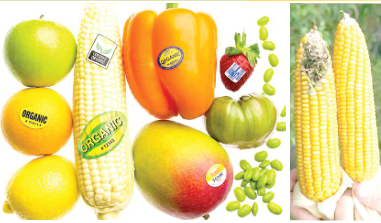
· Nigeria’s soil damaged by GMOs – MOMEF boss · Farmers demand proper labelling of GMO seeds · Weak regulatory safeguards is key – GIFSEP By Gabriel Ewepu As controversy continues in Nigeria’s agriculture sector over Genetically Modified (GM) crops and farm inputs more stakeholders are coming up with divergent narratives and counter-narratives on the challenges and threats posed by the Genetically Modified Organism (GMO) to food security in the country. However, some opinions have also emerged on possible good outcomes in deployment of GMOs to the country’s farmlands. GMO in agriculture refers to a plant or crop, animal, or microorganism whose DNA has been changed using biotechnology to add helpful traits. These traits are said to help crops fight bugs and pests and tolerate herbicides and other weed killers. The GMOs are also said to have traits of surviving harsh climatic conditions. Corn, tomatoes, soybeans, cotton, canola, sugar beets, and many more farm produce are widely grown as GMO varieties. GM varieties of maize, cotton, beans were among the first to be approved by the Federal Government of Nigeria despite strenuous opposition by consumers, farmers and civil society. But unapproved GM varieties of agro produce have all entered Nigeria’s agriculture system, farms, markets and dining tables. Many stakeholders who spoke to Vanguard AgroBiz lamented the influx of GM agro seeds, crops, food items outlining a long list of its harmful impact on both the nation’s agriculture and food security as well as consumer safety. But they noted that majority of Nigerians are yet to know about GMOs and their implications, yet they consume them. According to them the GMOs are already failing to deliver on its promises in the area of yield and shelf life. For instance, they said cotton variety approved in Nigeria in 2016 had been banned in neighboring countries of West Africa. According to them, it has now failed in Nigeria with farmers complaining that the variety did not only fail but also damaged the soils. Some of the items on the stakeholders’ objection lists include: Inadequate labeling; lack of a robust regulatory safeguards; inadequate preparation amongst Nigerian agric sector stakeholders, regulators and government for the widespread adoption; the harmful chemical inputs used on GM crop cultivation; and a genetically compromised future for Nigeria’s agro-sector. There are also concerns about inadequacy of risk assessment processes, post-release monitoring, traceability systems, liability mechanisms, and independent oversight. Nigeria’s soil damaged by GMOs – HOMEF boss According to the Executive Director, Health of Mother Earth Foundation, HOMEF, Arc Nnimmo Bassey, Nigerian soils have been damaged by GMOs. Speaking to Vanguard AgroBiz he stated: “We are equally assailed by the rush of Frankenstein foods produced through genetic engineering. Many of such products are imported without queries into Nigeria’’. He recalled that, “In 2024 the House of Representatives recommended a suspension of approval of GMOs. Our farmers, scientists, health professionals, and civil society are solidly against the approval and commercialisation of GMOs in Nigeria.” He stated further: “Sadly, a majority of people are yet to know about GMOs and their implications. What’s most concerning is that with food crops, people cannot tell the difference between a GM crop and a non-GM crop. So, no matter the level of knowledge on GMOs, people are consuming GMOs without knowing. Nigerians largely do not have the habit of reading labels.” According to HOMEF boss, “A market shelf survey conducted by HOMEF in more than 10 major cities revealed the presence of over 50 food products that contain GMO ingredients. When customers were asked if they were aware of GMOs’ labelling, the response was mostly no. Moreover, the inscriptions are often in very tiny prints.” He added, “Many countries have rejected GMOs after weighing the risks associated with them as well as the harmful chemical inputs used on their cultivation. ‘‘We need people-centred and agroecological food systems that protect health, livelihoods, and the environment. “Food is life. Seeds are our heritage. ‘‘Our future must not be genetically compromised.” Farmers demand proper labelling of GMO seeds The Chairman, All Farmers of Nigeria, AFAN, Federal Capital Territory, FCT, Abuja Chapter, Dr Perpetua Okafor, expressed acceptability views for GMOs in Nigeria while also pointing out some measures to safeguard the usages. She stated: ‘‘Farmers demand the proper labelling of GMO seeds, which will e
Don't miss out on breaking stories and in-depth articles.