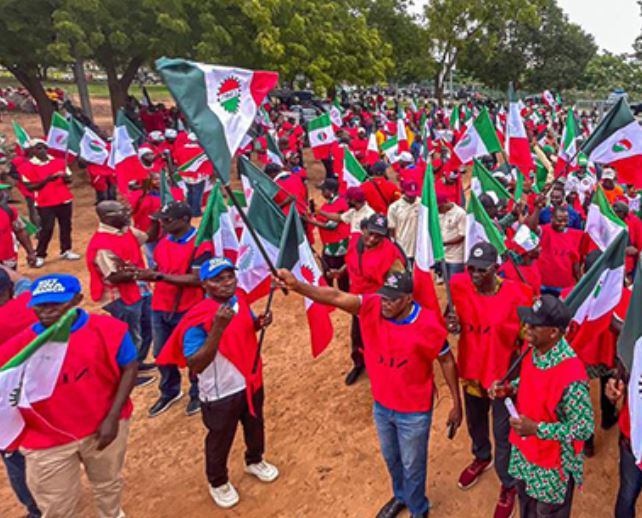
By Victor Ahiuma-Young For three days, the heart of Africa’s trade union movement was in Nairobi, Kenya, as workers’ representatives from across the continent, alongside international partners and other stakeholders, gathered to confront one of the defining questions of Africa’s future: how can the continent achieve a green energy transition without leaving workers and communities behind? The Second New Energy for Africa Convening, organised by the International Trade Union Confederation-Africa, ITUC-Africa, brought together participants from trade unions affiliated with the continental labour body, as well as international partners and other actors in the energy and climate space. From the deliberations came a clear and recurring message: Africa’s transition to clean energy must be more than a shift from fossil fuels to renewable sources. It must become a pathway to industrialisation, decent jobs, fair wages, social protection and affordable electricity for millions of Africans still excluded from reliable energy access. With more than 600 million people across the continent still without electricity, participants argued that Africa cannot afford to treat the energy transition merely as a climate obligation. It must also be seen as a major development opportunity—one capable of transforming economies, creating jobs, strengthening local industries and improving the quality of life of ordinary Africans. But the gathering also carried a warning. Without deliberate policies and the active participation of workers, Africa risks reproducing old inequalities under a new green label—exporting critical minerals, attracting investments and generating clean energy while workers remain trapped in precarious employment and communities continue to struggle with poverty. For ITUC-Africa, that cannot be the meaning of a just transition. The labour movement insists that Africa’s green transformation must put people at its centre, ensuring that new energy investments translate into decent employment, fair remuneration, social protection and affordable power, while giving African countries greater control over their resources and development choices. It was against this backdrop that ITUC-Africa General Secretary, Akhator Joel Odigie, and Deputy President, Rose Omamo, at the opening ceremony, called for workers to be placed at the centre of Africa’s energy transition and for governments to ensure that the continent’s green future delivers tangible benefits to its people. Industrialisation with a human face For Odigie, Africa’s energy challenge is inseparable from the continent’s quest for industrialisation. “Industrialisation is central to our liberation and development,” he said, stressing that Africa must move beyond lamenting its development challenges and focus on practical solutions. The challenge, he noted, is how Africa can industrialise without worsening environmental degradation and the climate crisis. That will require investment in technology, skills, infrastructure and financing, as well as genuine partnerships with institutions and countries outside the continent. But industrialisation, he stressed, will have little meaning if it does not improve the lives of ordinary people. For the worker returning home after a hard day’s work, energy justice should mean being able to afford electricity to cool the house, watch the news or spend time with family. “If our people cannot enjoy these basic necessities,” he asked, “then what kind of prosperity are we really talking about?” Public energy, affordable power ITUC-Africa is also campaigning to strengthen public energy systems through its Reclaim and Restore campaign. Odigie cited lessons from Finland, where the union delegation observed a system combining public and private participation but retaining a strong public role in the energy sector. The experience, he said, demonstrated how government involvement could help promote affordability. For Africa, the argument is that electricity should not be treated solely as a commercial commodity. It is essential to industrialisation, economic development and the dignity of ordinary people. Labour, government Odigie also rejected the perception that trade unions are inherently opposed to governments. According to him, organised labour’s role is to strengthen accountability and keep governments connected to the realities of ordinary citizens. Using a childhood experience, he recalled how his grandmother would place a small fire near his feet on cold nights to keep his body warm. That, he explained, is what trade unions do for governments: they keep the “feet” of leaders close to the fire so that their “heads” do not become too cold. The message is that labour wants to challenge governments where necessary, but also
Don't miss out on breaking stories and in-depth articles.