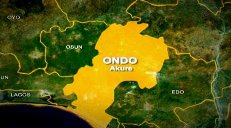
—We don’t know the source yet, Ondo govt says By Dayo Johnson, Akure AKURE: Residents of Akure, the Ondo State capital, have raised concerns over a persistent offensive odour that has enveloped parts of the metropolis for more than five weeks, urging the state government to urgently identify its source and address the situation. Some residents said the odour had caused discomfort, including headaches, throat irritation and difficulty breathing, while expressing concern over the possible health implications of prolonged exposure. Public affairs analyst, Barr. Wale Obanigba, and pro-democracy activist and lawyer, Oloroogun Sola Ajisafe, criticised the government’s response to the situation, describing it as inadequate and slow. However, the Ondo State Government said preliminary investigations had ruled out the Ala River as the source of the odour, adding that it was likely caused by organic compounds released into the atmosphere. In a statement signed by Henry Johnson Olagundoye on behalf of the Commissioner for Environment, Dr Tob Loko, the government said a team of professionals and environmental consultants had been constituted to investigate the source and nature of the odour. The government said preliminary findings had ruled out the Ala River as the source, describing the situation as “purely a case of air pollution arising from the release of certain organic compounds into the atmosphere.” It advised residents in affected areas to limit their exposure and wear nose masks while investigations continued. The government also urged residents to report cases of illegal waste disposal or unusual emissions to the Ministry of Environment. Loko appealed to residents to remain calm and continue with their normal activities, assuring them of the government’s commitment to protecting the environment and public health. Residents demand answers Reacting to the government’s position, Obanigba said residents had been raising concerns about the unusual odour for weeks and that the situation should no longer be treated as a routine environmental nuisance. “This is no longer a matter that should be treated merely as an environmental nuisance requiring reassurance through a press statement,” he said. He questioned the government’s explanation that the odour was caused by organic compounds, arguing that the specific compounds and their source had yet to be identified. “How can residents be assured that they can continue with their normal activities when government has not yet established exactly what they are breathing or its possible health implications?” he asked. Obanigba called on the Ministry of Environment to intensify air-quality monitoring, collect samples from affected areas and make the results public. He also urged the government to involve environmental scientists, public health experts and relevant regulatory agencies in the investigation. According to him, appropriate enforcement action should be taken if any facility or waste management practice is found to be responsible for the pollution. “Most importantly, government should provide regular and transparent updates. The people of Akure deserve more than reassurance. They deserve answers, scientific evidence and decisive action,” he said. ‘Response has been lethargic’ Ajisafe described the government’s response as “lethargy and irresponsibility,” arguing that the prolonged odour required an urgent and coordinated response. He said: “Best practice requires emergency teams on ground within four to six hours, a public advisory within 24 hours, and interim lab results within five to seven days. “In Akure, none of this happened. Instead, we got silence for weeks, then a vague statement.” Ajisafe attributed the delay partly to inadequate funding and bureaucratic bottlenecks, saying relevant institutions with expertise in environmental science should have been mobilised immediately. He specifically mentioned the Federal University of Technology, Akure (FUTA), Adekunle Ajasin University, Akungba-Akoko (AAUA), University of Medical Sciences (UNIMED) and Olusegun Agagu University of Science and Technology (OAUSTECH) as institutions that could contribute technical expertise to the investigation. “If this odour had been poisonous or life-threatening, how many people would have been affected in five weeks of inaction?” he asked. Ajisafe demanded that the government publish the membership of the investigative team, release interim findings, provide a timeline for resolving the problem and issue a clear public health advisory. He also called for adequate funding for relevant agencies to enab
Don't miss out on breaking stories and in-depth articles.