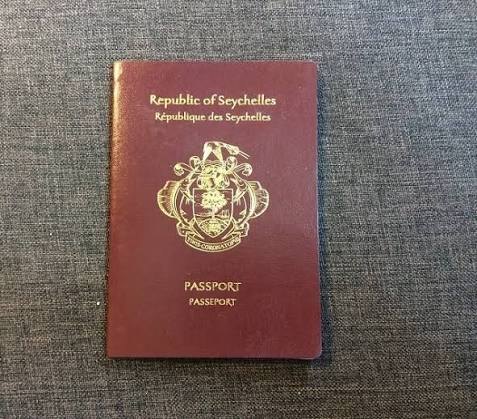
Amaka Diane Okeke For decades, wealth preservation followed a familiar formula: diversified investments, tax efficiency, asset protection and succession planning. These remain the foundations of sound financial planning, enabling families and businesses to build, protect and transfer wealth across generations. But the world in which wealth is created, managed and preserved has changed significantly. Geopolitical tensions, financial volatility, regulatory reforms, changing immigration policies and shifting business landscapes have introduced new forms of risk that extend far beyond financial markets. Preserving wealth is no longer solely about protecting assets from market fluctuations. It is equally about preserving the flexibility to respond when circumstances change. In an interconnected world, resilience increasingly depends on having options across more than one jurisdiction. This transformation is taking place alongside significant growth in global wealth. According to the UBS Global Wealth Report 2026, global personal wealth grew by 10.8% in 2025, the fastest pace since 2017, while nearly one million new US-dollar millionaires were created in a single year. As wealth expands across borders, investors are increasingly thinking beyond how to generate returns and asking how to build greater resilience in an increasingly uncertain world. This shift is redefining the role of global mobility within wealth planning. Once viewed primarily as a lifestyle consideration or a means of expanding travel access, Global mobility planning has become an important component of wealth preservation. For today’s investors, entrepreneurs and internationally minded families, residency and citizenship planning is no longer simply about where they can travel. It is also about where they can invest, establish businesses, educate their children, access healthcare and preserve opportunities across generations. At the heart of this evolution is a principle increasingly relevant to modern wealth management: jurisdictional diversification. Just as investors diversify their portfolios to reduce financial risk, they are increasingly considering how to diversify their legal, financial and geographic exposure to reduce dependence on a single country or regulatory environment. Global mobility planning provides the framework for this broader form of diversification, strengthening resilience while expanding long-term opportunity. At Optiva Capital Partners, we have seen this evolution reflected in our conversations with affluent families, entrepreneurs and business leaders. Increasingly, clients approach residency and citizenship planning not simply as a lifestyle enhancement or a means of achieving visa-free travel, but as a strategic decision that complements broader wealth-preservation objectives. The conversation is no longer centred solely on growing wealth. It is increasingly focused on ensuring that wealth remains protected, adaptable and positioned to thrive in an ever-changing global environment. Global Mobility Has Become an Extension of Wealth Preservation Diversification has always been a defining principle of wealth management. Traditionally, this has meant spreading investments across asset classes, sectors and geographic markets to reduce risk and improve long-term returns. Today, however, investors are increasingly recognising that financial diversification alone cannot address every source of uncertainty. Political instability, foreign exchange restrictions, tax reforms, banking regulations, sanctions and changing government policies can all reshape opportunities with little warning. As a result, investors are increasingly looking beyond portfolio diversification to strategies that reduce their exposure to jurisdictional concentration risk. Global mobility planning supports this broader approach by enabling investors to establish legal, financial and personal connections across multiple jurisdictions. Rather than concentrating every aspect of their lives and financial interests within a single country, they are building greater flexibility to respond to changing global conditions. In doing so, they strengthen the resilience of their overall wealth strategy and create greater freedom to act when circumstances change. Access Has Become a Strategic Asset Another defining feature of modern wealth preservation is the growing value of access. Wealth is no longer measured solely by accumulated capital, but also by the ability to deploy that capital, pursue opportunities and make strategic decisions wherever circumstances require. Access to international financial systems, business ecosystems, quality education, healthcare and stable regulatory environments has therefore become increasingly valuable to globally minded families. Global mobility planning enhances this access by giving individ
Don't miss out on breaking stories and in-depth articles.