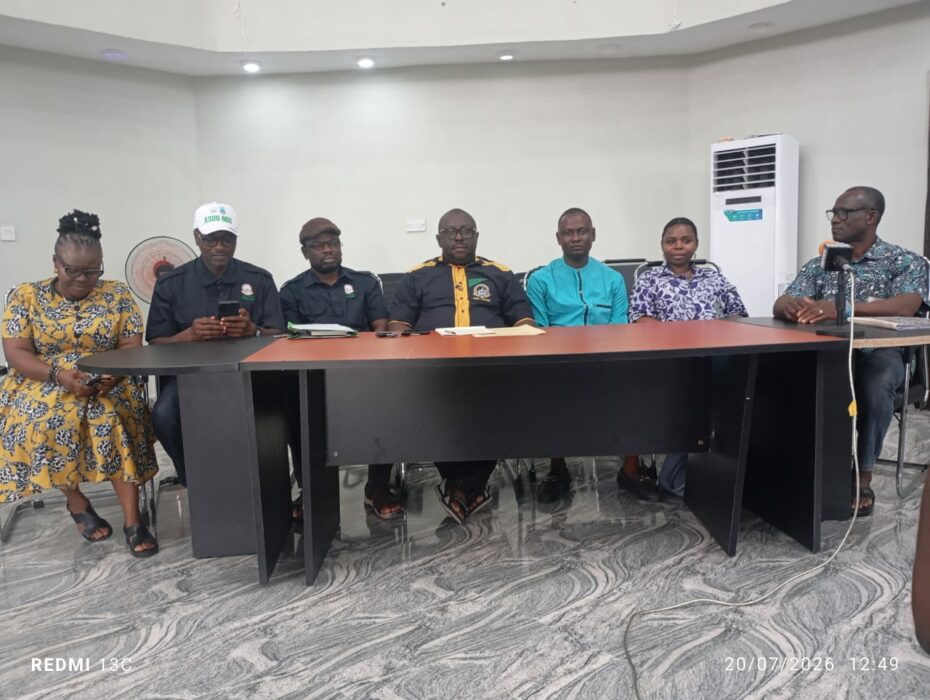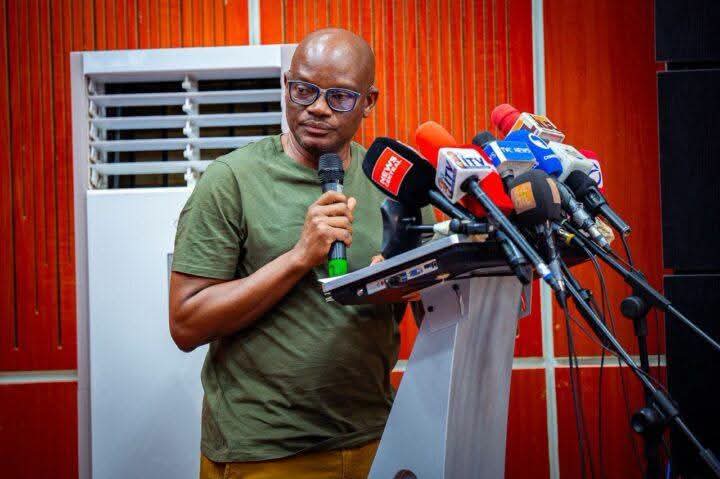
Union authorises strike in PLASU, 12 other universities over 2025 agreement By Golok Nanmwa The Academic Staff Union of Universities, ASUU, has described the political class as the biggest threat to Nigeria’s security, warning that rising political killings, thuggery and pre-election violence could plunge the country into a major crisis ahead of the 2027 general elections. The union also authorised affected branches in Plateau State University, Bokkos, PLASU, and other federal and state-owned universities to commence processes leading to industrial action over the non-implementation of the December 2025 agreement reached with the Federal Government. ASUU’s National Executive Council, NEC, took the decisions at its meeting held at the University of Abuja on August 8 and 9, 2026, where it reviewed developments in the education sector, economy, politics and security. In a statement signed by its National President, Prof. Christopher Piwuna, and made available to newsmen in Jos on Friday, the union said recent political developments had created palpable fears among Nigerians as the country approaches the 2027 elections. According to ASUU, the political atmosphere is increasingly being “toxified by thuggery, brigandage and political killings fueled by entrenched politics of bitterness and winner-takes-all.” The union warned that the situation had compounded the country’s already serious insecurity challenges, including threats to educational and religious institutions. ASUU said, “As things stand now, the political class are the most significant and dangerous threat to Nigeria’s security. They are the ‘tribe’ that threatens us all.” It further warned that if the current signals persisted, “the simmering tension may soon erupt like a volcano in the face of everybody.” The union also accused the ruling class of worsening the country’s problems through corruption, procurement violations, questionable contract awards and failure to prioritise critical infrastructure. It specifically challenged claims by the Rural Electrification Agency that solar farms had been installed and connected to 15 Nigerian universities. ASUU said information received from its branches showed that some of the installations were either not functioning or had suffered repeated breakdowns. The union urged governments to embrace transparency and accountability, arguing that citizens could not trust authorities whose promises were repeatedly raised and dashed. On the university system, ASUU expressed strong dissatisfaction with the continued non-payment of the outstanding three-and-a-half months’ salaries owed lecturers following the 2022 nationwide strike. It recalled that President Bola Ahmed Tinubu had initially paid four of the seven-and-a-half months withheld by the previous administration, but said the outstanding balance had remained unpaid. The union said lecturers had made significant sacrifices to recover lost academic time after the strike and that payment of the remaining balance would help strengthen industrial harmony in the nation’s universities. ASUU therefore resolved to deploy all legitimate means available to compel government to pay the outstanding salaries. The union also demanded immediate payment of the 25/35 per cent wage award and promotion arrears owed its members, warning that the continued delay was increasing frustration among lecturers. On the December 2025 FGN-ASUU agreement, the union described its implementation as haphazard and warned that the situation could lead to renewed unrest on university campuses. According to ASUU, federal universities, including universities of agriculture, were struggling to implement the financial components of the agreement because of inadequate government funding. At the state level, it said only about 10 per cent or fewer governors had openly endorsed the new salary package for academics, while several others were allegedly shifting responsibility to governing councils without providing the required financial backing. Consequently, NEC resolved to grant affected branches permission to embark on varying degrees of industrial action after satisfying the necessary requirements. Among the institutions listed by the union are Nasarawa State University, Keffi; Ibrahim Badamasi Babangida University, Lapai; University of Medical Sciences, Ondo; Gombe State University; Plateau State University, Bokkos; Adekunle Ajasin University, Akungba; Ambrose Alli University, Ekpoma; Olusegun Agagu University of Science and Technology, Okitipupa; Abia State University, Uturu; University of Education and Entrepreneurship, Akamkpa; Emmanuel Alayande University of Education, Oyo; Kaduna State University; and Aliko Dangote University of Science and Technology, Wudil. Recent reports on the NEC resolution indicate that affected branches have b
Don't miss out on breaking stories and in-depth articles.