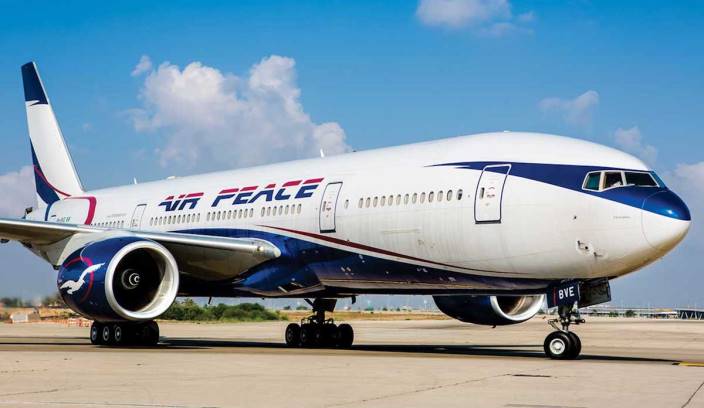
Fred Chukwuelobe Why Air Peace? That is the question Nigerians must ask following the decision by aviation industry unions to picket and disrupt the operations of Nigeria’s largest airline in Lagos and Abuja. This is not the first time Air Peace has found itself at the receiving end of what appears to be disproportionate industrial action. A few years ago, when the Nigeria Labour Congress (NLC) was engaged in a dispute with the Imo State Government, Air Peace was also picketed despite having nothing to do with the dispute. So, what is different this time? And why does Air Peace repeatedly appear to become the target? The unions have advanced two principal reasons for the latest action: the alleged refusal of Air Peace workers to join the unions and an alleged debt owed the Nigeria Civil Aviation Authority (NCAA) by all the airlines in respect of the five per cent Ticket Sales Charge (TSC). On the alleged debt, the Director-General of the NCAA, Captain Chris Najomo, reportedly said the regulator and all the airlines under the Airlines Operators of Nigeria (AON) had reached an agreement for the settlement of the outstanding owed by all the airlines. If such an agreement exists and the airlines are complying with it, why has the matter suddenly become grounds for industrial action against Air Peace? Records obtained indicate that the airline has paid billions in Ticket Charges last year and several billions this year and is still paying. It also paid several millions in other charges during the period and so far this year. As the country’s largest airline, Air Peace naturally pays more in statutory charges because of its size and operations. If the dispute is between a regulator and an airline over payment obligations, when did aviation unions become debt-collection agents for the NCAA? The situation becomes even more curious when union officials are heard telling Air Peace passengers to “go and buy tickets from other airlines” and “leave Air Peace.” That is not the language of neutral industrial action. It raises the legitimate question of whether something beyond workers’ rights is driving the campaign. The second justification – that Air Peace workers must join the unions – is even more troubling. Workers have a constitutional right to freedom of association. Union membership should not be imposed on employees against their will. Air Peace workers say they have enjoyed cordial relations with management for about 12 years and have regularly received salaries, promotions, healthcare benefits, allowances and other entitlements. They cite, among other benefits, travel privileges for themselves and family members. One of their leaders, Comrade Aminu Suleiman, put the position bluntly: “We can choose to join or not. It’s not by force.” Trade unions have historically played an important and legitimate role in protecting workers, negotiating better conditions and defending labour rights. I covered organised labour as a labour correspondent during my years in journalism and witnessed both the positive contributions of unions and instances of abuse and mismanagement of union funds. But the legitimate role of trade unions does not include forcing satisfied workers into membership simply because their numbers would increase union revenue or influence. That is where the current dispute becomes troubling, and questions need to be asked about the motives of the unions. Air Peace is one of the biggest employers in Nigeria’s aviation industry. Bringing its workforce into the fold of organised labour would undoubtedly increase union revenue through compulsory deductions from workers’ salaries. That may be the unions’ objective, but it cannot justify coercion or the targeting of the airline. And if the real issue is union membership, why only Air Peace? Other airlines also have workers who are not members of these unions. Why were their operations not similarly disrupted? If the issue is the alleged NCAA debt, why should passengers and workers be punished for a financial matter between a regulator and an airline? Even more disturbing are allegations that some Air Peace workers were physically assaulted during the picketing. If established, such conduct must be condemned unequivocally. A picket is not a licence for violence. Industrial action is a legitimate instrument of negotiation and pressure. It does not confer on union members the right to assault workers, intimidate passengers or prevent people from exercising their lawful right to work. The consequences of the action extend far beyond Air Peace. Passengers were stranded. Flights were disrupted. Airports were thrown into confusion. Businesses suffered losses, while families were left scrambling to reorganise travel plans. These are
Don't miss out on breaking stories and in-depth articles.