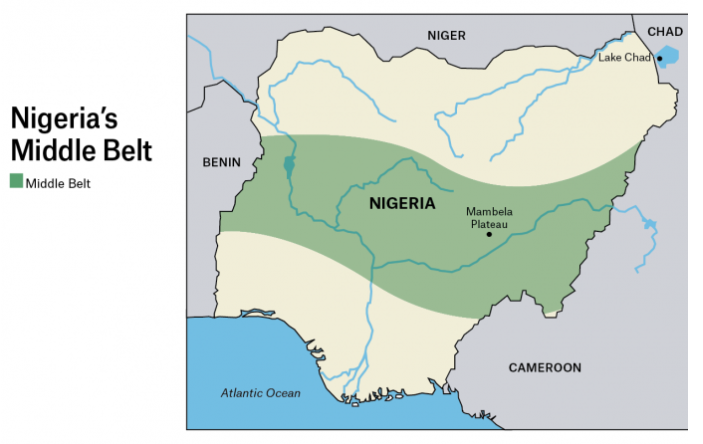
The Middle Belt Concern (MBC), a coalition of over 80 citizen groups, yesterday clarified that it never called on the federal government to declare a state of emergency in the Middle Belt region. The group in a rejoinder jointly signed by its conveners, Ier Jonathan-Ichaver and Marie Ene Orgah, clarified that its position at the media roundtable held in Lagos on August 13 was misrepresented by Daily Trust reporter who covered the event. The group, in a rejoinder to the report titled: “FG urged to declare state of emergency in Middle Belt,” said it never called on the federal government to impose a political or military state of emergency on the region. The group stated that the headline and narrative of the report did not accurately reflect the discussions at the event. The group explained that while its press statement was titled: “Middle Belt Concern Declares State of Emergency Over Genocidal Violence, Rejects Ranching Reserves as Betrayal of Displaced Communities,” the declaration was on the part of the group underscoring its concerns to the severity of violence and humanitarian suffering in the region and was never a demand for the federal government to declare a formal state of emergency on the region. It stressed: “The MBC as a body of over 80 citizen groups declared a state of emergency over the ongoing genocidal violence to underscore the gravity of the human suffering, not a call for the federal government to impose a political or military state of emergency on our region.” According to the organisation, the major issues discussed at the roundtable included the persistent attacks in parts of the Middle Belt, displacement of communities and the need for stronger government action to protect lives and property. The group said it reaffirmed its position that the attacks, which it attributed to what it described as “Fulani ethnic militia,” should not be characterised as farmers-herders clashes or climate-induced resource conflicts. The group also called for proactive measures to halt killings, prosecution of alleged terrorists and their sponsors, and the suspension of the Disarmament, Demobilisation, Rehabilitation and Reintegration (DDRR) programme for terrorists. The MBC further demanded the safe return of internally displaced persons (IDPs) to their ancestral communities, and called for reparations for losses and trauma suffered by displaced persons. The group also reiterated its opposition to what it described as the “Muslim-Muslim ticket” of the current administration, saying it was inconsistent with Nigeria’s pluralistic character. The equally rejected federal government’s proposals relating to grazing and ranching reserves across the Middle Belt, arguing that displaced communities should first be enabled to return safely to their ancestral lands.
Don't miss out on breaking stories and in-depth articles.