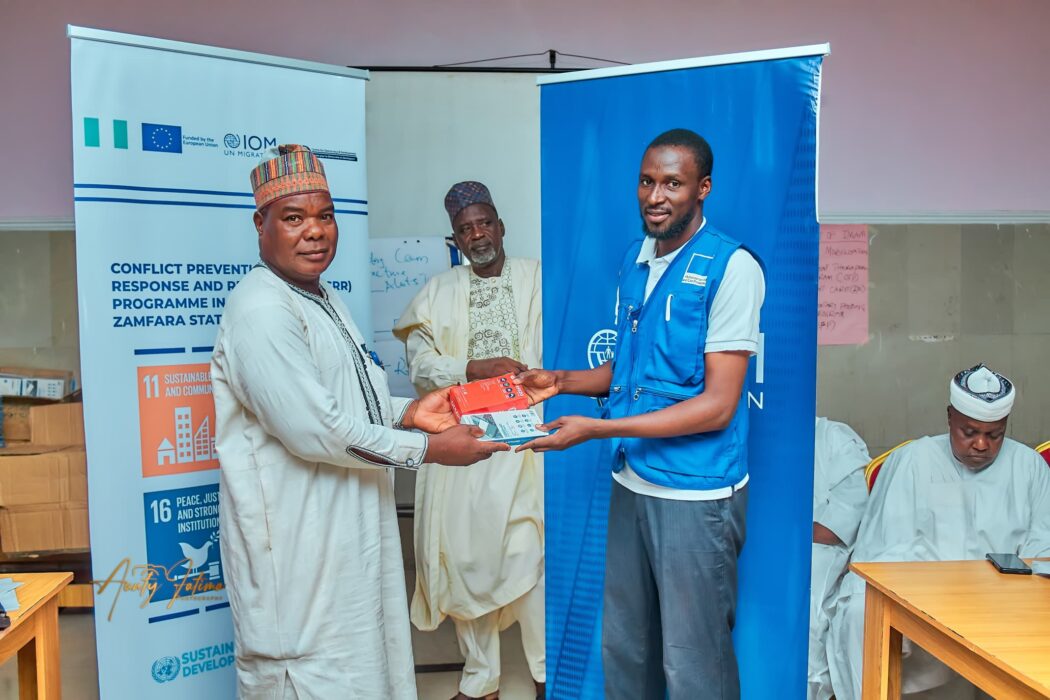
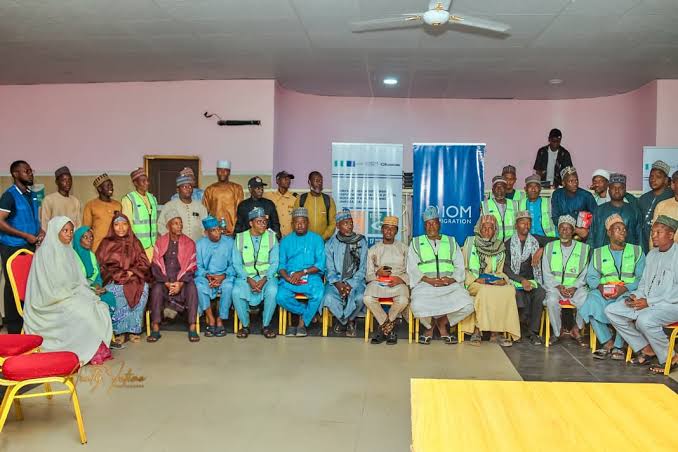
Francis Sardauna writes that through peace committees, youth empowerment, early-warning systems, livelihoods and psychosocial support, IOM’s EU-funded intervention is restoring peace in banditry-torn communities in Katsina and Zamfara States For communities in Nigeria’s North-west, the struggle for peace is no longer confined to security operations or the presence of armed personnel. It is increasingly being fought in village meetings, community peace committees, peace-promoting radio jingles and among young people searching for livelihoods in the region. This is the approach being adopted by the International Organization for Migration (IOM) under its Conflict Prevention, Crisis Response and Resilience (CPCRR) project implemented in banditry-plagued Batsari, Dandume, Danmusa, Faskari, Jibia, Sabuwa and Safana Local Government Areas of Katsina State, as well as Bungudu and Gusau Local Government Areas of Zamfara State. Funded by the European Union and jointly implemented by IOM, Mercy Corps and Centre for Democracy and Development (CDD), the CPCRR is restoring peace, preventing violence and monitoring early warning signs to rebuilding livelihoods, supporting victims and strengthening relationships between communities in the states. The IOM’s critical intervention comes against the backdrop of a deteriorating humanitarian situation orchestrated by the nefarious activities of bandits and natural disasters in the region, where the organisation says 737,073 people have been rendered homeless across the region. About 620,000, representing 84 per cent of the 737,073 internally displaced persons (IDPs) in the region, the humanitarian organization revealed that they are displaced by violence, including banditry and kidnapping besetting Nigeria’s North-west region. At its maiden Katsina press conference and media parley which brought together journalists from both print and broadcast media organisations, the IOM said its latest assessment showed that Katsina State alone had 181,000 IDPs, while neighbouring Zamfara State recorded more than 261,000. According to statistics presented to journalists at the media chat by the organisation, nearly 147,000 returnees had also been recorded across the region, including more than 37,000 in Katsina State, while 147,000 returnees are struggling to rebuild their lives after displacement by the marauding bandits and natural disasters. “So people are being displaced, but people are also trying to go home. The question is not simply: Have they returned? The real question is: Can they stay? Can they rebuild their lives? Can they feel safe again?” the Chief of Mission, IOM Nigeria, Sharon Dimanche, asked during the media parley. These unnerving questions and statistics underline the scale of the humanitarian crisis in the region and the need to move beyond emergency responses to interventions that would nip the root causes of displacement in the bud for sustainable peace and development to thrive in the region. In view of this, the IOM, through its Conflict Prevention, Crisis Response and Resilience project, has taken proactive and revolving measures to curtail the root causes of displacement and factors that allow conflict and vulnerability to persist in the agrarian North-west region. One of these measures taken by the organisation is the establishment of 80 Community Peace and Resilience Committees (CPRCs) across Katsina and Zamfara States to identify tensions, prevent conflicts and respond to early warning signs before disputes escalate into violence. Similarly, more than 1,700 community members and stakeholders have been trained on conflict prevention and Early Warning Early Response (EWER) mechanisms. 160 key informants in conflict hotspots and transhumance corridors were equally engaged to identify and respond to conflict in order to avert escalation. The IOM intervention also monitored 241 transhumance movements, involving 2,405 herders and 60,440 livestock, while producing and disseminating 11 Early Warning and Early Response and Transhumance Flow Monitoring reports. This strategy reflects a shift from responding only after violence has occurred to anticipating potential flashpoints and strengthening communities’ ability to act early. It also provides avenues for problems to be identified and resolved before they become crises. Also, under the CPCRR project, 300 at-risk youths have been trained in peacebuilding and skills acquisition, and some of them were supported with integrated livelihood kits designed to give them opportunities to earn a living and become financially independent. Placing youths at the centre of its peacebuilding strategy in the North-west region where unemployment and poverty have left many young people vulnerable to conflict, the humanitarian organization has recognised that
Don't miss out on breaking stories and in-depth articles.