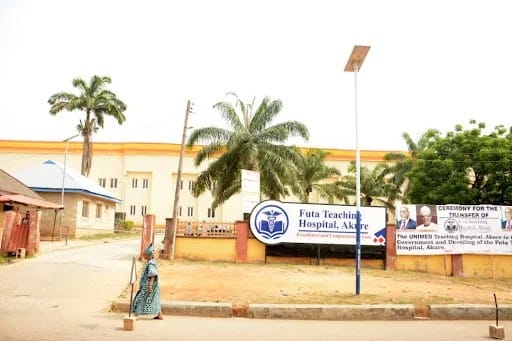
The concerns being raised regarding the proposed location of the Adamawa State University Teaching Hospital in Yola are legitimate and deserve a factual, balanced and objective response. The central question is whether a university’s Teaching Hospital must necessarily be located in the same city as its main campus or Medical College. Available experience in Nigeria shows that there is no universal requirement that the principal university campus, Medical College and Teaching Hospital must all be located within the same geographical area. Nigerian universities have, for decades, operated medical education through multi-campus arrangements, separate clinical campuses and geographically distinct teaching hospitals. Nigerian Precedents One of the clearest examples is the University of Nigeria, Nsukka (UNN). The university has its principal campus at Nsukka, while significant components of its medical education are based in Enugu. Its clinical training is supported by the University of Nigeria Teaching Hospital at Ituku-Ozalla. Thus, the university’s academic and clinical structures operate across different locations. This arrangement has been sustained as part of the university’s medical education system. Similarly, Ahmadu Bello University (ABU), Zaria, provides an instructive northern Nigerian example. Its pre-clinical medical education is associated with the Zaria/Samaru environment, while the clinical complex is located at the Ahmadu Bello University Teaching Hospital in Shika. The College of Medicine itself recognises the physical separation between its pre-clinical and clinical complexes. The distance has not prevented the university from maintaining an accredited medical training system. Nnamdi Azikiwe University (UNIZIK) offers another particularly relevant example. Its principal university environment is associated with Awka, but its College of Health Sciences has a significant presence in Nnewi. The Faculty of Medicine operates through facilities at Okofia, Nnewi, while clinical training takes place through the Nnamdi Azikiwe University Teaching Hospital in Nnewi. The medical programme therefore has its own specialised geographical structure within the wider university. There is also the example of Imo State University (IMSU). While the university is principally associated with Owerri, its College of Medicine and the Imo State University Teaching Hospital are located at Orlu. This demonstrates that medical education can be deliberately organised around a clinical location that is geographically distinct from the university’s principal campus. The experience of the University of Calabar is also instructive from another perspective. Its teaching hospital was established through the transformation and expansion of an existing healthcare facility, demonstrating that a teaching hospital does not necessarily have to be created entirely from the ground up. Existing hospitals can be upgraded and integrated into university medical education where they possess the appropriate infrastructure and clinical capacity. These examples are not identical to the proposed Adamawa arrangement, and they should not be presented as if they were. Their significance is simply that geographical separation between university academic facilities and clinical training facilities is an established feature of Nigerian medical education. The Peculiarity of Adamawa State University The situation involving Adamawa State University, Mubi, has its own distinctive features. The University is based in Mubi, and the establishment of its College of Medical and Allied Health Sciences provides the academic foundation for the state’s expansion into medical education. The critical issue, therefore, is not whether the Medical College should be removed from Mubi. Rather, it is how the University can obtain an adequate clinical environment for the training of its medical and allied health students. A Medical College requires more than lecture halls and laboratories. Students must ultimately receive extensive clinical exposure involving real patients, specialist consultants, operating theatres, emergency services, diagnostic laboratories, imaging facilities, wards and other tertiary healthcare services. This is where the proposed Teaching Hospital in Yola becomes relevant. The Specialist Hospital, Yola, is an existing tertiary healthcare institution with substantial infrastructure, specialist services, patient flow and clinical personnel. Its proposed conversion therefore offers an opportunity to provide ADSU with a functioning clinical environment without waiting several years and spending considerably more resources to construct an entirely new hospital. The issue should consequently be viewed as one of academic and clinical integration, rather than simply geographical location. Does the Distance Between Mubi and Yola Make the Arrangement Impossible? Distance is a legitimate logistical consideration, but it does not
Don't miss out on breaking stories and in-depth articles.